
Can dogs eat sausages?
Updated 7 August 2026
No, sausages are not a good thing to share. The RSPCA names processed meats such as pigs in blankets among the foods that are incredibly high in salt, and the fat sits alongside pork and cheese on PDSA's list of foods that raise the risk of pancreatitis. Many also carry onion, which Battersea lists as toxic to dogs. A single stolen sausage is unlikely to harm a healthy adult dog.
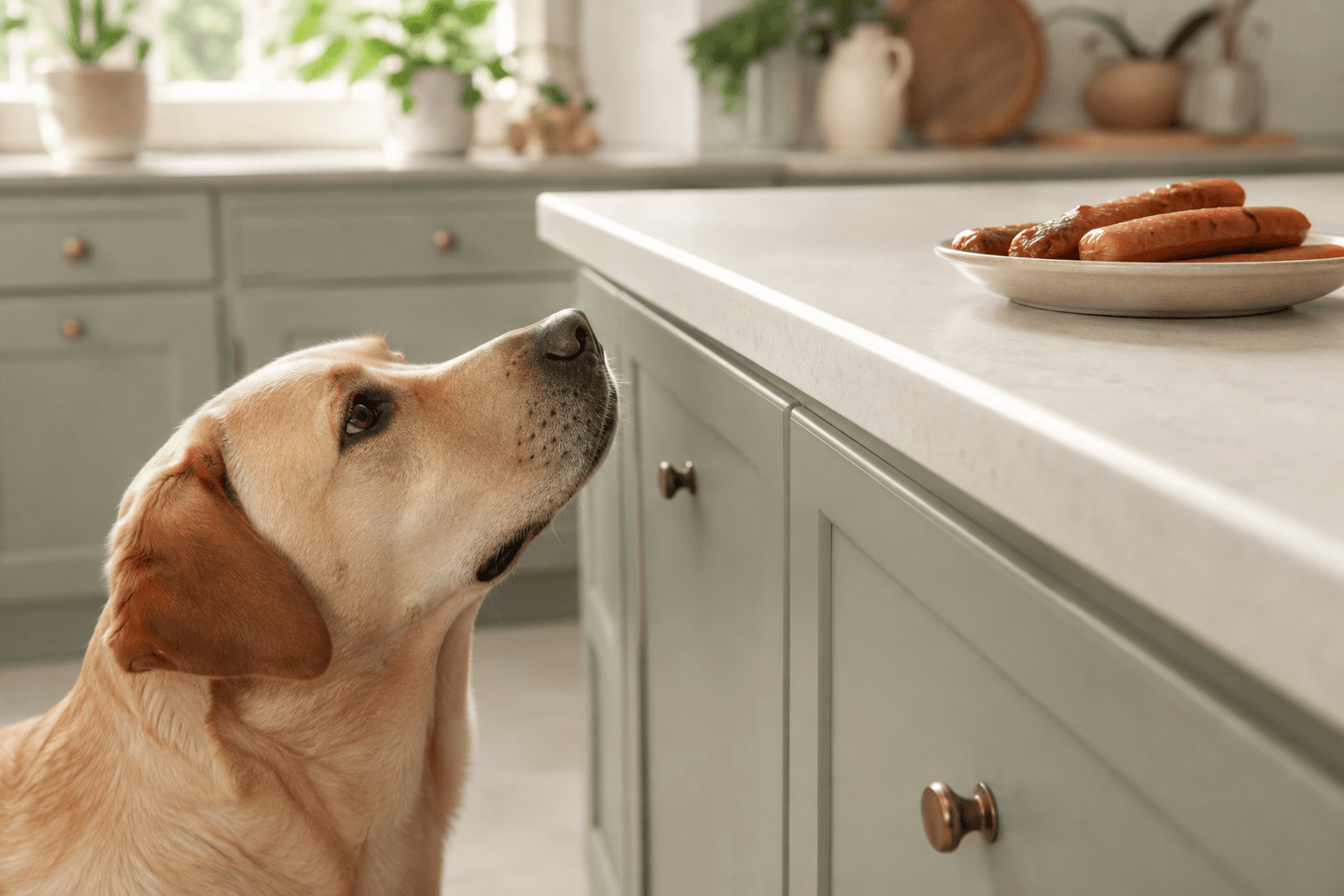
If your dog has eaten sausages
A single stolen sausage needs watching rather than panic; put water down and note how much was eaten. If your dog has eaten a large amount, a plate of pigs in blankets, or anything seasoned with onion or garlic, ring your vet with your dog's weight and an estimate of the amount. Out of hours, Vets Now runs emergency clinics across the UK, and the Animal PoisonLine is on 01202 509000.
The detail
A sausage is minced pork or beef, fat, rusk and seasoning packed into a casing, and every part of that list except the meat itself is a reason to keep it off the dog bowl. UK sausages typically run at around 1 to 2g of salt per 100g, more in some own-brand ranges, which stacks up fast against a small dog's daily needs.
Fat is the bigger concern for most vets. PDSA gives pork, cheese and butter as examples of the high-fat foods that raise a dog's risk of pancreatitis, and a fried or grilled sausage is close to pure fat and meat by the time it reaches the plate.
Seasoning is the wildcard. Many UK sausages, and particularly the flavoured varieties sold around Christmas, include onion or garlic for flavour, and Battersea's toxic food guidance lists the onion family as toxic to dogs whether it is dry, raw or cooked, damaging red blood cells.
Sausages by type
| Standard UK pork sausage | Around 1 to 2g of salt per 100gPDSA lists pork among the high-fat foods linked to pancreatitis |
| Pigs in blankets | Named by the RSPCA as incredibly high in saltBacon-wrapped, so salt and fat are doubled up |
| Sausage rolls | Sausage meat plus butter pastryA bigger fat dose than a plain sausage of the same size |
| Raw sausage or sausage meat | Treat as raw porkMSD Veterinary Manual: cook to at least 63°C to deal with Trichinella |
| Onion or garlic-seasoned sausages | Avoid entirelyBattersea lists the onion family as toxic to dogs in any form |
Sausages and pigs in blankets at Christmas
Pigs in blankets are a sausage wrapped in bacon, so they double up on salt and fat rather than adding anything new. The RSPCA names them directly as a processed meat that is incredibly high in salt, and warns that fatty Christmas leftovers can trigger pancreatitis.
A full plate of Christmas dinner scraps, sausage, bacon-wrapped sausage and stuffing together, is a bigger dose than any single item, so count the whole plate rather than assuming one sausage is fine because it looked small.
If a dog clears a serving dish of pigs in blankets while backs are turned, ring your vet with an estimate of how many and how big, rather than waiting to see how the evening goes.
Sausage rolls, sausage meat and stuffing
A sausage roll adds butter pastry to everything a plain sausage already carries, which makes it a bigger fat dose for the same size portion. Stuffing made with sausage meat and onion, a common British recipe, combines the fat problem with genuine onion toxicity in one dish.
If you make your own stuffing, keep a plain, onion-free portion aside if you want to share any of it, and even then treat it as an occasional taste rather than a serving.
Raw sausages and sausage meat
Raw sausage meat carries the same risk as any raw pork. The MSD Veterinary Manual advises treating pork as potentially infected with Trichinella unless it is labelled ready to eat, and says thorough cooking, to at least 63°C for whole cuts, is what deals with the parasite. Mincing the meat does not remove that risk.
If a dog steals raw sausages or sausage meat off a barbecue tray or a butcher's counter, cooking has not happened yet, so treat it the same as any raw pork incident and watch for digestive upset over the following days.
Cocktail sausages, chipolatas and choking
Small cocktail sausages and thin chipolatas are close to bite-sized for many dogs, which means they can be swallowed whole rather than chewed. That is a choking risk in small breeds, on top of the usual salt and fat.
A cocktail stick left in a sausage is a separate hazard again. Wooden or plastic sticks can lodge in the throat or gut, so check any leftover party food for sticks before it goes anywhere near the floor.
Vegetarian and vegan sausages
Swapping the meat does not remove the risk. Meat-free sausages still carry salt and, because they lack the fat and flavour of pork, they often lean harder on onion or garlic powder to make up the taste, and Battersea lists the onion family as toxic to dogs in any form.
Check the ingredients list rather than assuming a vegetarian sausage is automatically the safer option. A plain, onion-free vegetable side is a better share than any sausage, meat or otherwise.
Signs to watch for
- Vomiting or diarrhoea after a fatty or salty portion
- Excessive thirst and urination, which can point to salt intake
- Lethargy, a painful tummy or a hunched posture, which can mean pancreatitis
- Pale gums or unusual tiredness in the days after eating onion-seasoned sausage
Common questions
My dog ate a whole sausage. Should I worry?
A single cooked sausage is unlikely to seriously harm a healthy adult dog, though it may upset their stomach. Watch for vomiting, diarrhoea or a hunched posture over the next day, and check the ingredients for onion or garlic.
Can dogs eat pigs in blankets at Christmas?
No. The RSPCA specifically names pigs in blankets as incredibly high in salt, and the bacon wrapping adds more fat on top of the sausage. Keep the serving dish out of reach rather than sharing one.
Are sausage rolls worse than plain sausages for dogs?
Yes, because the butter pastry adds a significant fat load on top of everything already in the sausage meat. A sausage roll is a bigger dose of the same risks in a smaller-looking package.
Can dogs eat vegetarian sausages?
Not automatically safer. Meat-free sausages often use onion or garlic powder to make up for the flavour meat would normally provide, and Battersea lists the onion family as toxic to dogs in any form. Check the ingredients before sharing.
My dog ate raw sausage meat. What now?
Treat it as raw pork. The MSD Veterinary Manual advises cooking pork thoroughly because of the Trichinella parasite, and mincing the meat does not remove that risk. Watch for digestive upset over the following days and call your vet if it does not settle.
What are the signs of pancreatitis after a fatty meal like sausages?
PDSA lists a painful tummy, vomiting and reduced appetite, often starting suddenly. It is a serious illness that can be fatal without treatment, so any of these signs after a fatty meal is worth a same-day call to your vet.
Can puppies eat sausages?
No. The salt and fat are a bigger relative load for a small, growing body, and puppy food already provides balanced nutrition. Keep sausages away from puppies entirely.