
Can dogs eat chicken?
Updated 6 August 2026
Yes. Plain cooked chicken with no skin, no bones and no seasoning is one of the safest things you can share, and it is the protein most bland-diet advice is built around. Raw chicken and cooked chicken bones are the two exceptions, and both are worth taking seriously.
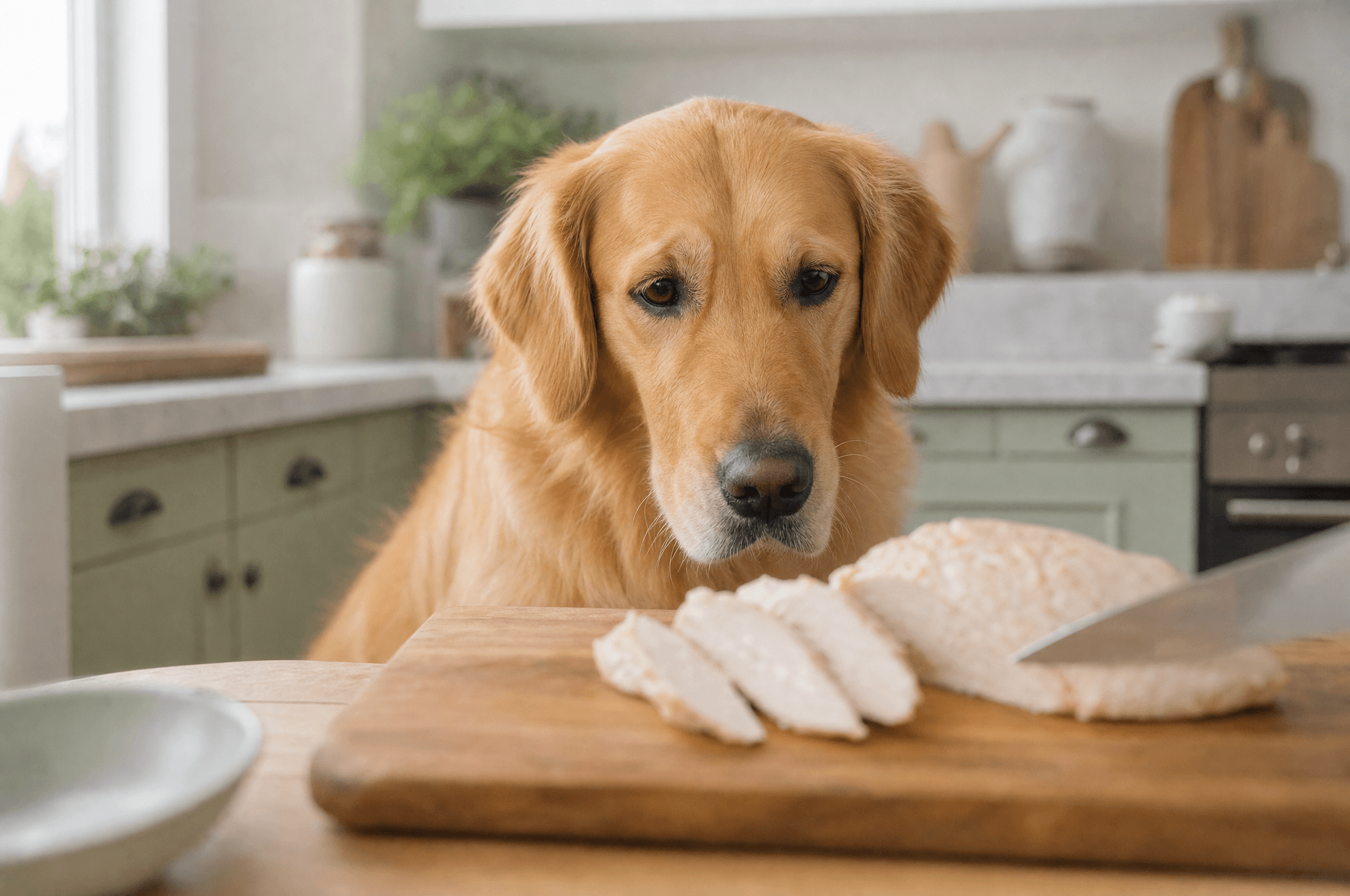
The detail
Plain boiled chicken with white rice is the bland diet a lot of UK vets suggest after a bout of sickness or diarrhoea, because the meat is lean and easy on a sore stomach. PDSA's diet guidance puts lean cooked meat among the human foods you can share, as long as there is no oil, butter, salt or flavouring on it.
Portion still matters. Chicken is food, not a freebie, so the cubes coming off your plate should come out of your dog's daily allowance rather than sitting on top of it.
Three things move chicken out of the green zone: the skin, the bones and serving it raw. Each one has its own section below, and the bones section is the one to read if a carcass has just gone missing.
Chicken is also among the more common food allergens in dogs. VCA Animal Hospitals lists it alongside dairy, beef, chicken eggs, soy and wheat gluten as the proteins most often behind a food allergy.
What is in 100g of cooked skinless chicken breast
| Protein | About 31g |
| Fat | About 3.6gSkin-on roast chicken is several times this |
| Added salt | NoneAs long as you cook it plain, with no stock or rub |
| Anything toxic to dogs | NothingThe risks are bones and raw meat, not the meat itself |
How much is sensible
| Dog size | Sensible amount |
|---|---|
| Small (under 10kg)Chihuahua, Jack Russell | About 20g of plain cooked breast, chopped small |
| Medium (10 to 25kg)Cocker spaniel, border collie | About 40g, a few times a week |
| Large (over 25kg)Labrador, German shepherd | About 60g, a few times a week |
| Overweight dogs | Breast only, skin off, and take the same calories off dinner |
Plain cooked chicken and the bland diet
Boiled or poached breast, shredded, with nothing added, is the version to use. No salt, no stock cube, no oil, no garlic and no onion, since Battersea lists onions and garlic among the foods that are toxic to dogs.
Bland-diet portions are a vet question rather than a treat question. If your dog has had a day of vomiting or diarrhoea, ring the practice for how much to feed and how long to keep it up before going back to their normal food.
Can dogs eat raw chicken?
This is the query behind most chicken searches, and the answer has two halves. VCA Animal Hospitals found that nearly a quarter of raw pet food samples in one study carried harmful bacteria including Salmonella and Listeria, and PDSA warns that raw meat holds bacteria and parasites that cooking would normally kill.
The second half is about what raw feeding actually is. A commercial raw diet is formulated, frozen and made to hygiene standards, and PDSA advises choosing a commercially prepared one rather than making it up at home, since a home-made raw diet is easily unbalanced. A chicken breast that has been sitting in your fridge for two days is not the same thing at all.
The household risk is real too. VCA notes that dogs can carry salmonella in their gut without looking ill, and PDSA points to cross-contamination with E. coli and Salmonella through bowls, hands and floors. If anyone in the house is very young, elderly or immunosuppressed, that is a reason to cook the chicken.
Chicken skin and fat
Take the skin off. Roast chicken skin is fat that has been salted and often rubbed with herbs or garlic, and Vets Now connects high-fat food with pancreatitis in dogs.
The same goes for the fat in the roasting tin and anything you would pour over dinner. Skinless breast or thigh meat gives your dog the part they actually want.
Chicken bones
Never cooked. Vets Now says cooked bones, chicken and pork especially, splinter easily and can cause serious internal injury if swallowed, and Battersea lists cooked bones among the foods that are dangerous, with a perforated gut as the worst outcome.
If your dog swallows cooked bone, ring your vet rather than watching and hoping. Say when it happened and roughly how much, and get advice before you feed anything else. Raw bones are not a free pass either: PDSA warns that bones carry a risk of blockages, broken teeth and digestive problems whether raw or cooked.
Chicken allergy in dogs
Chicken is one of the proteins dogs react to most often. VCA Animal Hospitals lists it alongside dairy, beef, chicken eggs, soy and wheat gluten as the most common food allergens, and describes the usual signs as itchy skin, paws or ears, or vomiting and diarrhoea.
An allergy is not a reason to panic about a shared cube, but it is a reason to stop guessing. Recurring itchy ears or soft stools are worth a vet appointment and a proper elimination diet rather than a trial-and-error swap at home.
Signs to watch for
- Gagging, drooling, retching or straining after a bone
- Vomiting or diarrhoea after raw chicken
- Itchy skin, paws or ears in a dog with a chicken allergy
If your dog overdoes it
If your dog has swallowed cooked bone, ring your vet now with the time and rough amount, and do not make them vomit unless a vet tells you to. Vomiting or diarrhoea after raw chicken that lasts more than a day, or any blood in it, is also a call. Out of hours, Vets Now runs emergency clinics across the UK, and the Animal PoisonLine is on 01202 509000.
Common questions
Can dogs eat chicken every day?
As a topper on top of a complete food, yes, in the portions in the table above. Chicken on its own is not a balanced diet for a dog, so it should sit alongside their normal food rather than replace it.
My dog ate a cooked chicken bone. What now?
Ring your vet straight away with the time and roughly how much bone. Vets Now says cooked chicken bones splinter easily and can cause serious internal injury. Do not make your dog vomit unless a vet tells you to.
Is raw chicken safe for dogs?
It carries a bacterial risk to your dog and to your household. VCA Animal Hospitals found harmful bacteria including Salmonella and Listeria in nearly a quarter of raw pet food samples in one study, and PDSA advises a commercially prepared raw product over home-made if you feed raw at all. Kitchen chicken breast is not a formulated raw diet.
Can dogs eat chicken skin?
Better not. It is the fattiest part of the bird, usually salted, and Vets Now links high-fat food with pancreatitis in dogs. Pull it off and give them the meat.
How do I know if my dog is allergic to chicken?
The usual signs VCA Animal Hospitals describes are itchy skin, paws or ears, or vomiting and diarrhoea. Diagnosis needs a proper elimination diet run past your vet, because guessing at ingredients at home rarely gives a clear answer.
Can puppies eat chicken?
Yes, plain, cooked, skinless and boneless, in small pieces. It makes a good soft training reward. Keep the amount small so it does not unbalance a diet that is built for growth.
Is chicken and rice good for a dog with diarrhoea?
It is the standard bland diet a lot of UK vets suggest, using boiled breast and plain white rice. Ring your practice for the amount and how long to keep it going. If diarrhoea lasts beyond a day or two, or there is blood in it, your dog needs seeing rather than feeding differently.