
Can dogs eat pork?
Updated 6 August 2026
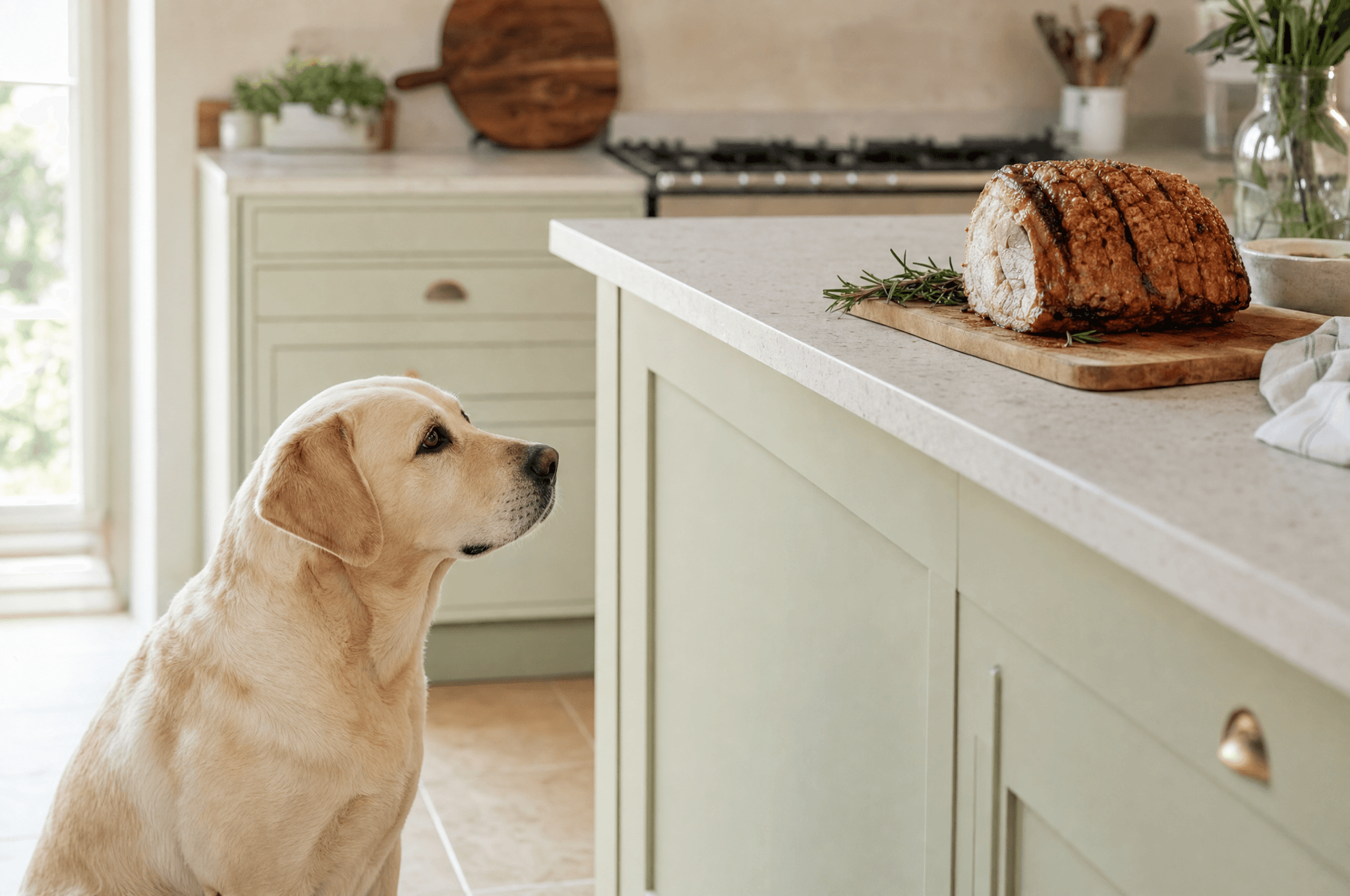
Yes, in small amounts, as long as it is plain, lean and cooked. Pork with no seasoning, no rind and no bone works as an occasional topper for most dogs. Raw pork, crackling, cured pork such as bacon and gammon, and cooked pork bones all belong on the no list.
The detail
Pork is not on any veterinary toxic list. PDSA's dog diet guidance puts lean cooked meat among the human foods you can share, with the condition that there is no oil, butter, salt or flavouring on it, and plain pork loin meets that test.
The amber rating is about everything pork usually arrives with. Fat, cure salt, seasoning and bone are what turn an ordinary lean meat into a vet trip, and pork in a British kitchen rarely turns up without at least one of them.
Fat is the one PDSA names directly. Its pancreatitis page lists pork alongside cheese and butter as high-fat foods that raise the risk, which is a fair reflection of how pork is normally cooked and served here.
Raw is the other line. The MSD Veterinary Manual advises treating pork as potentially infected with Trichinella unless it is labelled ready to eat, and says thorough cooking or correct freezing is what prevents it.
Pork by form
| Plain cooked lean pork, trimmed | Fine in small amountsNo salt, oil, gravy or seasoning |
| Pork fat, rind and crackling | Skip itFat is the pancreatitis link PDSA names |
| Raw pork | NoTrichinella risk per the MSD Veterinary Manual |
| Bacon, gammon, ham, sausages | NoCure salt and seasoning on top of the fat |
| Cooked pork bones | NoThey splinter |
How much is sensible
| Dog size | Sensible amount |
|---|---|
| Small (under 10kg)Chihuahua, Jack Russell | A 15g cube of plain cooked lean pork, once or twice a week |
| Medium (10 to 25kg)Cocker spaniel, border collie | About 30g, chopped over dinner |
| Large (over 25kg)Labrador, German shepherd | About 50g, once or twice a week |
| Any dog who has had pancreatitis | None. Fatty meat is the exact thing their diet is built to avoid |
Plain cooked pork
This is the only form of pork worth sharing. Cook it through, trim the fat off, leave out the salt, oil, gravy and rub, and cut it into cubes rather than handing over a chop.
Keep it as a topper rather than a meal. A complete dog food already covers protein, so pork is there to make dinner more interesting and should come off the day's food budget, not sit on top of it.
Can dogs eat raw pork?
No. The MSD Veterinary Manual advises treating pork as potentially infected with Trichinella unless it is labelled ready to eat, and infection starts when an animal eats meat holding the larvae. Cooking the meat through, or freezing it correctly, is what deals with it.
The manual also notes that most infected animals show no obvious signs, which is exactly why this one is easy to shrug off. Raw pork carries the usual bacterial load as well, and PDSA warns that raw meat holds bacteria and parasites that cooking would normally kill.
Pork fat and crackling
Skip both. Crackling is rind and fat with salt rubbed into it, which puts it in the same bracket as bacon rind, and PDSA names pork among the high-fat foods that raise the pancreatitis risk.
Roast fat and the drippings from the tin are the same story in liquid form. If your dog gets a taste of Sunday lunch, make it a trimmed cube of the meat and leave the tray alone.
Bacon, gammon, ham and sausages
Cured pork is a different question from fresh pork. Bacon and gammon are cured in salt, which stacks a sodium load on top of the fat, and both have their own pages on this site for that reason.
Sausages and pork pies bring seasoning that often includes onion, and Battersea lists onions among the foods that are toxic to dogs. Processed pork is the category to keep off the floor.
Pork bones
Cooked pork bones are a firm no. Vets Now says cooked bones, chicken and pork especially, splinter easily and can cause serious internal injury if swallowed, and Battersea lists cooked bones among the dangers alongside the risk of constipation or a perforated gut.
Raw pork bones are not the safe alternative people hope for either. PDSA warns that bones bring a risk of blockages, broken teeth and digestive trouble whether they are raw or cooked, so a rib bone off a plate is worth a call rather than a shrug.
Signs to watch for
- Vomiting or diarrhoea after a fatty portion
- Loss of appetite, lethargy or a hunched posture, which can point to pancreatitis
- Gagging, drooling or straining after a bone
If your dog overdoes it
A trimmed cube of cooked pork needs no action. If your dog has eaten crackling, a large fatty portion or a bone, ring your vet, and mention the amount and the time. Out of hours, Vets Now runs emergency clinics across the UK, and the Animal PoisonLine takes owner calls on 01202 509000.
Common questions
Can dogs eat roast pork from Sunday lunch?
A trimmed cube of the meat is fine, with no gravy, no salt and no crackling. Gravy is salty and often contains onion, and the fat is what PDSA links to pancreatitis. Keep the portion to the size in the table above.
Can dogs eat raw pork?
No. The MSD Veterinary Manual advises treating pork as potentially infected with Trichinella unless it is labelled ready to eat, and cooking or correct freezing is what prevents infection. Feed it cooked through or not at all.
My dog ate crackling. Should I worry?
Watch them closely for the next day or two. Crackling is fat and salt together, and vomiting, refusing food or a hunched posture after a fatty portion is a reason to ring your vet. A dog who has had pancreatitis before should be phoned in about straight away.
Are pork bones safe if they are raw?
PDSA says bones carry a risk of blockages, broken teeth and digestive problems whether raw or cooked. Cooked pork bones are worse because they splinter. Neither is something to hand over casually.
Is pork worse for dogs than chicken?
As it is usually served, yes, because pork tends to come with more fat, cure salt or crackling attached. Plain lean pork loin and plain chicken breast are much closer than the reputation suggests.
Can puppies eat pork?
A very small piece of plain cooked lean pork is not harmful, but puppy food is balanced for growth and a fatty extra can loosen a puppy's stomach quickly. Keep shares tiny and occasional, and stop if stools go soft.