
Can dogs eat gammon?
Updated 5 August 2026
No. Gammon is pork cured in brine, so it carries a heavy salt load on top of the fat that triggers pancreatitis in dogs. A stolen scrap is not an emergency, but the Christmas joint, the rind and above all the cooked bone should stay well away from your dog.
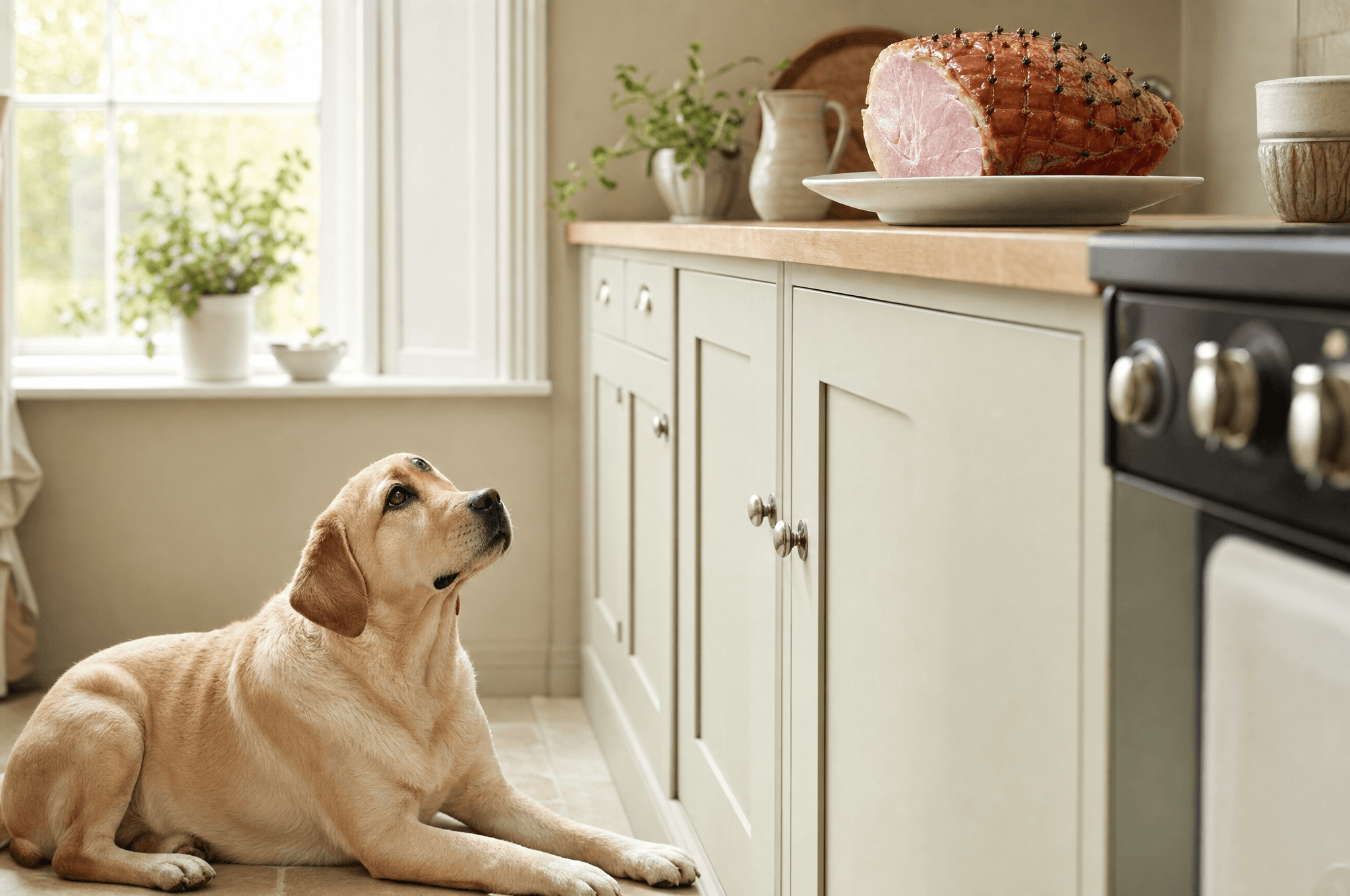
If your dog has eaten gammon
A scrap needs fresh water and nothing else. For several slices, ring your vet with your dog's weight and the rough amount. If any cooked bone was eaten, call the same day and do not induce vomiting. Out of hours, call Vets Now or the Animal PoisonLine on 01202 509000.
The detail
Gammon is the hind leg of a pig cured in salt, and the cure is the difference between it and plain roast pork. Cooked gammon typically holds around 2 to 3g of salt per 100g, against roughly 0.2g in unseasoned pork.
The fat is the second problem. The PDSA lists recently eaten high-fat foods such as pork, cheese and butter among the things that put dogs at higher risk of pancreatitis, and a gammon dinner delivers salt and fat together.
Then there is the bone. A cooked gammon bone splinters, and Battersea warns that cooked bones can perforate the gut, which can be fatal. However appealing the leftover bone looks, it is the most dangerous part of the joint.
The salt in a gammon dinner
| Cooked gammon | Around 2 to 3g of salt per 100gUnseasoned roast pork is roughly 0.2g |
| A dinner-plate slice (about 90g) | Roughly 2g of saltA meaningful dose for a small dog |
| Risky dose (Pet Poison Helpline) | Around 2 to 3g of salt per kg of body weight |
| The cooked bone | A splinter risk, not a salt oneBattersea warns cooked bones can perforate the gut |
Why gammon is worse than plain pork
The brine cure is the whole answer. Curing pushes the salt content of gammon to roughly ten times that of unseasoned pork, and dogs handle salt far less well than we do.
Plain cooked pork is itself a fatty meat that vets connect to pancreatitis, so gammon starts from a poor baseline and adds a salt problem on top.
Can dogs eat gammon bones?
No, and this is the part of the joint most likely to cause a genuine emergency. Cooking makes a bone brittle, so a chewed gammon bone breaks into shards that can lodge in the throat or pierce the gut.
If your dog has already eaten one, ring your vet rather than watching and waiting, and do not try to make them vomit. Sharp fragments cause more damage on the way back up.
Christmas gammon and Boxing Day leftovers
December is when this question peaks, because a glazed joint sits at nose height for two days and everyone at the table wants to share. A few festive scraps add up faster than any single slice.
The leftover risk is the worst one: a fridge-raided joint or a binned bone. Wrap the bone and get it into an outside bin the same day.
Gammon fat and rind
The trimmed fat and crisped rind are the fattiest part of an already fatty meat, and they are exactly what tends to get slipped under the table. This is the sort of one-off fatty meal the PDSA connects to pancreatitis.
Pancreatitis is not a mild upset. It usually means days of pain, anti-sickness drugs and sometimes a drip, so the kind gesture is not kind.
My dog ate gammon. What should I do?
For a dropped scrap, put water down and move on. For several slices, ring your vet with your dog's weight, and watch for vomiting, a hunched posture or refusal to eat over the next day or two.
If any bone went with it, that is a same-day vet call regardless of how your dog seems. Splinter damage does not always show straight away.
Signs to watch for
- Excessive thirst after a salty share
- Vomiting, a hunched or prayer posture, refusing food
- After a bone: gagging, straining, blood in the stool
Common questions
My dog ate a slice of gammon. Should I worry?
One slice is a poor snack, not a poisoning. Put fresh water down and watch for vomiting or an upset stomach over the next day. Several slices, or any dog with a pancreatitis history, is a vet call.
My dog ate a gammon bone. What do I do?
Ring your vet today, even if your dog seems fine. Cooked bones splinter and the shards can pierce the gut, so this needs professional advice rather than watching and waiting. Do not make your dog vomit.
Is ham the same as gammon for dogs?
Close enough. Both are cured pork, so both carry the same salt and fat problems. Neither belongs in a dog's bowl beyond an accidental scrap.
Can my dog have a bit of Christmas gammon with dinner?
Better not. Plain cooked turkey breast is the festive meat worth sharing, with none of the cure. Save the gammon for the sandwiches.
Can puppies eat gammon?
No. A puppy's smaller body makes the same scrap a much bigger salt dose, and fatty meat upsets young stomachs easily. Keep it out of reach entirely.
What are the signs of pancreatitis after fatty food?
Repeated vomiting, a painful tummy your dog may show by stretching into a prayer position, lethargy and refusing food. The PDSA lists these as common signs, and they mean a vet visit that day.