
Can dogs eat grapes?
Updated 5 August 2026
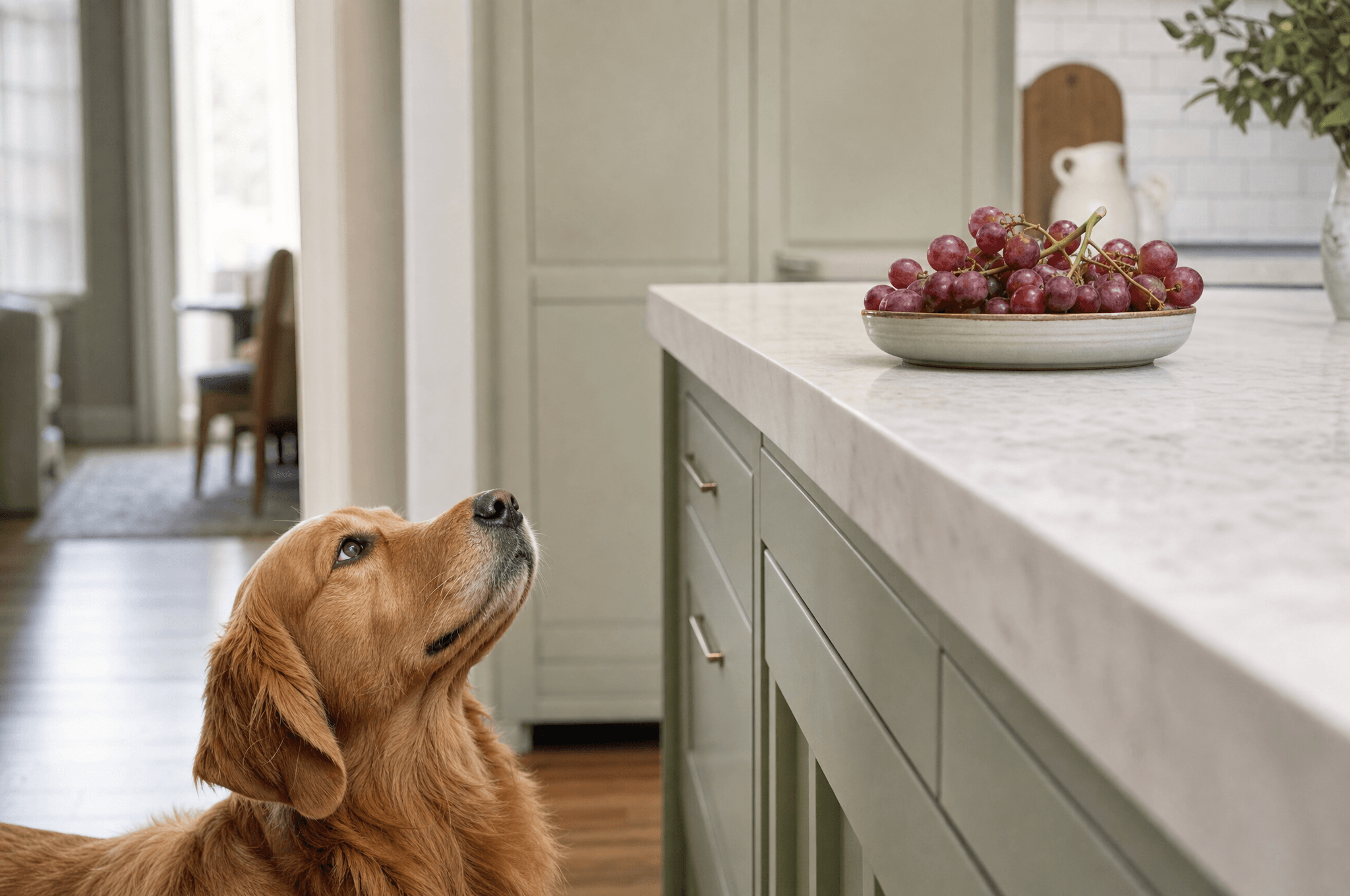
No. Grapes, raisins, sultanas and currants are toxic to dogs and can cause kidney failure. There is no established safe amount, and one dog can be poisoned by a quantity another dog tolerates. Treat any amount as a vet call.
If your dog has eaten grapes
Call your vet now, even if your dog seems fine. Note roughly how many grapes or raisins were eaten and when. Do not wait for symptoms, and do not make your dog vomit unless a vet tells you to. Out of hours, call Vets Now or the Animal PoisonLine on 01202 509000.
The detail
Grape poisoning is unpredictable, which is what makes it dangerous. Some dogs eat several grapes with no visible effect, while others develop acute kidney injury after a few.
Nobody can tell you in advance which dog is which. That is why every veterinary source treats any ingestion as an emergency rather than quoting a safe number.
The suspected culprit is tartaric acid, identified after Pet Poison Helpline vets connected grape cases with cream of tartar poisonings in 2021. The research is still developing, but the advice has not changed: no amount is considered safe.
Risk by form
| Fresh grapes | Toxic, any colour, seedless or not |
| Raisins, sultanas, currants | Toxic and more concentrated per gram |
| Baked goods containing dried fruit | Toxic. Cooking does not neutralise the agentHot cross buns, mince pies, fruit cake, malt loaf |
| Grape juice, jelly, wine | Avoid. No safe version established |
Raisins, sultanas and currants
Dried versions are worse per gram because drying concentrates the toxin. A 30g snack-box of raisins is roughly 100g of fresh grapes condensed into a few mouthfuls.
They also hide better than fresh grapes. Fruit cake, malt loaf, raisin cereals, snack boxes in school bags and trail mix are the usual routes into a dog.
Hot cross buns, mince pies and fruit cake
Baking does not remove the danger, so a stolen mince pie counts as raisin ingestion. UK vets see a spike in cases every Easter and Christmas for exactly this reason.
If your dog raids the baking, ring your vet with a guess at how much fruit the recipe held. Do not wait to see how they seem.
Grape juice, jelly and wine
Anything made from grapes carries the same question mark, and there is no data establishing a safe version. Juice and jelly also add sugar your dog does not need.
Wine adds alcohol, which is toxic to dogs in its own right. Keep all of it out of reach and treat spills as worth cleaning up promptly.
How many grapes are dangerous?
There is no reliable threshold, and published cases include serious illness after small amounts. Sensitivity varies so much between individual dogs that weight-based tables are false comfort.
This is why the advice is binary. Any amount means a phone call, even if your dog has eaten grapes before without trouble.
My dog ate grapes before and was fine
That is genuinely common, and it proves nothing about next time. Tolerance in one incident does not carry over, and vets see dogs poisoned on their second or third exposure.
Treat every incident as the first. The call costs nothing compared with kidney treatment.
Signs to watch for
- Vomiting, often within a few hours
- Diarrhoea, lethargy, loss of appetite
- Increased or decreased thirst and urination in the following days
Common questions
My dog ate one grape. Do I really need to call the vet?
Yes. It is probably fine, but because sensitivity varies so much between dogs, every major poison service advises a call for any amount. The call is free; kidney failure is not.
How quickly do symptoms appear?
Vomiting often starts within a few hours, but kidney signs can take 24 to 72 hours. Seeming fine on the day tells you nothing, which is why vets act early.
Are seedless or peeled grapes safer?
No. The toxin is in the flesh, not the seeds or skin. Cooked grapes and raisins in baked goods are just as dangerous.
What will the vet actually do?
For recent ingestion, usually induced vomiting, then activated charcoal and often a day or two of fluids to protect the kidneys. Blood tests track kidney values over the following days.
What about grape jelly or grape juice?
Avoid them. They are made from the same fruit, and UK jams and juices add sugar on top.
Is there a home remedy I can try first?
No. Do not induce vomiting without veterinary advice, and do not use salt water, which is dangerous in itself. Phone first, always.