Can dogs eat lamb bones?
Updated 5 August 2026
No. Cooked lamb bones splinter, and the fragments can pierce or block a dog's gut, so the chop bone from a Sunday roast is one of the riskier leftovers in the kitchen. Raw lamb bones divide veterinary opinion. If your dog has already eaten a cooked bone, ring your vet now.
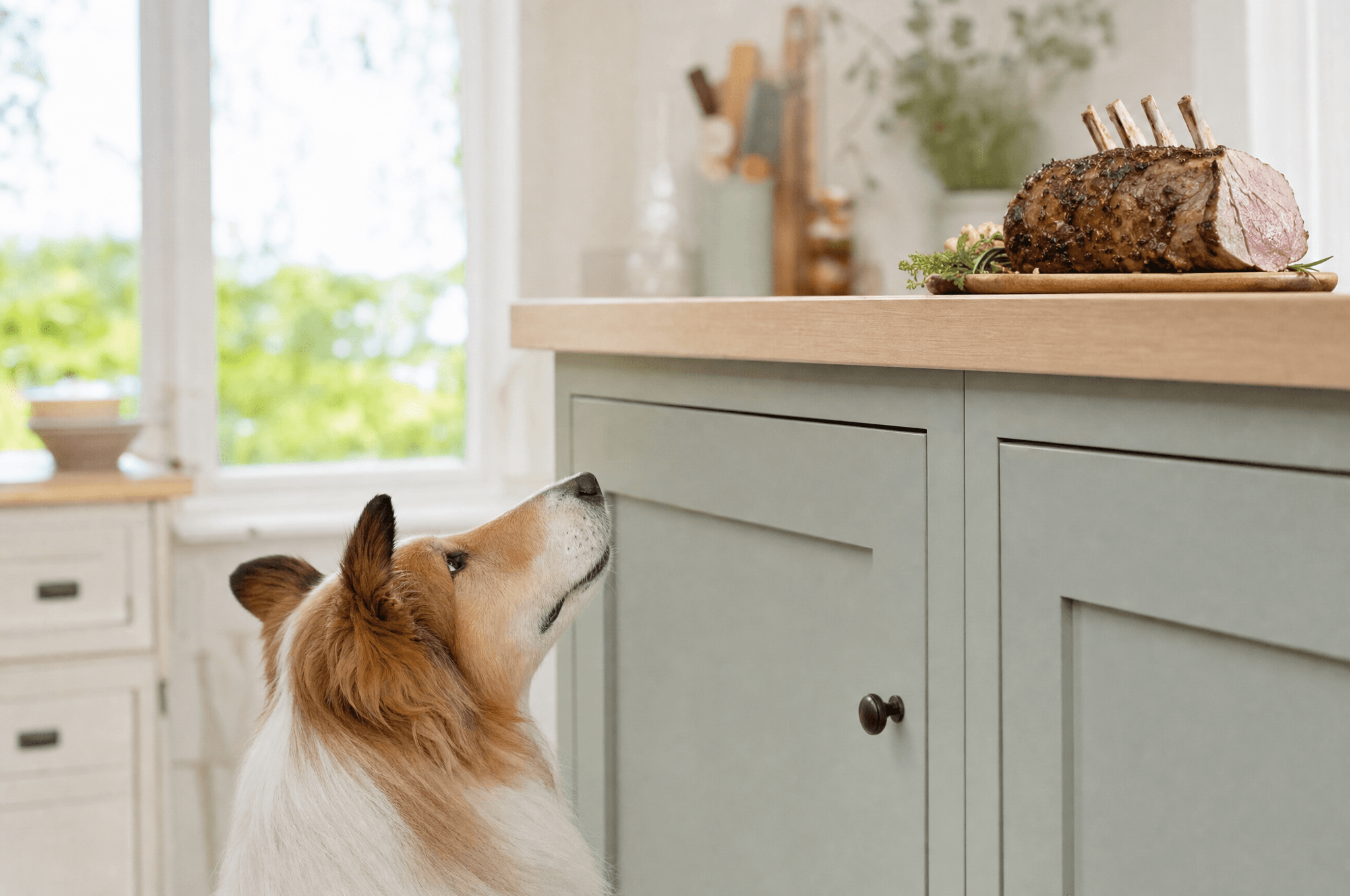
If your dog has eaten lamb bones
Remove any remaining bone and ring your vet now, even if your dog seems fine. Note roughly how much bone was eaten and when. Do not induce vomiting and do not feed anything unless your vet tells you to. Out of hours, call Vets Now or the Animal PoisonLine on 01202 509000.
The detail
Cooking is what turns a bone from a chew into a hazard. Heat dries the bone out and makes it brittle, so instead of being ground down it snaps into shards with sharp edges.
Those shards cause a spread of injuries. Battersea's guidance is to avoid cooked bones at all cost because they splinter and, at worst, perforate the gut, and the Kennel Club adds mouth injuries, constipation and obstructions needing surgery to the list.
Lamb bones have a specific UK problem: they arrive at the table attached to chops and roast legs, smelling of the meal. A begged-for chop bone or a raid on the scraps plate is how most incidents start.
Risk by form
| Cooked chop or cutlet bone | No. Brittle, swallowable, splintersThe most common lamb bone incident |
| Cooked leg or shoulder bone from a roast | No. Splinters like any cooked bone |
| Bones boiled for stock | No. Boiling makes bone brittle too |
| Large raw lamb bone | Divided vet opinion. Supervised chewing only, if your vet agreesThe PDSA lists blockages and broken teeth among raw bone risks |
| Swallowed fragments, any form | Ring your vet now. Do not induce vomiting |
Cooked lamb bones
This is the firm no, and it covers every cooked form: chop bones, cutlet bones, the leg bone from a roast, and anything boiled up for stock. Cooked bone is brittle, and lamb bones are small enough to swallow in chunks once they crack.
The shards can cut the mouth, lodge in the throat, or travel further and pierce or block the intestine. Battersea and the Kennel Club both put cooked bones on their danger lists for exactly this reason, with surgery as the worst-case outcome.
There is no safe way to serve one. Bin lamb bones in a container the dog cannot open, and treat outdoor bins and dropped street food as part of the risk map.
Raw lamb bones
Raw is where honest sources disagree, so here are both sides. Battersea reserves its avoid-at-all-cost warning for cooked bones, and raw feeding advocates argue that a large raw bone is a natural chew that keeps teeth busy.
The PDSA takes the cautious side: its raw feeding guidance lists bones among the hazards, citing intestinal blockages and tooth fractures, on top of the bacteria that raw meat carries. Plenty of vets have removed raw bone fragments as well as cooked ones.
If you choose to offer one anyway, the risk-reduction rules are consistent: raw only, large enough that it cannot be swallowed (a lamb leg bone, never a chop), always supervised, taken away once it splinters or shrinks, and never for dogs that gulp rather than chew. Ask your own vet first, since they know your dog's teeth and habits.
Chop bones from the Sunday roast
The lamb chop bone is the classic incident: small, cooked, greasy and handed over by a well-meaning relative. It fails on every count, because it is brittle, swallowable in one or two crunches, and coated in fat that can upset the stomach on its own.
A house rule worth setting before the next roast: plate scraps go straight into a sealed bin, and guests do not feed the dog. A strip of the meat itself, trimmed of fat, is the share that actually works.
My dog swallowed lamb bone fragments. What now?
Ring your vet now, even if your dog seems fine. Fragments can take hours or days to cause trouble, and early advice beats waiting for symptoms. Do not try to make your dog vomit, because shards that scraped going down can scrape coming back up.
Vets Now lists the blockage signs to watch for: loss of appetite, vomiting, no stools or diarrhoea, dehydration, and abdominal discomfort such as reluctance to move or crying out. Gagging, drooling or pawing at the mouth straight after eating suggests a piece is stuck higher up and needs a same-day visit.
Take the remaining bone away and note roughly how much was eaten and when. Your vet may examine, x-ray or simply monitor, but that decision is theirs to make.
Signs to watch for
- Gagging, drooling or pawing at the mouth soon after eating
- Vomiting or retching
- Loss of appetite
- No stools, straining, or blood in the stools over the following days
- A tense, painful tummy, reluctance to move, or crying out
Common questions
My dog ate a cooked lamb chop bone. Should I panic?
Not panic, but do ring your vet now rather than watching and waiting. Fragments can take hours or days to cause a blockage or perforation, and early advice costs nothing. Do not make your dog vomit.
How long after eating a bone would symptoms show?
Throat and mouth trouble shows immediately, as gagging or drooling. Gut signs like vomiting, no stools or a painful tummy can take 24 to 72 hours, so keep watching for several days even if the first evening goes fine.
Are lamb bones safer than chicken bones?
Not once cooked. Any cooked bone becomes brittle and splinters, and the Kennel Club's warning covers all of them. Lamb chop bones add the specific problem of being small enough to swallow in chunks.
Can dogs have raw lamb ribs or marrow bones?
Opinion is split, and the PDSA lists bones among raw feeding hazards because of blockages and broken teeth. If your vet is comfortable with it for your dog, keep to large bones, supervise every session and take the bone away once it splinters. Ribs are on the small side for most dogs.
Should I feed bread to push bone fragments through?
No. The bread trick is folklore, and feeding anything after a bone incident should be your vet's call. Ring them first and follow their instructions.
Is lamb meat itself safe for dogs?
Yes, plain cooked lamb with the fat trimmed and no bone is a fine occasional share, and lamb is a common protein in commercial dog food. The bone and the fatty drippings are the parts to keep back.