
Can dogs eat eggs?
Updated 5 August 2026
Yes. Cooked eggs are safe for dogs and one of the better human foods to share. Serve them plain: no butter, milk, salt or seasoning. Raw eggs carry a salmonella risk, so cook them first. Most dogs can have a few eggs a week, scaled to their size.
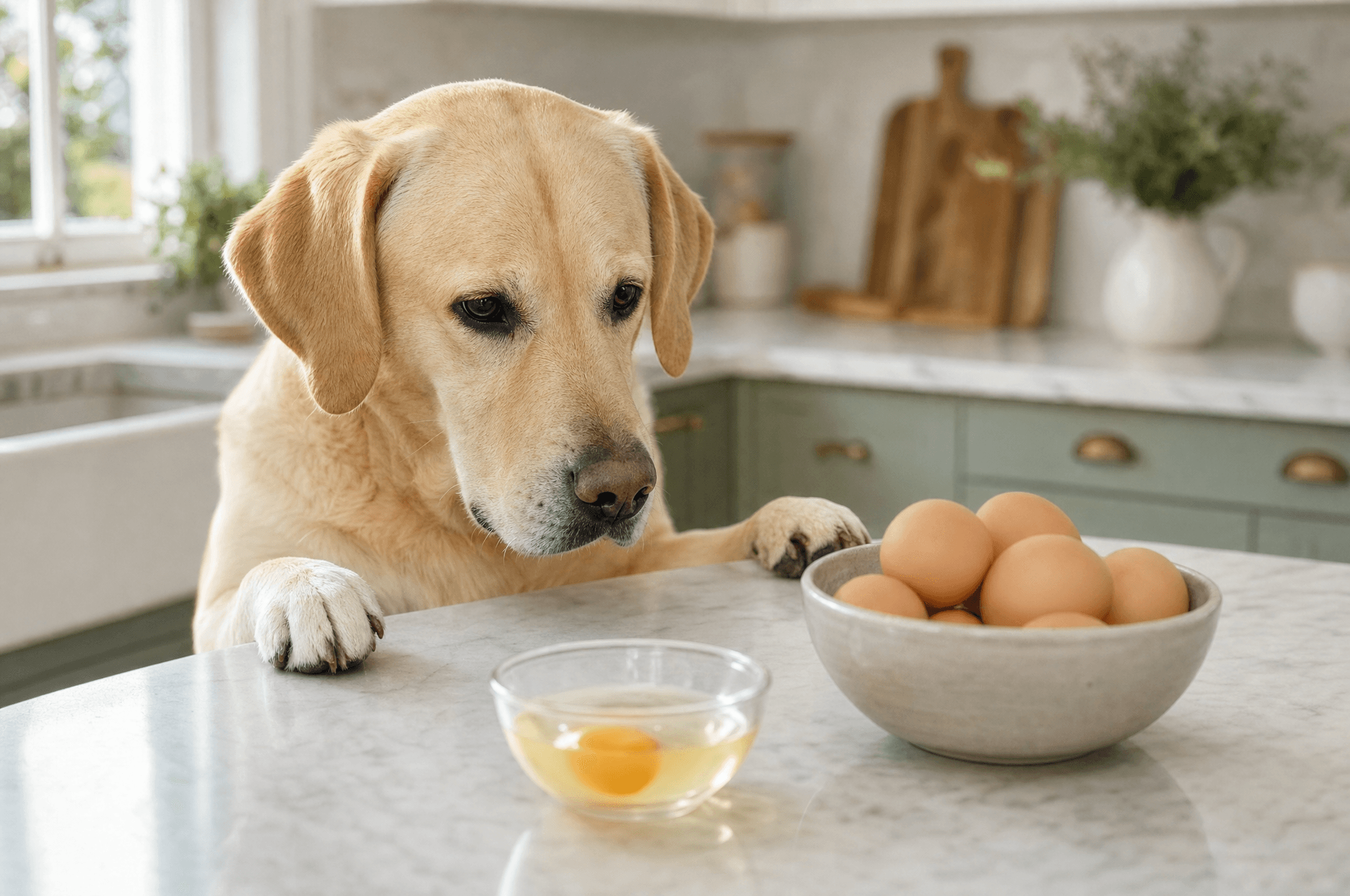
The detail
Egg is close to the ideal shared food. It is protein and fat with nothing a dog cannot handle, it costs pennies, and it works as a training reward, a meal topper or a soft option for a dog off its usual food.
The one rule that matters is cooking. A cooked egg keeps everything good about the raw one and removes the salmonella question, which is why every version on this page starts with a pan of plain eggs.
The limit is calories rather than danger. A medium egg carries around 66 calories, which is a meaningful chunk of a small dog's daily intake, so the by-size table below is worth a look before eggs become a habit.
What is in one medium egg
| Protein | Around 6gThe reason eggs earn their place |
| Fat | Around 5gNearly all of it in the yolk |
| Calories | Around 66 |
| Anything toxic to dogs | NothingRaw eggs carry a salmonella risk; cooking removes it |
How much is sensible
| Dog size | Sensible amount |
|---|---|
| Small (under 10kg)Chihuahua, Jack Russell | Half an egg per serving, once or twice a week |
| Medium (10 to 25kg)Cocker spaniel, border collie | One egg per serving, up to twice a week |
| Large (over 25kg)Labrador, German shepherd | One egg per serving, two or three times a week |
| Overweight dogs or dogs with pancreatitis history | Ask your vet first. The fat in the yolk is the concern |
Can dogs eat raw eggs?
Skip raw. The salmonella risk that applies to people applies to dogs too, and the PDSA points out that bacteria in raw food can spread through the household by cross-contamination.
Raw egg white also contains avidin, a protein that binds biotin, one of the B vitamins. The occasional stolen raw egg will not cause a deficiency, but regular raw eggs stack the odds badly for no benefit.
Cooking solves both problems at once. If your dog cleans up a dropped raw egg, no drama: fresh water, wash the floor, and mention it to your vet only if vomiting or diarrhoea follows.
Scrambled eggs for dogs
Fine, with one big caveat: scramble them in nothing. The butter, milk and salt that make scrambled eggs nice for you are exactly the extras a dog does not need, and the milk upsets the many adult dogs that handle lactose badly.
Use a dry non-stick pan or a splash of water and serve them cooled. Plain scrambled egg is also a useful soft food for a dog recovering from a stomach upset, if your vet has suggested a bland diet.
Boiled eggs
The easiest safe version. A hard-boiled egg needs no pan-watching, keeps in the fridge for a couple of days, and chops into training-sized pieces without any mess.
Soft-boiled is fine too as long as the white is fully set. Let it cool before sharing, and peel it: the shell question gets its own section below.
Can dogs eat egg shells?
Not off their own bat. A crunched shell breaks into sharp shards that can scratch the mouth and throat, and shell pieces from the compost caddy carry whatever else was in there with them.
Ground eggshell is a different case. Some vets prescribe it as a calcium source for dogs on home-cooked diets, finely powdered and properly dosed, but that is a measured supplement on veterinary advice.
A complete dog food already has calcium covered. Extra calcium can cause problems of its own, especially in growing puppies, so do not add shell off your own bat either.
How many eggs can a dog eat a week?
Scale it to the dog. A medium egg is around 66 calories, which is a small snack for a Labrador and close to a tenth of the daily intake of a 5kg terrier.
The standard veterinary rule of thumb keeps all treats within about a tenth of daily calories. In practice that means half an egg once or twice a week for a small dog, and up to three eggs a week for a large one, trimmed back if other treats are in the mix.
Common questions
Can puppies eat eggs?
Yes, cooked and plain, in smaller amounts than an adult dog. A teaspoon or two of scrambled egg makes a good soft training reward. Never raw, for the same salmonella reason as adults.
Can dogs eat eggs every day?
A large, active dog can manage an egg most days, but for small dogs a daily egg is a lot of extra calories. A few a week is the safer habit for most pets.
My dog ate a raw egg off the counter. Should I worry?
Probably not. One raw egg rarely causes trouble, so put water down, clean up and watch for vomiting or diarrhoea over the next day. Ring your vet if either arrives or your dog seems off.
Are eggs good for a dog's coat?
They can help, since coat quality depends on protein and fats that eggs supply. A complete dog food already covers this, so treat eggs as a bonus rather than a fix. A persistently dull coat is a vet conversation, not an egg shortage.
Can dogs eat fried eggs?
Best not. The egg is fine but the oil or butter it was fried in adds fat your dog does not need, and rich fatty extras are a common trigger for stomach upsets. Boiled or dry-scrambled does the same job cleanly.
Can dogs with pancreatitis eat eggs?
Ask your vet before sharing any. The yolk carries most of the egg's fat, and pancreatitis diets restrict fat tightly. Plain cooked egg white is sometimes allowed, but that is a per-dog decision.