
Can dogs eat onion?
Updated 5 August 2026
No. Onion is toxic to dogs in every form: raw, cooked, fried, dried or powdered. Its allium compounds destroy red blood cells and cause anaemia, and the worst signs often take days to appear. Anything beyond a stray crumb of onion is worth a call to your vet.
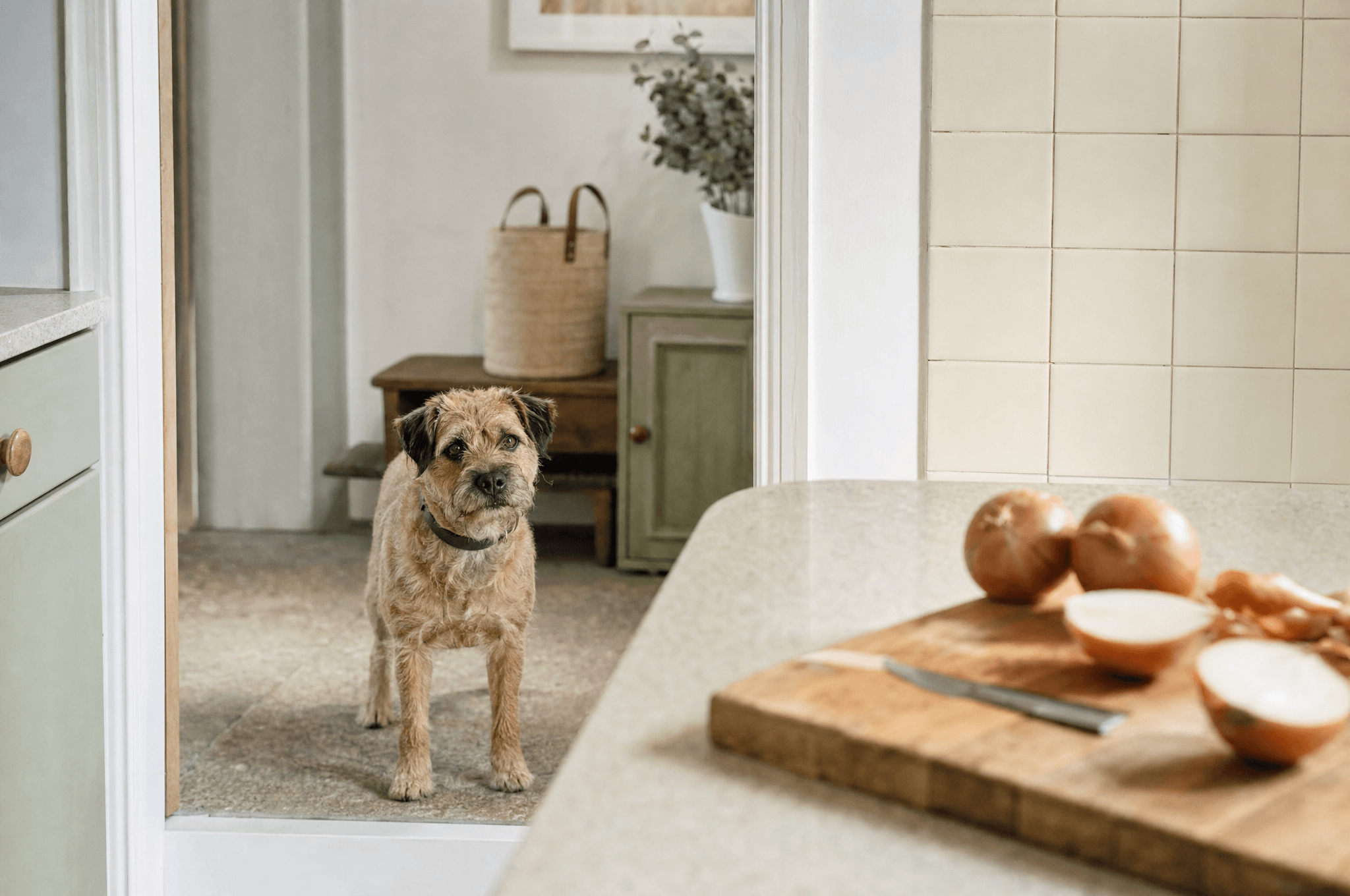
If your dog has eaten onion
Ring your vet if your dog has eaten onion in any real quantity, and keep the packaging if powder or a prepared food was involved. Do not wait for symptoms; the anaemia often shows days after the theft, when treatment is harder. Out of hours, call Vets Now or the Animal PoisonLine on 01202 509000.
The detail
The toxin is N-propyl disulphide, shared across the whole allium family: onions, garlic, leeks, chives and shallots. It attacks the red blood cells that carry oxygen, and the damage builds quietly before anything looks wrong.
That delay is what makes onion different from most kitchen hazards. A dog can eat onion on Sunday, seem fine on Monday and be pale, weak and breathless by Wednesday, because the MSD Veterinary Manual reports that red cell destruction peaks around 72 hours after eating.
Cooking changes nothing. VCA Animal Hospitals is blunt about it: dried, powdered, liquid, cooked or raw, every form is poisonous to dogs, and the concentrated powders are worse per gram than the vegetable itself.
Risk by form
| Raw onion, any colour | Toxic. Clinical signs reported from 15 to 30g per kg in dogs |
| Cooked, fried or roasted onion | Toxic. Cooking does not destroy the allium compounds |
| Onion powder and granules | Toxic and more concentrated per gramGravy, stuffing, stock cubes, flavoured crisps |
| Spring onions, chives, leeks, garlic | Toxic. Same family, same toxinVCA rates garlic the most toxic of the group |
| Pickled onions | Toxic, with a heavy salt load on top |
Cooked onion
Cooking does not remove the toxin. Fried onions, roasted onions, onion in casseroles and the softened onion at the bottom of most home cooking all carry the same allium compounds as a raw one.
This is how most dogs actually get poisoned: leftovers, plate scrapings and takeaway remains rather than a raw onion off the counter. A curry or a plate of sausages and onions shared as a treat counts as an onion incident.
Onion powder in gravy, stuffing and crisps
Powdered onion is more concentrated than fresh, per VCA, and it hides in half the savoury products in a UK kitchen. Gravy granules, stuffing mixes, stock cubes, soup packets and flavoured crisps routinely carry it.
One crisp is not a poisoning, but a dog that cleans up a roast dinner with gravy and stuffing has taken onion from several directions at once. Check labels before sharing anything savoury, and treat onion powder near the top of an ingredients list as a hard no.
Spring onions, chives and the rest of the family
Spring onions are onions, and chives, leeks, shallots and garlic sit in the same allium family with the same toxin. VCA lists garlic as the most toxic of the group weight for weight.
Garden beds and veg patches count too. A dog that digs up and chews spring onions or chives has eaten the same toxin as one raiding the kitchen, so fence the allium bed off from a known digger.
Red onion vs white onion
There is no safe colour. Red, white, brown and pickled onions all carry the same allium compounds, and no veterinary source rates one variety as gentler than another.
Pickled onions add vinegar and salt on top of the toxin, and sweeter varieties simply taste nicer to a dog. Treat every onion in the house identically: out of reach, never shared.
How much onion is dangerous?
The MSD Veterinary Manual reports clinical signs in dogs from around 15 to 30g of raw onion per kg of body weight, with blood changes from the bottom of that range. For a 10kg dog the lower figure is about 150g, roughly one medium onion.
Do not treat that as a safe allowance. Powders concentrate the dose, some breeds (including Akitas and Shiba Inus, per the Pet Poison Helpline) are more sensitive, and smaller amounts eaten repeatedly add up because the damage accumulates.
The honest rule is the simple one. A trace in a cooked dish is probably nothing; anything more, or anything involving powder, is a phone call.
Signs to watch for
- Vomiting or diarrhoea in the first day
- Pale gums, weakness and tiring on walks a few days later
- Red or brown urine
- Fast breathing or a racing heart
Common questions
My dog ate a small piece of cooked onion. Should I worry?
A single small piece is unlikely to harm a medium or large dog, but ring your vet if your dog is small or you are unsure of the amount. Watch for tiredness, pale gums or dark urine over the next five days either way.
How much onion is toxic to a 10kg dog?
The MSD Veterinary Manual reports clinical signs from around 15 to 30g per kg, so roughly 150g for a 10kg dog, about one medium onion. Powders reach that dose in far smaller amounts, and repeated small exposures add up.
Are crisps with onion powder dangerous for dogs?
A dropped crisp is not a poisoning, but onion powder is concentrated, so a dog that empties a bag or grazes flavoured crisps regularly is taking a real dose. Keep sharing to plain foods and ring your vet if a whole bag disappears into a small dog.
How long does onion poisoning take to show?
Stomach upset can start within a day, but PDSA puts the anaemia at one to five days after eating. That is why vets treat onion ingestion on the history, not on how the dog looks today.
Is garlic as bad as onion for dogs?
Worse, gram for gram: VCA lists garlic as the most toxic member of the family. Garlic supplements and garlic bread both count, so run any garlic product past your vet first.
What will the vet do for onion poisoning?
For a recent theft, usually induced vomiting and activated charcoal, then blood tests over the following days to track red cell damage. Severe anaemia can need oxygen, fluids or in the worst cases a transfusion.