
Can dogs eat salami?
Updated 9 August 2026
No, salami and pepperoni are best avoided for dogs. Both are cured, processed meats that are typically high in salt and fat, often seasoned with garlic, chilli or paprika, and sometimes made with nitrates or nitrites as curing agents. A single small accidental bite is not an emergency, but this is not a food worth offering on purpose.
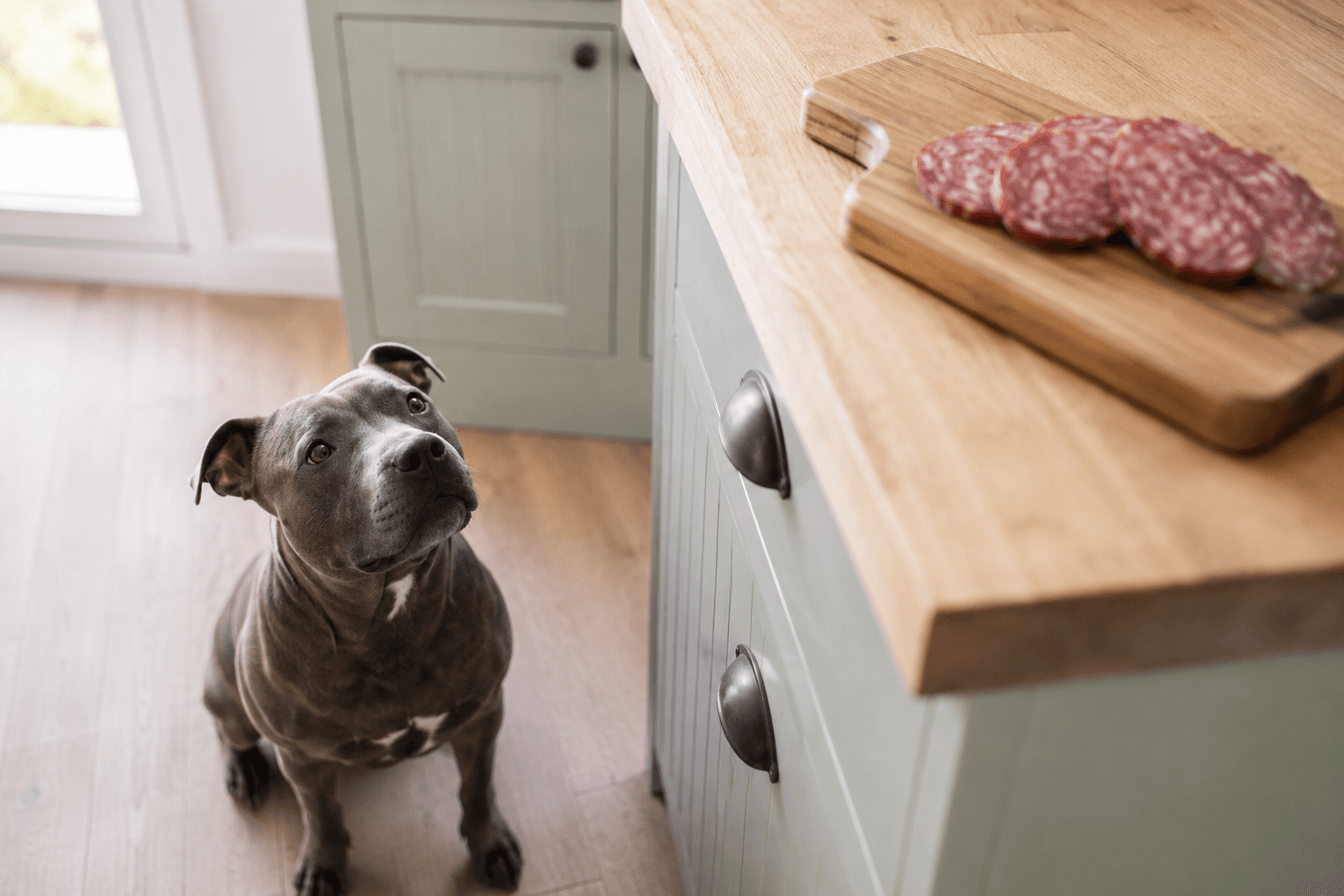
If your dog has eaten salami
If your dog has eaten a single small accidental slice, offer fresh water and keep an eye on them rather than treating it as an emergency. Call your vet if your dog ate a whole stick of salami, a pack of pepperoni, or a significant portion of a pizza, and tell them roughly how much and your dog's weight. Make sure fresh water stays available while you wait for advice, and watch for vomiting, weakness or a painful abdomen.
- The detail
- What is in a cured sausage like salami or pepperoni
- How much is sensible
- Can dogs eat pepperoni?
- Why is cured meat like salami worse than plain cooked meat?
- My dog stole a slice of pizza with pepperoni, what now
- My dog ate a whole stick of salami or a pack of pepperoni, what now
- Are chorizo, prosciutto and other cured meats just as risky?
- Better things to share
- Common questions
The detail
Salami and pepperoni are cured, fermented sausages, made from ground meat, fat and salt, packed into a casing and left to cure over weeks. That curing process is exactly what makes them a concern for dogs: salt is used generously as a preservative, and the finished product is considerably saltier, gram for gram, than a piece of plain cooked meat.
Salt is the everyday concern. The MSD Veterinary Manual notes that clinical signs of salt toxicosis in dogs can appear from around 2 to 3g of sodium chloride per kg of body weight, and a stick of salami or a stack of pepperoni slices carries a meaningful dose of sodium well before that threshold, especially for a small dog. PDSA's poisons and hazards page adds that a dog eating a large amount of salt quickly, without access to water, can develop poisoning that is fatal.
Fat is the second concern, and cured sausage is typically high in it, since fat is a large part of what gives salami and pepperoni their texture and flavour. VCA Animal Hospitals notes that pancreatitis may be triggered in some cases by a fatty meal, and PDSA's own guidance lists high-fat foods among the recognised risk factors, so a dog that steals a whole stick of salami or a stripped pepperoni pizza has eaten a genuinely large, fast dose of both salt and fat in one go.
Seasoning adds a further layer. Garlic, chilli and paprika are all common in salami and pepperoni recipes, and PDSA's guidance on onion and garlic poisoning is clear that garlic damages a dog's red blood cells and can cause anaemia, while chilli and other hot spices can irritate a dog's mouth and stomach even where they are not separately toxic. Nitrates and nitrites, used to cure the meat and give it its pink colour, are not an acute danger at the amount in a stolen slice, but they are another reason this is a processed food rather than a plain protein.
A single small accidental bite, a slice fallen off a pizza or lifted off a charcuterie board, is unlikely to be a genuine emergency for most healthy adult dogs. The scenario worth taking seriously is a dog getting into a whole stick of salami, a full pack of pepperoni, or eating most of a takeaway pizza, since that is where the salt, fat and seasoning add up to a real dose rather than a taste.
What is in a cured sausage like salami or pepperoni
| Salt (sodium) | Very high, cured to preserve the meatMSD: salt toxicosis signs from around 2 to 3g of sodium chloride per kg of body weight |
| Fat | High, similar to other fatty processed meatsA recognised pancreatitis trigger in a large single amount, per VCA and PDSA |
| Garlic, chilli and paprika | Common seasonings in salami and pepperoniGarlic specifically is toxic to dogs, per PDSA |
| Nitrates and nitrites | Used as curing agents in most cured sausageNot an acute danger in a stolen slice, but another reason to avoid regular feeding |
How much is sensible
| Dog size | Sensible amount |
|---|---|
| Small (under 10kg)Chihuahua, Jack Russell | A single small accidental slice is unlikely to need a vet visit, but skip it as a deliberate treat |
| Medium (10 to 25kg)Cocker spaniel, border collie | A slice or two accidentally is unlikely to be an emergency, though a larger amount is worth watching closely |
| Large (over 25kg)Labrador, German shepherd | A few accidental slices are unlikely to be serious, but a whole stick or a stolen pizza's worth is worth a call to your vet |
| Heart, kidney or pancreatitis history | Skip salami and pepperoni entirely, and call your vet if more than a taste is eaten |
Can dogs eat pepperoni?
No, treat pepperoni the same way as salami, since it is the same broad food, a cured, fermented sausage, usually seasoned more heavily with paprika and chilli for its characteristic heat. It carries the same salt and fat concerns as salami, often with an extra dose of spice on top.
Pepperoni's most common route into a dog's mouth in the UK is a stolen pizza slice or a dropped piece from a topping, and that scenario is common enough to plan for, particularly with a food-motivated dog and a pizza box left within reach.
Why is cured meat like salami worse than plain cooked meat?
The curing process is the difference. Plain cooked chicken or beef is mostly protein and water, with fat depending on the cut, while salami and pepperoni are deliberately salted, seasoned and often fatty by design, since that is what preserves the meat and gives it its flavour.
A dog can eat plain, unseasoned meat as a reasonable occasional treat precisely because none of that curing and seasoning has happened. Salami and pepperoni are a genuinely different food from a health perspective, not a smaller, spicier version of a plain protein.
My dog stole a slice of pizza with pepperoni, what now
A single slice, pepperoni and all, is unlikely to be an emergency for most healthy adult dogs, though the cheese, tomato base and any garlic in the sauce all add their own concerns on top of the pepperoni itself. Keep an eye on your dog over the following day rather than assuming nothing happened.
Watch for vomiting, diarrhoea, excessive thirst or a painful abdomen, and call your vet if your dog ate several slices, a large amount of the topping specifically, or seems unwell. A whole pizza is a different, more serious scenario than a single stolen slice.
My dog ate a whole stick of salami or a pack of pepperoni, what now
This is the scenario worth taking seriously, since a whole stick or pack carries far more salt and fat than a single slice, and the MSD Veterinary Manual's salt toxicosis figures show how quickly that adds up for a smaller dog. Ring your vet and let them know roughly how much was eaten and your dog's weight.
Make sure fresh water is available while you wait for advice, since hydration matters for managing a large salt load, and watch for vomiting, weakness, tremors or a painful abdomen over the following hours and days.
Are chorizo, prosciutto and other cured meats just as risky?
Broadly yes, since the underlying concern is the curing and seasoning process rather than anything unique to salami specifically. Chorizo adds paprika and often a fair amount of fat, prosciutto and other dry-cured hams are typically very high in salt, and most deli-style cured meats share the same salt, fat and seasoning profile that makes salami worth avoiding.
Treat any cured, processed meat from a deli counter or charcuterie board the same cautious way, worth keeping off a dog's plate entirely rather than trying to judge a safe amount for each variety.
Signs to watch for
- Excessive thirst or urination from the salt content
- Vomiting or diarrhoea after a larger amount
- A painful, tense or bloated-looking abdomen, suggesting pancreatitis
- Weakness, tremors or disorientation in a serious salt-poisoning case
Common questions
Can dogs eat salami?
No, salami is best avoided. It is a cured, processed meat that is typically high in salt and fat and often seasoned with garlic or chilli, none of which suits regular dog feeding.
Can dogs eat pepperoni?
No, treat it the same as salami. Pepperoni is the same broad food, a cured, seasoned sausage, and carries the same salt and fat concerns, often with extra chilli and paprika.
Is a single slice of salami or pepperoni dangerous?
A single small accidental slice is unlikely to be an emergency for most healthy dogs. It is still not something to offer on purpose, since it adds nothing nutritionally that a dog needs.
My dog ate a whole stick of salami, is that an emergency?
Call your vet and tell them roughly how much was eaten and your dog's weight, since a whole stick carries a genuinely large salt and fat dose. Make sure fresh water is available while you wait for advice.
Can salami cause pancreatitis in dogs?
It can contribute, since VCA Animal Hospitals lists a fatty meal among the recognised triggers for pancreatitis, and cured sausage is typically high in fat. A large amount eaten at once is the bigger concern than a single small slice.
Is chorizo or prosciutto safer than salami for dogs?
No, treat any cured, processed meat the same cautious way. Chorizo, prosciutto and most deli meats share the same salt, fat and seasoning concerns that make salami worth avoiding.
My dog stole a slice of pepperoni pizza, should I worry?
A single slice is unlikely to be an emergency for most healthy dogs, but watch for vomiting, diarrhoea or a painful abdomen over the next day. Call your vet if your dog ate several slices or seems unwell.