
Can dogs eat salt?
Updated 8 August 2026
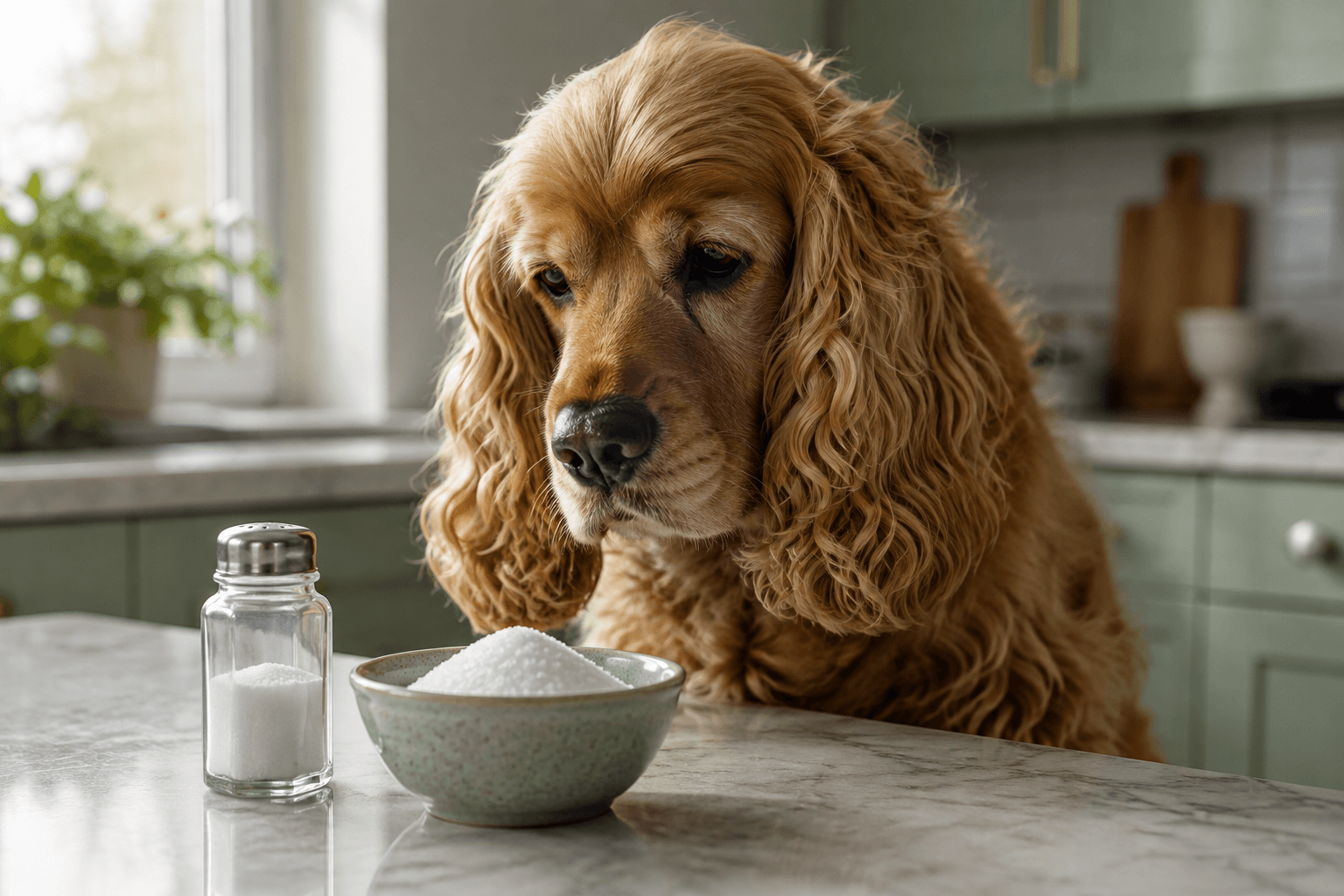
Unsafe in any real quantity, though the severity depends heavily on the amount. The MSD Veterinary Manual puts the lethal dose of salt for dogs at roughly 4g per kilogram of body weight, a threshold homemade salt dough, seawater and de-icing grit can reach fast. PDSA notes that true salt poisoning is otherwise rare, since a dog will usually drink water to cope with a smaller dose. A crisp or two is a very different risk from a mouthful of playdough or seawater.
If your dog has eaten salt
For a large ingestion, such as salt dough, a big mouthful of seawater or de-icing salt, ring your vet or the Animal PoisonLine straight away. Offer fresh water in small, frequent amounts rather than letting your dog gulp a large volume at once, and watch closely for vomiting, wobbliness or tremors. Out of hours, Vets Now runs emergency clinics across the UK, and the Animal PoisonLine is on 01202 509000.
- The detail
- How much salt is dangerous for a dog
- Salt dough, play dough and craft salt
- Seawater and the beach
- Is a salty snack like crisps actually dangerous?
- Table salt, stock cubes and cooking salt
- Never use salt to make a dog vomit
- My dog drank seawater last summer and seemed fine
- Better things to share
- Common questions
The detail
Salt poisoning is a genuine dose-dependent toxicity, not a food that is either fine or fatal. The MSD Veterinary Manual states that clinical signs of toxicosis can appear after ingestion of 2 to 3g of salt per kilogram of body weight, with the acute oral lethal dose at around 4g per kilogram, which is a real, calculable threshold rather than a vague warning.
Two very different everyday situations reach that threshold in practice. A dog let loose on a beach can drink far more seawater than it would ever choose to on its own, and the MSD Veterinary Manual specifically notes that dogs have developed hypernatraemia after swimming in the ocean, which is around 3.5% sodium, without access to fresh water. Homemade salt dough and salt-based craft play use similarly concentrated salt, cup for cup, worked directly into something a dog can swallow whole.
The everyday question is different and lower stakes. PDSA's guidance on pet hazards says salt poisoning is rare, largely because a dog that eats a bit too much salt from crisps or a salty snack will usually drink water to cope with it, and most healthy adult dogs handle an occasional salty crisp or chip without lasting harm. That is not permission to season a dog's dinner, since the sodium still adds up in a diet that should not need extra salt at all.
One further warning is worth repeating on its own, because it is an old habit that still does harm. Pet Poison Helpline states plainly that salt and salt water should never be used to induce vomiting in an animal, due to the risk of causing salt poisoning on top of whatever the dog swallowed in the first place.
How much salt is dangerous for a dog
| Signs of toxicosis begin | Around 2 to 3g of salt per kg of body weightMSD Veterinary Manual |
| Acute lethal dose | Around 4g of salt per kg of body weightMSD Veterinary Manual |
| Seawater sodium content | Around 3.5% |
| An occasional stolen crisp | Low risk for a healthy adult dogPDSA |
| Salt dough, seawater or de-icing salt | A genuine emergency risk |
Salt dough, play dough and craft salt
Homemade salt dough, the flour, water and salt mix used for craft ornaments, is one of the sources the MSD Veterinary Manual names directly, and it is genuinely one of the more dangerous everyday routes to salt poisoning because the salt is mixed in at a high concentration and the dough is soft and easy to swallow in a large lump.
Keep salt dough projects, whether fresh or drying, well out of reach while a dog is in the house, and treat a swallowed lump the same way you would any other significant salt ingestion: ring your vet rather than waiting to see.
Seawater and the beach
A day at the coast is the most common way a healthy dog reaches a genuinely dangerous salt dose, since seawater is around 3.5% sodium and a dog playing fetch in the surf swallows mouthfuls without really trying to drink. The MSD Veterinary Manual names exactly this scenario as a documented cause of hypernatraemia in dogs without fresh water access.
Bring a bowl and fresh water to every beach trip, offer it regularly, and discourage a dog from lapping at the waves. Signs after a beach visit typically include increased thirst, vomiting and unusual tiredness, and are worth a call to your vet rather than assuming it is just a big day out catching up with them.
Is a salty snack like crisps actually dangerous?
Generally, no, not in a small, occasional amount. PDSA's guidance notes that salt poisoning is rare precisely because a dog given too much salt from something like a crisp or a chip will usually just drink more water, and most healthy adult dogs cope with the odd stolen crisp without any lasting effect.
That is different from making salty snacks a habit. Crisps, salted nuts and similar foods add sodium to a diet that is already balanced without it, and a dog with an existing heart or kidney condition has far less headroom, so check with your vet before treating a dog with either condition to anything salty at all.
Table salt, stock cubes and cooking salt
A pinch of salt that falls into a dog's dinner while you are cooking is not the same risk as a lump of salt dough or a mouthful of seawater, but stock cubes, gravy granules and similar cooking ingredients are far more concentrated in sodium than most owners expect, and a dog that eats a whole cube or a spoonful of dry stock powder has had a real dose in a small volume.
Do not deliberately season a dog's food, and store stock cubes, salt tins and gravy granules somewhere a dog cannot get into on its own, the same way you would any concentrated ingredient.
Never use salt to make a dog vomit
This is an old piece of advice that still circulates and is genuinely dangerous. Pet Poison Helpline is explicit that salt and salt water should never be used to induce vomiting in an animal, because of the risk of causing salt poisoning on top of whatever the original problem was.
If a dog has eaten something it should not have, ring your vet or the Animal PoisonLine and let a professional decide whether and how to induce vomiting safely. There is no home remedy worth the risk salt carries here.
My dog drank seawater last summer and seemed fine
A dog that drank some seawater without visible symptoms on a previous trip likely had a smaller dose, more access to fresh water during the walk, or simply better luck than a dog that swallowed several mouthfuls chasing a ball into deeper water. The MSD Veterinary Manual's dose figures show a real range between the amount that causes signs and the amount that is lethal, so one uneventful beach day does not rule out a problem on the next one.
Bring fresh water every time regardless of past trips, and watch for increased thirst, vomiting, wobbliness or unusual tiredness in the hours after any beach visit, even the ones where a dog was never seen drinking from the sea.
Signs to watch for
- Excessive thirst
- Vomiting or diarrhoea
- Lethargy or unusual tiredness
- Stumbling gait or disorientation
- Tremors, seizures or collapse in severe cases
Common questions
My dog ate a few crisps. Should I worry?
Generally not for a healthy adult dog having a small amount once. PDSA notes that true salt poisoning is rare, since a dog will usually drink water to cope with a modest dose, but do not make it a habit.
How much salt is toxic to a dog?
The MSD Veterinary Manual puts the onset of signs at around 2 to 3g of salt per kilogram of body weight, with a lethal dose around 4g per kilogram. That threshold is reached fast by salt dough, seawater or de-icing salt, much more slowly by everyday salty snacks.
Is seawater dangerous for dogs to drink?
Yes, in a real quantity. Seawater is around 3.5% sodium, and the MSD Veterinary Manual specifically documents dogs developing salt poisoning after swimming in the sea without access to fresh water. Bring a water bowl to every beach trip.
Can salt dough ornaments poison a dog?
Yes. Salt dough is named directly by the MSD Veterinary Manual as a source of salt toxicosis, since the salt is mixed in at a high concentration and the dough is soft and easy to swallow in a large piece.
Should I use salt water to make my dog sick?
No, never. Pet Poison Helpline states that salt and salt water should never be used to induce vomiting in an animal, because of the real risk of causing salt poisoning on top of the original problem.
What are the signs of salt poisoning in dogs?
Pet Poison Helpline lists vomiting, diarrhoea, a stumbling gait, disorientation, tremors and seizures. Increased thirst and lethargy are usually the earliest signs, particularly after a beach visit or a swallowed lump of salt dough.
Do dogs with heart or kidney problems need to avoid salt more strictly?
Yes. A dog with an existing heart or kidney condition has far less headroom for extra sodium, so check with your vet before giving any salty snack, even an occasional one, to a dog with either diagnosis.