
Can dogs eat prawn crackers?
Updated 7 August 2026
Best avoided. Prawn crackers are not toxic to dogs, but they are fried starch with very little actual prawn in them, and the fat load sits in the same danger zone PDSA warns about for pancreatitis. A dropped cracker off the takeaway table is not an emergency. Sharing the bag is where the trouble starts.
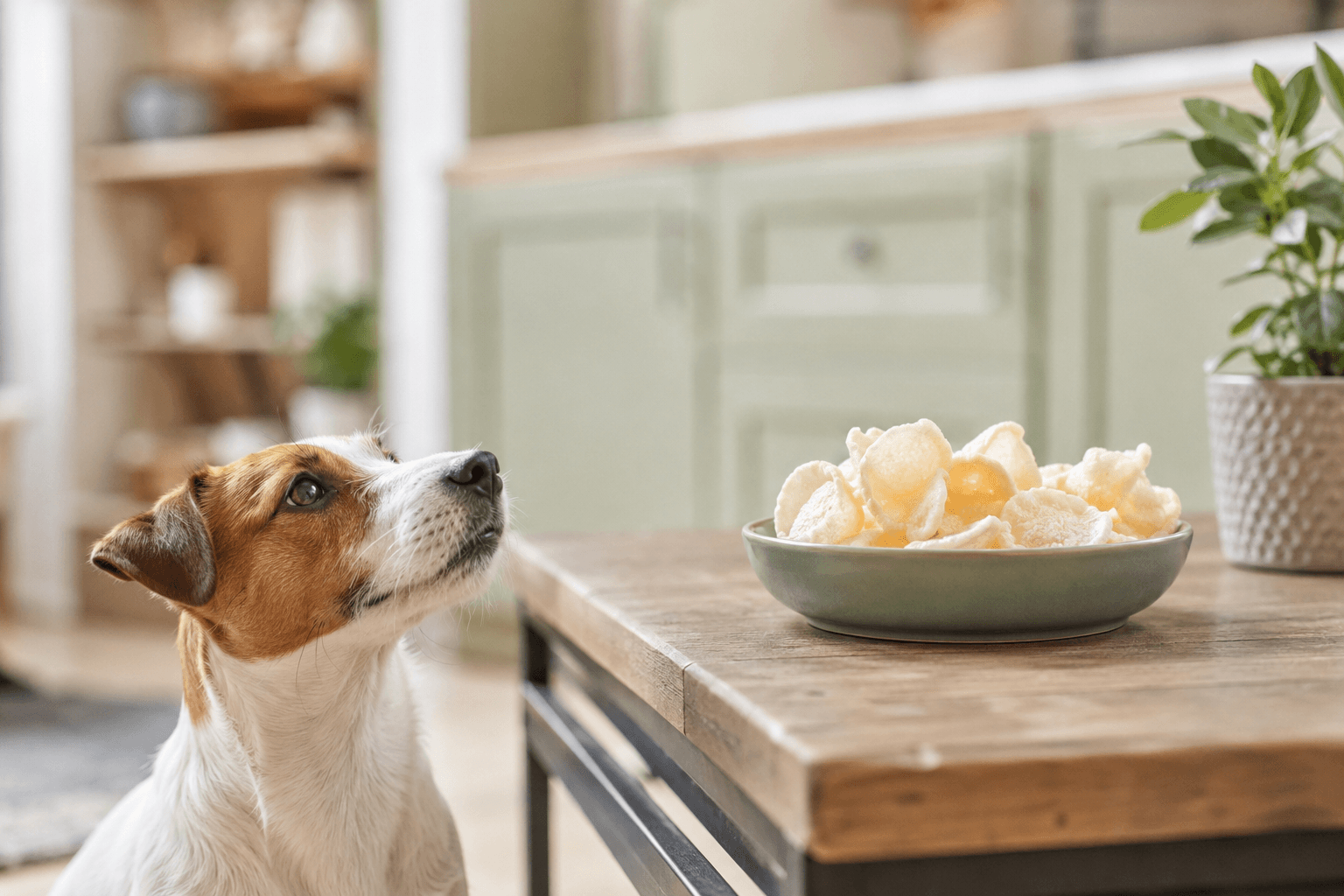
The detail
A prawn cracker is mostly tapioca starch, fried in oil, with prawn making up a small fraction of the recipe rather than the main ingredient the name suggests. Sharwood's lists prawn at 18 percent of its crackers, and Marks & Spencer's version at 20 percent, with tapioca starch, oil, sugar and salt making up the rest. The shellfish on the packet is doing more marketing than nutrition, which matters for a dog because it means there is very little actual protein in a cracker to offset the starch and oil.
The frying is the real issue for a dog. A typical UK supermarket brand runs to around 500 to 520 kcal and 27g of fat per 100g, which is close to a third fat by weight, and PDSA's pancreatitis guidance names high-fat foods such as pork, cheese and butter as examples of what raises a dog's risk of the condition. A fried starch snack sits comfortably in that same bracket, and unlike a lean protein treat it brings none of the nutritional upside to balance the fat against.
Salt adds a second, smaller concern on top of the fat. Typical brands carry somewhere around 1.5 to 1.7g of salt per 100g, and the Pet Poison Helpline lists salt among the substances that can cause vomiting, diarrhoea and, at a high enough dose, tremors or seizures in pets. A dog would need to eat a genuinely large amount of crackers to reach a dangerous dose of salt, but the fat gets there first in most real-world incidents, well before the salt becomes the main concern. Small dogs reach both thresholds faster than large ones simply because their daily calorie and sodium budgets are smaller to begin with.
None of this makes prawn crackers dangerous in the way onion or chocolate are. There is no single named toxin in a plain cracker, which is why this page sits in amber rather than red, but there is also nothing in them a dog needs, which is why the sensible answer is to keep the bowl on the table rather than the floor. A dog that has developed a taste for the takeaway box is one worth retraining onto a plainer snack sooner rather than later, before Friday-night crackers become a habit that shows up on the scales.
What is in a typical UK bag of prawn crackers
| Prawn content | Around 8 to 20 percent, depending on the brandMost of the packet is tapioca starch, oil and seasoning |
| Fat | Around 27g per 100gClose to a third fat by weight, from the frying oil |
| Calories | Around 500 to 520 kcal per 100g |
| Carbohydrate | Roughly 60g per 100gMostly tapioca starch, not protein |
| Salt | Roughly 1.5 to 1.7g per 100gVaries by brand and flavour |
| Anything toxic to dogs | Nothing in a plain crackerDips and flavoured varieties can add onion or garlic, which is toxic |
How much is sensible
| Dog size | Sensible amount |
|---|---|
| Small (under 10kg)Chihuahua, Jack Russell | Best avoided; if given, one or two off the floor, rarely |
| Medium (10 to 25kg)Cocker spaniel, border collie | Best avoided; if given, two or three, rarely |
| Large (over 25kg)Labrador, German shepherd | Best avoided; if given, a small handful, rarely |
| Overweight dogs, or any dog with pancreatitis history | None. The fat content is exactly what their diet should avoid |
Prawn crackers compared with plain prawns
These are two different foods wearing the same name. Plain cooked, peeled prawns are a lean, low-fat treat, while a prawn cracker is fried starch that happens to carry a small percentage of prawn among the tapioca and oil.
If your dog is after the seafood taste, a plain cooked prawn does the job with a fraction of the fat and none of the fried oil. See our prawns page for portion guidance on the real thing rather than the cracker version of it.
It is worth remembering the two are not interchangeable in a recipe either. A dog that tolerates plain prawns well will not necessarily tolerate a fried snack in the same way, because the fat and starch, not the shellfish, are what usually cause the trouble.
Prawn cracker dips and sauces
Sweet chilli, soy and prawn cocktail dips add sugar and salt on top of an already fatty snack, and some soy-based dips and dipping sauces include garlic or onion for flavour. Battersea lists the onion family as toxic to dogs whether it is dry, raw or cooked, so check any dip before a cracker gets dunked in it anywhere near your dog.
A cracker on its own is a far smaller worry than a cracker dragged through a shared dip, so keep the dip pot well away from a begging nose during a takeaway.
Curry sauce from the same takeaway carries its own onion and spice load on top of whatever the cracker brings, so treat a stolen dip-laden cracker as worth watching more closely than a plain one off the floor.
My dog ate a whole bag of prawn crackers
A full sharing bag from a Chinese takeaway is a genuine dose of fat and salt rather than a dropped snack. Watch for vomiting, diarrhoea, lethargy or a painful, hunched posture over the next day or two, since those signs can point to pancreatitis rather than a simple stomach upset.
Put water down, withhold any more food for a few hours, and ring your vet if your dog seems unwell, is a small breed, or has had pancreatitis before. Have the approximate bag size ready if they ask.
Symptoms of pancreatitis do not always show up straight away, so a dog that seems fine on the night is not automatically in the clear. Keep an eye on appetite and stools for a couple of days after a large incident.
Prawn crackers and dogs with pancreatitis
Skip them entirely for a dog that has had pancreatitis in the past. PDSA names high-fat foods among the known triggers of the condition, and a fried snack close to a third fat by weight is exactly the kind of food a pancreatitis diet is built to avoid.
A carrot stick or a plain rice cake gives roughly the same crunch without the frying oil, and either is a safer answer to a begging face at the takeaway table than the crackers themselves.
A dog with no history of pancreatitis is not immune either, since a single very fatty meal can be enough to trigger a first episode. Treating prawn crackers as an every-time-no rather than a sometimes-food is the simpler rule to keep to.
Can puppies eat prawn crackers?
Better not to. A puppy's stomach is more easily upset than an adult dog's, and the fat and salt in a fried cracker are a bigger relative dose for a small, growing body.
There is nothing in a prawn cracker a growing puppy needs, so there is no real upside to weigh against the risk. Keep the bowl well out of paw's reach until dinner is over.
A puppy that has already had a taste and shows no ill effects has simply been lucky rather than proving the food is fine. The safer habit is to keep fried snacks off the menu entirely until adulthood, and even then treat them as an occasional lapse rather than a regular share.
Signs to watch for
- Vomiting or diarrhoea after a large or fatty portion
- Lethargy or a painful, hunched posture, which can point to pancreatitis
- Excessive thirst after a salty portion
Common questions
Can dogs eat prawn crackers?
Not as a deliberate treat. They are fried starch with very little actual prawn in them, high in fat and salt with nothing a dog needs. An occasional dropped cracker off the floor is not an emergency.
Are prawn crackers toxic to dogs?
No, not in the way onion or chocolate are. The concern is fat and salt rather than a specific poison, so the risk is about quantity and how fatty the individual dog's stomach is, not the ingredient itself.
My dog ate a whole bag of prawn crackers. What should I do?
Watch for vomiting, diarrhoea or a painful, hunched posture over the next day or two, which can point to pancreatitis. Ring your vet if any of those appear, sooner for a small dog or one with a history of pancreatitis.
Are prawn crackers better than crisps for dogs?
Not really, they carry a similar salt and fat load in a different shape. Neither makes a good deliberate treat, and a carrot stick beats both on every count.
Can dogs eat prawn crackers with sweet chilli dip?
Skip the dip. It adds sugar and salt, and some dips and sauces include garlic or onion, which is toxic to dogs. The cracker alone is the smaller of the two problems.
Can puppies eat prawn crackers?
Better not to. Puppies have more sensitive stomachs, and the fat and salt are a bigger relative dose for a small body. There is nothing in a prawn cracker a puppy needs.