
Can dogs eat beef?
Updated 7 August 2026
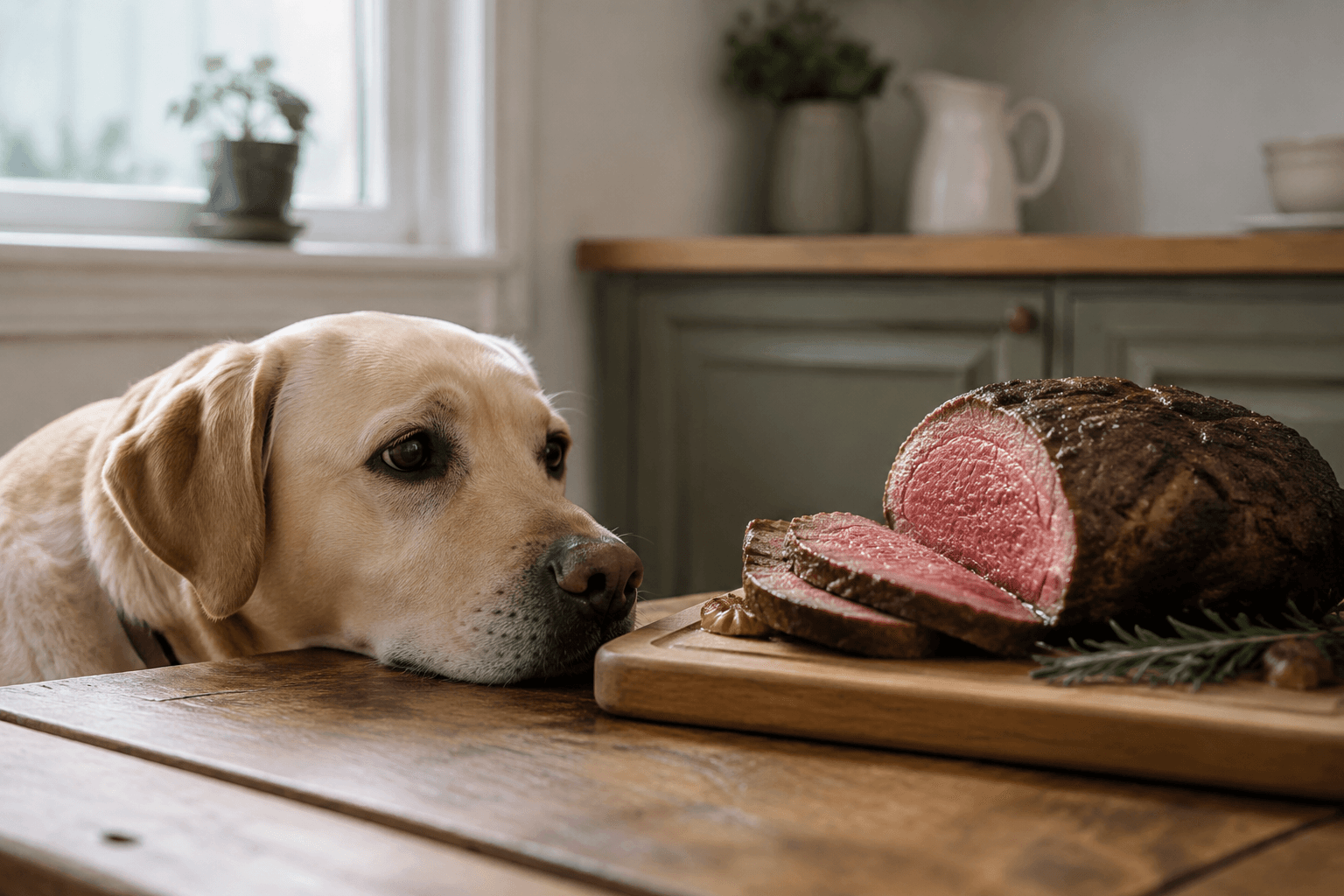
Yes. Plain cooked beef is safe for dogs and already a common ingredient in complete dog foods. Trim the fat, leave out the seasoning, and cook it through rather than serving it raw. Beef is also one of the more common food allergens in dogs, so a new itch or upset stomach after a diet change is worth noting.
The detail
Lean cooked beef is mostly protein and water, with the fat content depending heavily on the cut and how it was minced or trimmed. Trimmed steak or extra-lean mince can run as low as 5 to 10g of fat per 100g, while a standard mince or a fattier cut can carry 20g or more for the same weight, so the single word 'beef' covers a fairly wide range depending on exactly what is on the label. Cooked lean beef also carries around 25g of protein per 100g, which is why it turns up as a named ingredient on so many complete dog food bags.
The Kennel Club's healthy treats guidance recommends plain cooked meat, cut small and served with no added seasoning or oil, as an ideal training reward, and while its example is chicken breast, the same principle applies just as well to beef. A small cube of lean cooked beef, cooled and unseasoned, ticks the same boxes as the chicken it names directly, and many dogs rate it just as highly.
Fat is the main thing to watch rather than the meat itself. PDSA's pancreatitis guidance names high-fat foods among the known triggers of the condition, and a fatty mince or the trimmings cut off a joint sit much closer to that category than a lean, well-trimmed cut of steak does. Choosing the leaner cut, or draining a pan of mince thoroughly before serving, is a simple way to keep beef on the safer side of that line, and it costs nothing beyond a minute at the hob.
Beef is also one of the most common proteins dogs develop a reaction to over time. VCA Animal Hospitals lists beef alongside dairy, chicken, egg, soy and wheat gluten as common food allergens, with itchy skin, sore paws or digestive upset the usual signs, and any of those appearing after a diet change is worth mentioning to your vet rather than assuming it is unrelated. A dog that has eaten beef for years without a problem can still develop a reaction later, since food allergies typically build up after repeated exposure rather than showing on the first bowl. This is different from a one-off stomach upset after a fatty portion, which usually settles on its own within a day or two.
Beef by cut and preparation
| Lean cooked steak or trimmed mince | About 5 to 10g fat per 100gThe better choice for regular treats |
| Standard or fatty mince | 20g fat per 100g or moreCloser to the level PDSA links with pancreatitis |
| Raw beef, any cut | Can carry E. coli or salmonellaPDSA does not recommend raw meat, cooked or uncooked bones included |
| Gravy, stock cubes, seasoned beef | Check for onion powderA common ingredient in UK gravy granules |
| Beef jerky or biltong | Check for added salt, garlic or chilliPlain dog-specific jerky is the safer version of the same snack |
| Anything toxic to dogs | Nothing in the plain, cooked meatFat, seasoning and raw bacterial risk are the separate issues to manage |
How much is sensible
| Dog size | Sensible amount |
|---|---|
| Small (under 10kg)Chihuahua, Jack Russell | A couple of small cubes of lean cooked beef, a few times a week |
| Medium (10 to 25kg)Cocker spaniel, border collie | A small handful, around 40g, cooked and trimmed of fat |
| Large (over 25kg)Labrador, German shepherd | Up to about 75g, cooked and trimmed of fat |
| Overweight dogs, or any dog with pancreatitis history | Lean cuts only, trimmed hard, and a smaller portion than the table suggests |
Raw beef and beef mince
Raw beef carries the same bacterial risk as any raw meat. PDSA's raw feeding guidance says raw food can contain E. coli, salmonella and other pathogens that cooking would normally destroy, and that it does not recommend feeding pets bones, cooked or uncooked, where bone is part of the cut.
If your dog steals raw mince or a raw steak off the counter, one incident is unlikely to cause serious harm in a healthy adult dog, but watch for vomiting or diarrhoea over the next couple of days and ring your vet if it does not settle on its own.
Households that feed a commercial raw diet are following a different process, since PDSA notes that commercially prepared raw food meeting recognised manufacturing standards carries lower hygiene risks than a homemade raw joint left out on the counter.
Beef fat, dripping and gristle
Trim it off before sharing. The fat and gristle round the edge of a joint, or the dripping saved from a roast, is concentrated fat, and PDSA names high-fat foods among the known pancreatitis triggers.
Christmas and Sunday roasts are the usual route in, when trimmings go into a bin the dog can reach or get handed over as a reward for sitting quietly. Keep the fat for a bin with a secure lid rather than the dog bowl.
A jar of dripping left to cool on the side is a particular temptation for a dog with a good nose, so treat it the same way you would a block of butter and keep it well out of reach until it goes in the bin.
Beef in gravy or stock cubes
Check the ingredients before sharing gravy over a dinner. Many UK gravy granules and stock cubes include onion powder, and Battersea lists the onion family as toxic to dogs whether it is dry, raw or cooked.
Plain beef with no gravy is the safer share. If your dog does get into a gravy boat, the amount of onion powder in a typical serving is unlikely to be dangerous on its own, but a bigger portion or a small dog eating it is worth a call to your vet.
Our gravy page covers this in more depth, including which UK brands tend to carry onion and which are plainer, if gravy is a regular part of your dog's Sunday routine.
Beef jerky and biltong
Dried beef snacks concentrate salt as part of the curing process, and some UK and South African-style biltong is further seasoned with garlic, chilli or onion. Read the ingredients rather than assuming a meat snack is automatically the safer option.
Plain, unseasoned dried beef treats made specifically for dogs are a different product from human jerky or biltong, and are the better choice if you want to offer a chewy meat snack.
A small piece of plain human jerky, with nothing but beef and salt in it, is unlikely to cause more than thirst in a healthy adult dog. A seasoned or spiced version is the one worth checking twice before it becomes a car-journey treat.
Beef allergies in dogs
Beef sits alongside dairy and chicken as one of the proteins VCA Animal Hospitals names most often in canine food allergies. Signs are usually itchy skin, sore paws or ears, or ongoing digestive upset, rather than a sudden dramatic reaction the first time it is eaten.
A suspected allergy needs a vet-guided elimination diet to confirm properly, since guessing at home rarely gives a reliable answer. If your dog has never had beef before, introduce a small amount and watch for a reaction over the following days rather than serving a full portion straight away.
A dog diagnosed with a beef allergy usually needs beef removed from treats and chews as well as meals, since even a small daily amount in a training treat can keep symptoms going. Read treat labels with the same care as the main food.
Signs to watch for
- Vomiting or diarrhoea after a fatty portion or raw beef
- Lethargy or a painful, hunched posture, which can point to pancreatitis
- Itchy skin, sore paws or ears developing over time, which can point to a food allergy
Common questions
Can dogs eat raw beef?
It carries a bacterial risk. PDSA's raw feeding guidance says raw meat can contain E. coli and salmonella, pathogens that cooking would normally destroy, so cooked beef is the safer everyday choice.
Is beef mince good for dogs?
Lean mince, cooked and drained of fat, is fine as an occasional protein source. Standard or fatty mince carries a lot more fat, so check the label or ask your butcher for a leaner cut.
Can dogs eat beef jerky or biltong?
Only if it is plain. Human jerky and biltong are often heavily salted and sometimes seasoned with garlic or chilli, so a plain dog treat made for the purpose is the safer version.
Is beef bad for dogs with allergies?
It can be. VCA Animal Hospitals lists beef among the most common food allergens in dogs, alongside dairy and chicken. Itchy skin or digestive upset after a diet change is worth raising with your vet.
Can dogs eat beef gravy?
Check the label first. Many UK gravy granules contain onion powder, which Battersea lists as toxic to dogs, so plain beef without the gravy is the safer share.
Can dogs eat beef fat or dripping?
Better not to. PDSA names high-fat foods among the known triggers of pancreatitis, and beef fat and dripping are a concentrated version of exactly that.
Can puppies eat beef?
Yes, cooked, lean and cut small, in modest amounts. A puppy's complete food already covers its nutritional needs, so treat beef as an occasional extra rather than a meal replacement.