
Can dogs eat liver?
Updated 7 August 2026
Yes, in moderation. Cooked liver is a genuinely nutritious treat and the base of most liver training treats, but it is also one of the most concentrated dietary sources of vitamin A. Vitamin A poisoning most commonly follows raw liver, cod liver oil or rich supplements fed over weeks to months, not one meal. Keep it occasional rather than daily.
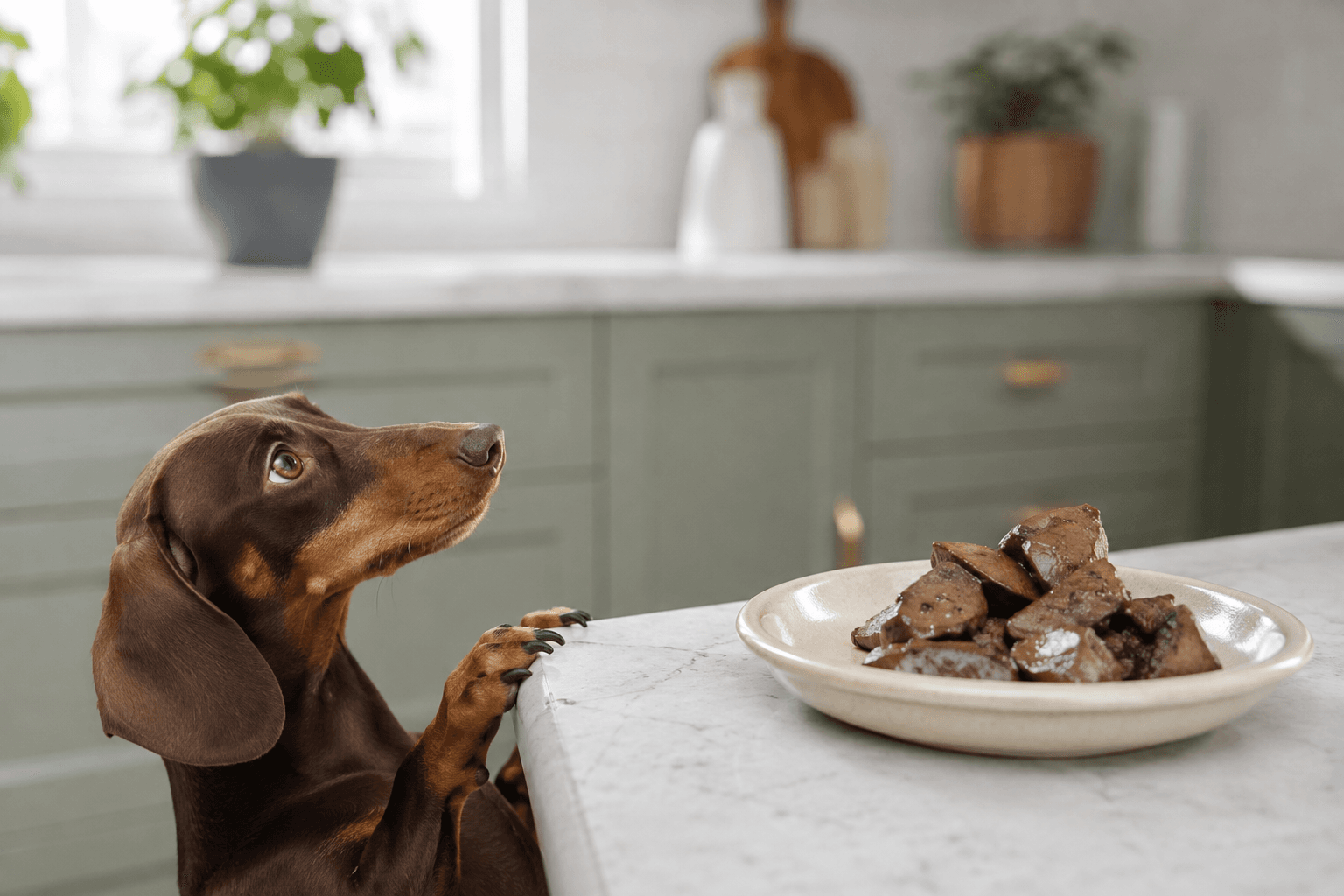
The detail
Liver is dense with nutrition in a way ordinary muscle meat is not. It carries a lot of protein and iron, and vitamin A sits at the centre of both its benefits and its risk, since the liver is where an animal stores that vitamin rather than where it gets used.
That storage role is exactly why liver toxicity exists. VCA Animal Hospitals says vitamin A poisoning most commonly occurs when pets are fed raw liver, cod liver oil, or other supplements rich in vitamin A over several weeks to months, rather than from a single generous serving.
Cooking does not remove the vitamin A, so a cooked liver treat carries the same concentration as a raw one. What changes the risk is quantity and frequency: a small piece once or twice a week is a very different diet from liver served daily or used as the main ingredient in homemade treats.
None of this makes liver worth avoiding. It is a genuinely useful, palatable treat in the amounts most owners already use, training-sized pieces a few times a week. The caution applies mainly to raw-fed diets that lean on liver as a staple, and to owners who free-feed liver treats without tracking how much adds up.
Why moderation matters with liver
| Vitamin A | Far more concentrated than in muscle meatVCA: toxicity typically follows weeks to months of overfeeding |
| Cooking | Does not reduce vitamin A contentA cooked treat carries the same concentration as raw |
| Sensible frequency | Once or twice a week, small piecesVet Help Direct: regular large amounts are the common cause of toxicity |
| Raw liver specifically | Adds a bacteria and parasite risk on topPDSA: raw meat holds pathogens cooking would kill |
How much is sensible
| Dog size | Sensible amount |
|---|---|
| Small (under 10kg)Chihuahua, Jack Russell | A piece about the size of a fingernail, once or twice a week |
| Medium (10 to 25kg)Cocker spaniel, border collie | A couple of small cubes, once or twice a week |
| Large (over 25kg)Labrador, German shepherd | A small handful of cubes, once or twice a week |
| Overweight or diabetic dogs | Treat it as an occasional extra and count the calories within their daily total |
Raw liver
Raw liver carries the vitamin A risk in its most concentrated, least cooked-down form, and PDSA's raw feeding guidance warns that raw meat holds bacteria and parasites that cooking would normally kill. That applies to offal as much as to muscle meat.
Raw feeders who use liver as a regular staple are the group VCA points to when it describes vitamin A poisoning developing over weeks to months. If you feed a raw diet, keep liver to a small proportion rather than treating it as a main ingredient.
Liver treats and freeze-dried liver
Freeze-dried liver treats are popular for training precisely because dogs find them so rewarding, which makes them easy to overfeed without noticing. A dog working through a full session of recall practice might get through more liver in twenty minutes than you'd otherwise feed in a week.
Break training treats into smaller pieces so each repetition uses less, and factor them into the day's food rather than treating them as free extras. Vet Help Direct names regularly being fed large amounts of liver as a common cause of the toxicity, and a pocket of training treats used daily can add up faster than a Sunday liver dinner.
Can dogs eat liver every day?
Not as a matter of routine. VCA's description of vitamin A poisoning is built on liver fed over weeks to months, so an occasional piece is a different situation from a daily one, and daily liver, even in small amounts, is the pattern that tips toward that chronic end.
A couple of times a week, in the small amounts described above, sits comfortably away from that risk. If liver-based treats are a daily habit in your house, that is worth cutting back rather than a reason to panic about any single day.
Liver for puppies
A growing skeleton is more sensitive to the bone changes that chronic vitamin A excess can cause, since VCA lists excessive bone development and painful or limited movement among the effects of over-supplementation. Puppy food is already balanced for growth, so liver on top of it should stay occasional and small.
A pea-sized piece of cooked liver as a training treat now and then is fine. Building a puppy's regular diet around liver, or any single organ meat, is not something either source recommends.
Chicken liver vs beef liver
Both are genuinely nutritious and both carry the same underlying vitamin A story; neither source we cite draws a sharp line between species on how much is safe. What matters more than which animal the liver came from is how often it appears in your dog's week and how big the piece is.
If you swap between chicken and beef liver as different treats, there's no need to track them separately, just keep the combined total to the small, occasional amounts described in the portions above.
Signs to watch for
- Poor coat, dry or flaky skin developing over weeks of a liver-heavy diet
- Stiff, painful joints or reluctance to move, linked to bone changes
- Weight loss and lethargy alongside the above
Common questions
Is liver bad for dogs?
No, not in the small, occasional amounts most owners already feed. The risk is vitamin A toxicity, which is linked to raw liver or rich supplements fed over weeks to months, not an occasional piece.
Can dogs eat liver every day?
It's better not to make it a daily habit. Vitamin A poisoning is linked to liver fed regularly over weeks to months, so once or twice a week is a safer pattern.
Can dogs eat raw liver?
Cooked is the better choice. PDSA's raw feeding guidance warns that raw meat holds bacteria and parasites that cooking would normally kill, and raw liver is also the form most linked to vitamin A poisoning.
How much liver can I give my dog?
A small piece, roughly a fingernail to a couple of cubes depending on their size, once or twice a week. Scale training treats down too if liver-based ones are a regular feature of your sessions.
Can puppies eat liver?
A pea-sized piece occasionally is fine. Their bones are more sensitive to the changes chronic vitamin A excess can cause, so keep liver small and occasional rather than a regular addition.
What are the signs of vitamin A toxicity in dogs?
VCA Animal Hospitals lists poor coat, dry skin, weight loss, constipation, excessive bone development and painful or limited movement, developing over weeks to months of overfeeding. These build up gradually rather than appearing after one meal.
Are liver treats safe for training?
Yes, used in the small pieces training normally involves. Break treats up small and count them as part of your dog's daily food rather than an unlimited extra.