
Can dogs eat turkey?
Updated 7 August 2026
Yes. Plain, cooked turkey with the skin and bones removed is safe for dogs and sits in most complete dog foods already. PDSA includes boneless white turkey meat in its own dog-safe Christmas dinner recipe, plain and without gravy, glaze or seasoning. The two genuine risks are the fatty skin, which is linked to pancreatitis, and cooked bones, which splinter.
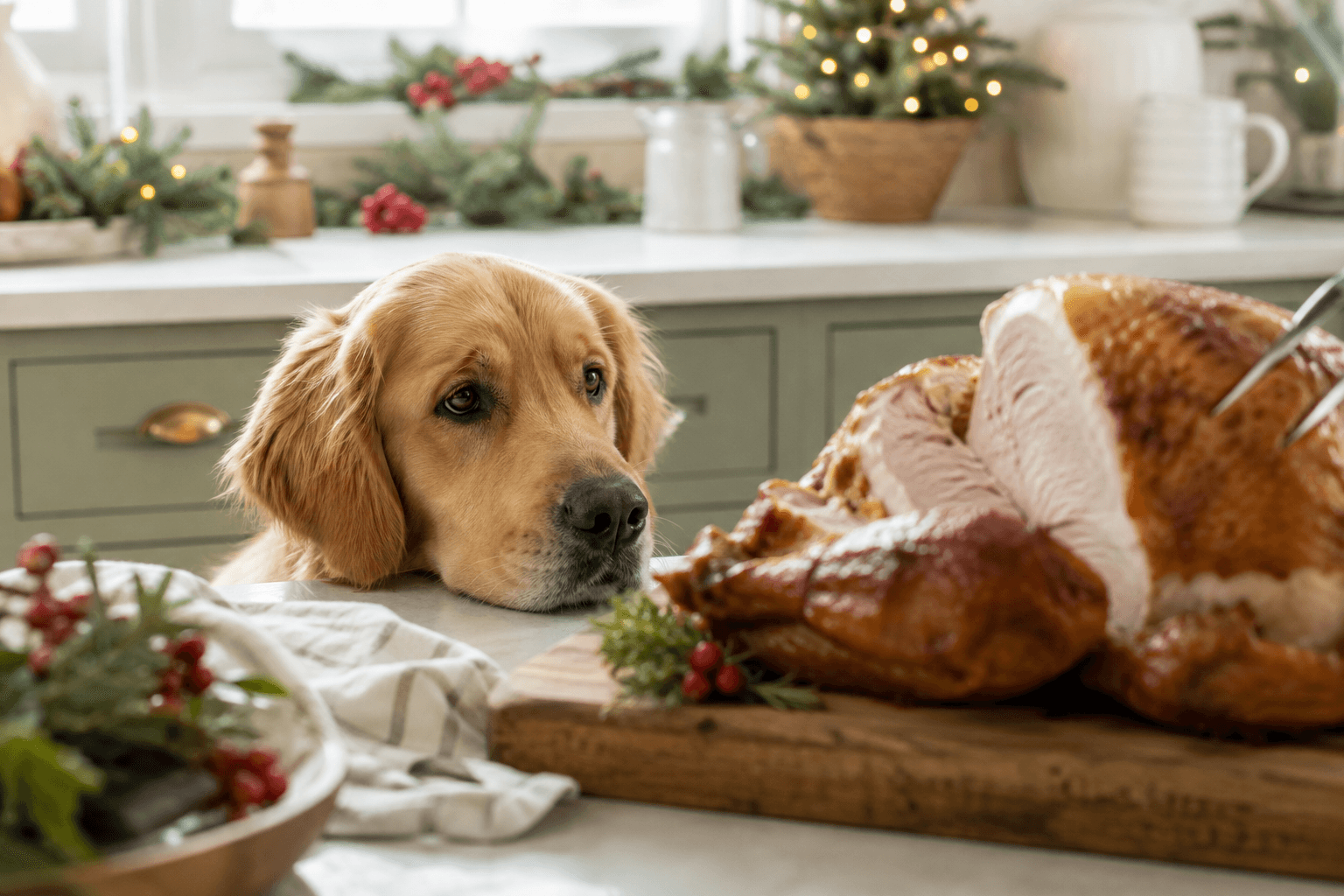
The detail
Turkey breast is a lean, high-protein meat, similar in profile to chicken breast, which is why it turns up in bland-diet advice and in many complete dog foods as the named protein. Skinless white meat carries very little fat compared with the dark meat and skin, and that gap in fat is what decides most of this page's advice.
Dark meat and skin are a different food nutritionally. The skin especially is a layer of rendered fat, often basted, salted or rubbed with herbs and garlic for a roast, and Vets Now names foods high in fat as one of the most common triggers behind pancreatitis in dogs.
Bones are the other half of the story, and they are not a fat problem, they are a shape problem. Cooking dries bone out and makes it brittle, and the Kennel Club warns that eating turkey, chicken or goose carcasses can leave bone fragments large enough to cause an obstruction.
None of this makes turkey itself risky. A spoonful of plain, cooked, skinless breast is one of the simplest shares on this list, and the real caution is about three things that usually arrive alongside it at Christmas: the skin, the bones and everything else on the plate.
Turkey: what's actually in it
| Skinless breast, cooked | Lean, high protein, low fatThe part most complete dog foods already use |
| Skin | Concentrated fatVet Help Direct: very high in fat, should not be given |
| Cooked bone, any part | Not safe in any amountKennel Club: carcasses can leave fragments large enough to obstruct |
| Gravy, stuffing, pigs in blankets | Separate risks eachOnion, salt and sausage-meat fat, not a turkey problem |
How much is sensible
| Dog size | Sensible amount |
|---|---|
| Small (under 10kg)Chihuahua, Jack Russell | About 20g of plain, skinless breast, chopped |
| Medium (10 to 25kg)Cocker spaniel, border collie | About 40g, a few times a week |
| Large (over 25kg)Labrador, German shepherd | About 60g, a few times a week |
| Overweight or diabetic dogs | Breast only, skin off, and take the same calories off their usual dinner |
Turkey skin
Take it off. Skin is where the fat concentrates, and Vet Help Direct's Christmas advice says it is very high in fat and should not be given to your dog, even as a small piece.
Vets Now names foods high in fat as one of the most common triggers for pancreatitis, an inflamed and swollen pancreas that causes vomiting, loss of appetite and abdominal pain. A basted, salted roast skin is a worse version of the same problem, since the fat carries whatever seasoning sat on top of it.
Turkey bones
Never give cooked turkey bones. The Kennel Club warns that eating turkey, chicken or goose carcasses can leave bone fragments large enough to cause an obstruction, and cooking is exactly what makes a bone brittle enough to shatter that way.
Keep the carcass, the wing tips and the neck out of reach once the meat is off, and put them straight in a bin your dog cannot get into. If your dog gets to a bone before you notice, watch for gagging or drooling in the minutes after and ring your vet, since fragments can cause damage lower down over the following days even if the first few hours look fine.
Turkey with gravy, stuffing or pigs in blankets
The turkey is rarely the problem on Christmas Day; everything served with it is. Gravy is often thickened with the roasting juices and can carry onion, and PDSA's Christmas guidance treats even a few pigs in blankets as a serious calorie load for a small dog, roughly the equivalent of a whole festive dinner for a person.
Read our separate pages on gravy and stuffing before you plate up a share, since both carry their own onion and salt risk that has nothing to do with the turkey itself. Serve the meat on its own plate, cooked and cooled, rather than spooning it straight out of the roasting tin.
Raw turkey mince
The same rules apply as any raw poultry. PDSA's raw feeding guidance says raw meat holds bacteria and parasites that cooking would normally kill, and recommends a commercially prepared raw diet over a home-made one if you want to feed raw at all.
A raw turkey mince bought for a stir-fry is not the same product as a formulated raw diet, and it is not intended for a dog's bowl. Cook it through before it goes anywhere near your dog, the same as you would for yourself.
Turkey dinner leftovers and Boxing Day
Leftover turkey is fine reheated once and served plain, but a plateful is still food, not a bonus. Vets Now's Christmas advice suggests offering your dog the same amount as always rather than topping up their normal meal with festive extras.
If your dog has already had a generous helping of skin, gravy or stuffing earlier in the day, skip the turkey share that evening rather than adding it on top. Watch for the pancreatitis signs below over the next day or two if the day's eating went further than planned.
Smoked or deli turkey slices
Cured and smoked turkey slices are salted heavily to preserve them, which puts far more sodium into a slice than the same weight of home-roasted breast carries. Treat deli turkey as an occasional taste rather than a regular share, and skip it altogether for a dog on a low-salt diet for heart or kidney reasons.
A slice or two off a sandwich is not an emergency. A dog that gets into a whole multipack of deli-style turkey has eaten a genuinely large amount of salt in one sitting, and the Pet Poison Helpline lists vomiting, tremors and seizures among the signs of salt overdose, so that scale of amount is worth a call to your vet.
Signs to watch for
- Vomiting, loss of appetite or a hunched, painful stance after fatty skin or gravy, which point at pancreatitis
- Gagging, drooling or pawing at the mouth after cooked bone, which suggests something is stuck
- No stools, straining or vomiting over the following days after swallowed bone fragments
Common questions
Can dogs eat turkey skin?
No, skip it. Vet Help Direct's Christmas advice says turkey skin is very high in fat and should not be given to dogs, and Vets Now names high-fat foods as a common trigger for pancreatitis.
Can dogs eat turkey bones?
No, never cooked ones. The Kennel Club warns that turkey carcasses can leave bone fragments large enough to cause an obstruction, so keep the whole carcass out of reach once the meat is off.
Can dogs eat turkey mince?
Yes, once it is cooked through with nothing added. Raw turkey mince carries the same bacteria risk PDSA describes for any raw meat, so cook it the same way you would for yourself.
How much turkey can a dog eat at Christmas?
PDSA's guidance keeps treats and shared food under 10 percent of a dog's daily intake, so a few cubes of plain breast is plenty. Reduce their normal dinner slightly if they have already had a generous share.
Can dogs eat turkey gravy or stuffing?
Only if you check what's in them first, since both commonly carry onion, which is toxic to dogs. Read our separate gravy and stuffing pages before serving either.
Is turkey good for dogs with an upset stomach?
Plain, boiled, skinless turkey is a reasonable bland-diet protein, similar to the chicken most vets suggest. Ring your vet for how much to feed and for how long before going back to normal food.
Can puppies eat turkey?
Yes, a small piece of plain, cooked, skinless breast is fine. Their complete puppy food already covers what they need, so keep any share small and occasional.