
Can dogs eat pesto?
Updated 7 August 2026
No. Nearly every pesto, jarred or homemade, is built on garlic, and the MSD Veterinary Manual lists garlic as more toxic to dogs than onion, gram for gram. On top of that, pesto is dense in fat from the oil, pine nuts or cashews, and salt from the parmesan, which is its own route to an upset stomach or pancreatitis.
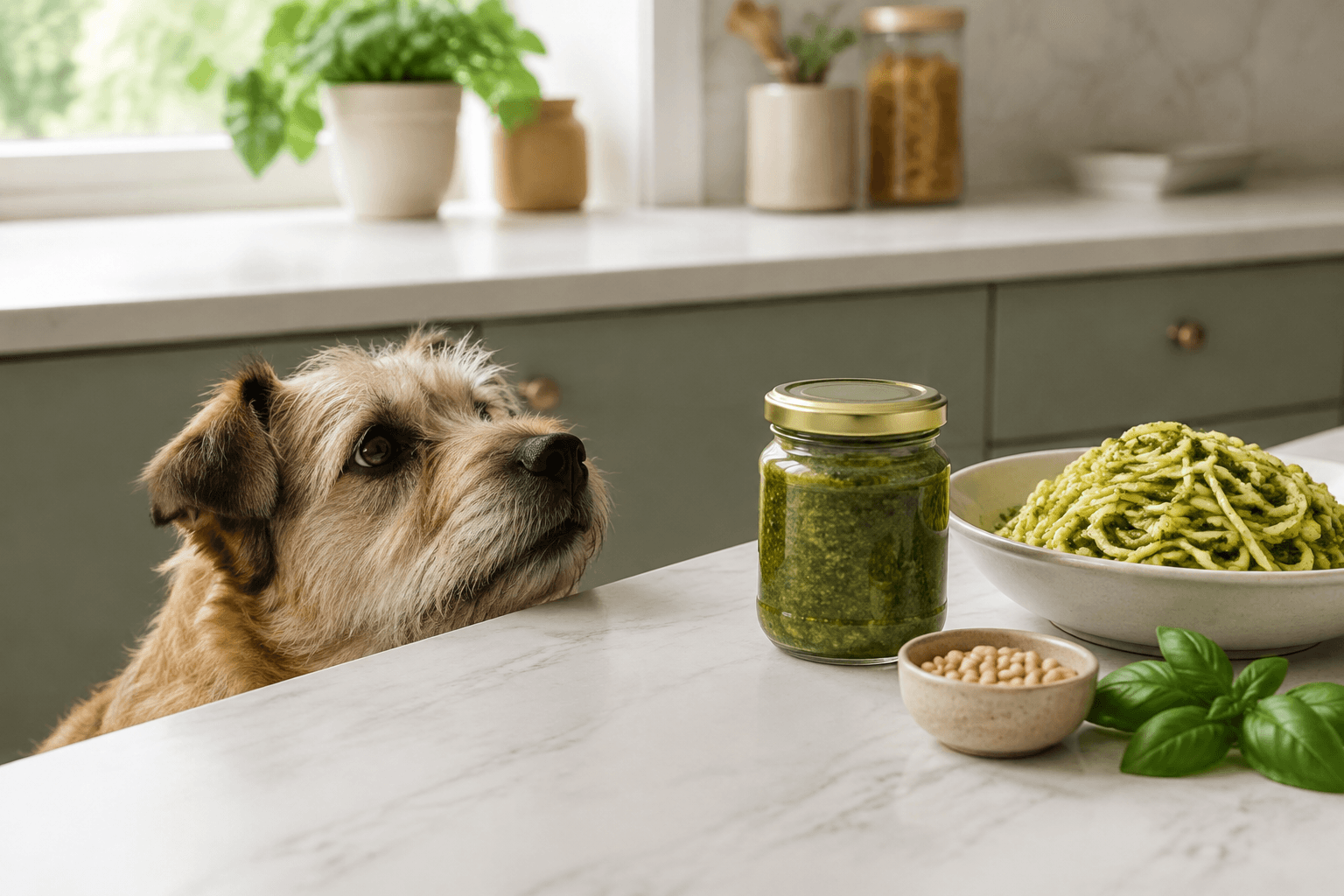
If your dog has eaten pesto
For a small lick, put water down and watch for vomiting, diarrhoea, pale gums or dark urine over the next few days, since garlic's effects can be delayed. For a larger amount, ring your vet now with your dog's weight and an estimate of how much pesto was eaten. Out of hours, Vets Now runs emergency clinics across the UK, and the Animal PoisonLine is on 01202 509000.
The detail
A basil pesto is basil, garlic, pine nuts or cashews, parmesan, olive oil and salt blended into a paste, and almost none of that list is neutral for a dog. Basil itself is not a problem, but it is a small part of what is actually in the jar.
Garlic is the sharpest risk. The MSD Veterinary Manual states that garlic is three to five times more toxic to dogs than onion, and that in dogs, ingesting 15 to 30g of raw onion per kilogram of body weight has produced clinical signs, a threshold garlic reaches at a much smaller dose.
The rest of the jar is a slower-burning problem. A tablespoon of pesto is close to pure fat and salt once you set the garlic aside, and PDSA names cheese among the high-fat foods that raise a dog's risk of pancreatitis, a painful and potentially serious illness.
What is in a typical jar of pesto
| Garlic | Present in almost every recipeMSD Veterinary Manual: garlic is 3 to 5 times more toxic to dogs than onion |
| Fat | Roughly 40 to 50g per 100gFrom the oil, pine nuts or cashews, and parmesan |
| Salt | Roughly 1.5 to 2g per 100gLargely from the parmesan |
| A single stolen forkful | Unlikely to be an emergency in a healthy adult dogWatch for delayed symptoms over the following days |
| A raided jar or a full bowl | Ring your vet with your dog's weight and the amount eaten |
Pesto pasta and a stolen forkful
A dog that steals a mouthful of pesto pasta off a plate has had a small amount of garlic, not a clove's worth, and most healthy adult dogs will not come to serious harm from a single lick or forkful. Watch for vomiting, diarrhoea or lethargy over the following few days rather than assuming nothing happened because the dog seems fine that evening.
A bowl licked clean, or a jar emptied straight from the fridge, is a different amount entirely and is worth a call to your vet with your dog's weight and a rough estimate of how much pesto was in the bowl.
Red pesto and sun-dried tomato pesto
Red pesto swaps some or all of the basil for sun-dried tomatoes and often adds more garlic rather than less, along with the same parmesan and oil base. Ripe tomato flesh itself is not toxic to dogs, so the garlic and salt content is still the deciding factor, not the tomato.
Treat red and green pesto the same way for a dog: as a garlic-heavy, high-fat sauce that stays off the plate rather than as two different risk levels.
Vegan and dairy-free pesto
Swapping parmesan for nutritional yeast or a plant-based hard cheese removes the dairy but changes nothing about the garlic. Some dairy-free recipes lean on more garlic to make up for the flavour cheese would otherwise provide, so a vegan pesto is not automatically the safer jar.
Check the ingredient list rather than assuming a plant-based label means dog-friendly. The oil content in most vegan pesto is just as high as the traditional version.
Pine nuts, cashews and other pesto nuts
Pine nuts and cashews are not toxic to dogs the way macadamia nuts are, but the ASPCA lists high-oil, high-fat nuts among the foods that can cause vomiting, diarrhoea and, in some pets, pancreatitis. Pesto packs a lot of ground nut into a small volume, which concentrates that fat rather than diluting it.
This is a second reason to keep pesto away from a dog even on the rare jar made without much garlic, since the nut and oil content alone is enough to upset a sensitive stomach.
My dog ate pesto. What should I do?
For a small lick or a single stolen forkful, put water down and watch your dog over the next few days for vomiting, diarrhoea, pale gums, lethargy or dark urine, since garlic's effects on red blood cells can take days to show rather than hours.
For a larger amount, a raided jar or a full bowl of pesto pasta, ring your vet straight away with your dog's weight and an estimate of how much was eaten, rather than waiting to see how the next few days go.
Signs to watch for
- Vomiting or diarrhoea in the first day or two
- Pale gums, lethargy or unusual tiredness appearing one to five days later
- Dark or discoloured urine as red blood cells break down
- A painful, hunched posture or reduced appetite, which can point to pancreatitis
Common questions
My dog licked pesto off a plate. Should I worry?
A single lick or small forkful is unlikely to seriously harm a healthy adult dog, but watch for vomiting, diarrhoea, pale gums or dark urine over the next few days, since garlic's effects can be delayed. Call your vet if any of these appear.
Is pesto more dangerous than plain garlic bread for dogs?
Both contain garlic and should be treated the same way. Pesto adds a significant amount of fat and salt on top, so a larger portion of pesto is arguably a bigger combined dose than the same weight of garlic bread.
Can dogs eat basil on its own?
Plain basil leaf, with nothing else added, is not considered toxic to dogs in small amounts. The problem with pesto is everything else in the jar, not the basil itself.
How much pesto is dangerous for a dog?
There is no safe amount to feed on purpose, since garlic toxicity depends on your dog's size and how sensitive they are. The MSD Veterinary Manual notes garlic is several times more toxic than onion gram for gram, so treat any real serving as a reason to call your vet.
Is vegan pesto safe for dogs?
Not automatically. Dairy-free pesto still contains garlic and a similar amount of oil, and some recipes add more garlic to make up for the missing parmesan flavour. Check the label rather than assuming plant-based means dog-friendly.
What are the signs of garlic poisoning in dogs?
PDSA lists vomiting and reduced appetite as early signs, followed by pale gums, lethargy and dark urine as anaemia develops, often one to five days later. Ring your vet if you see any of these after a dog has eaten pesto or another garlic-containing food.
Can puppies eat pesto?
No. Puppies are smaller, so the same amount of garlic represents a bigger dose relative to their body weight, and puppy food already covers their nutritional needs. Keep pesto away from puppies entirely.