
Can dogs eat pasta?
Updated 6 August 2026
In small amounts, yes. Plain cooked pasta is harmless for most dogs, though it brings calories and nothing else. The real risk is the sauce: tomato-based sauces usually carry onion and garlic, both toxic to dogs, and creamy ones add fat and lactose. A few plain pieces is the sensible ceiling.
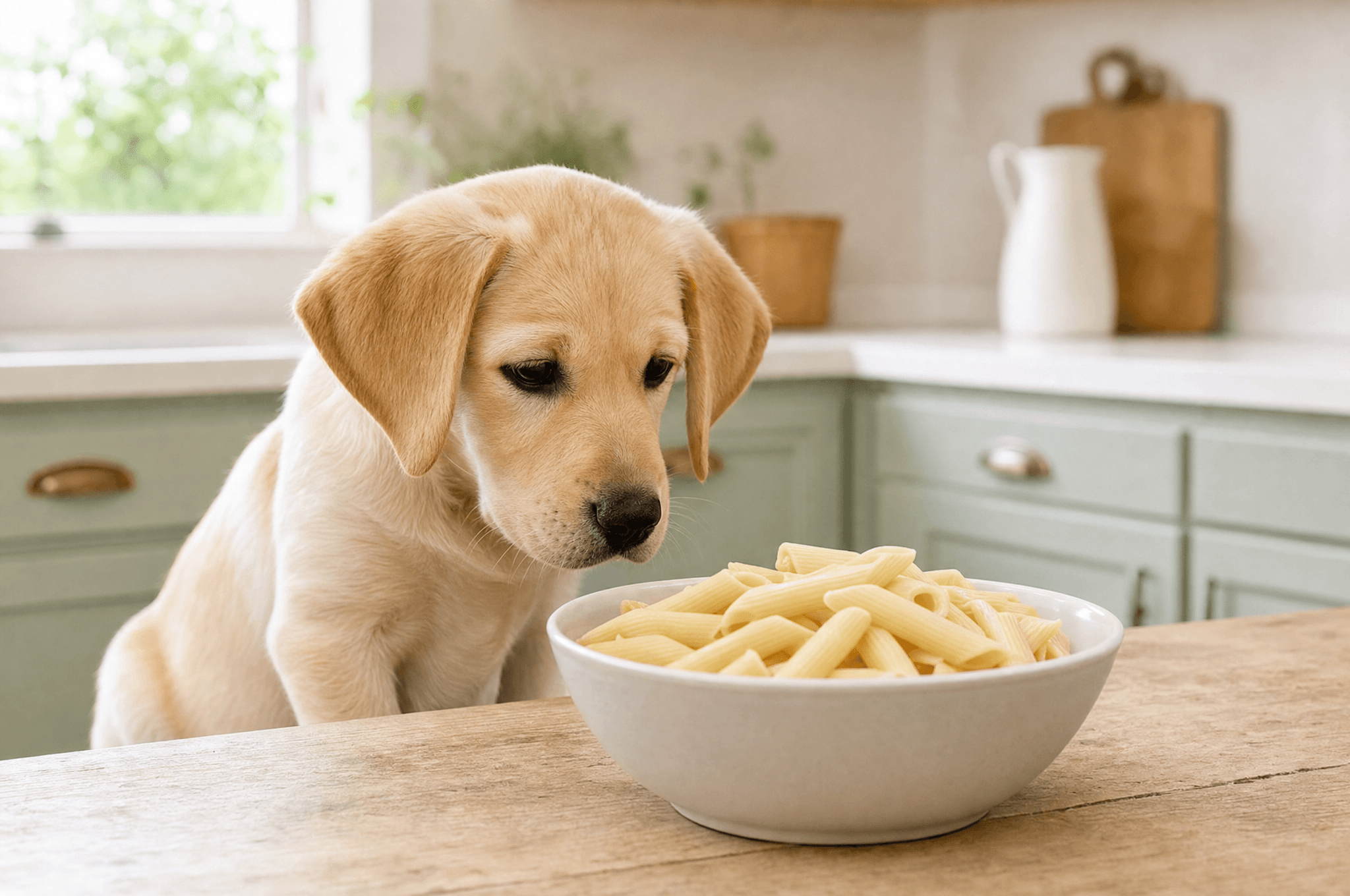
The detail
Pasta on its own is about as neutral as human food gets for a dog. It is wheat, water and sometimes egg, with nothing toxic anywhere in the recipe.
It is also pointless. A complete dog food already covers carbohydrate, so a bowl of penne adds calories a dog does not need, and 100g of cooked pasta is around 130 of them. That is why the verdict is moderation rather than a green light.
The genuine hazard on pasta night is everything the pasta is dressed in. Onion and garlic sit in almost every jar of tomato sauce and every bolognese, and the onion family damages dogs' red blood cells in raw, cooked and powdered form alike.
Pasta by form
| Plain cooked pasta | Fine in small amountsAround 130 calories per 100g cooked |
| Tomato-based sauces and bolognese | Avoid. Nearly always contain onion and garlic |
| Creamy and cheesy sauces | Avoid. Fat and lactose upset most dogs |
| Pesto | Avoid. Garlic is the deal-breaker |
| Raw dried pasta | Not toxic. Hard on teeth and stomach in quantity |
How much is sensible
| Dog size | Sensible amount |
|---|---|
| Small (under 10kg)Chihuahua, Jack Russell | One or two pieces of plain pasta, occasionally |
| Medium (10 to 25kg)Cocker spaniel, border collie | A small forkful |
| Large (over 25kg)Labrador, German shepherd | A couple of forkfuls at most |
| Overweight or wheat-sensitive dogs | Skip it. There is nothing here their diet is missing |
Plain cooked pasta
Cooked, unseasoned and unsauced, pasta is a safe if unrewarding share. A few pieces of penne or fusilli make a perfectly good training-treat oddity for dogs who enjoy the chew.
Keep the portion honest. Pasta is dense in calories for a food with no other contribution, and regular leftovers are how waistlines quietly disappear.
Pasta sauces are the real problem
This is the section that answers the question people are actually asking, because nobody eats plain pasta and neither does the dog under the table. Tomato-based sauces nearly always contain onion and garlic, which are toxic to dogs, so bolognese, arrabbiata and most jar sauces are off the menu. Plain ripe tomato itself is fine, which makes the sauce problem easy to misjudge.
Creamy and cheesy sauces swap one problem for another. Carbonara and mac and cheese load fat and lactose onto a digestive system that handles neither well, and a rich stolen portion is a classic route to a night of diarrhoea or worse. Pesto adds garlic on top.
Raw dried pasta
A hoovered piece of dried fusilli is nothing to panic about, since raw pasta is not toxic to dogs. It is hard on teeth, and in quantity it sits badly and can swell and cause an uncomfortable, gassy stomach.
If a dog works through a whole bag, offer water and watch for vomiting or a swollen belly, and ring your vet if either shows up. Otherwise, a dropped piece is a shrug.
Can dogs eat spaghetti?
Same food, same answer: a small amount of plain spaghetti is fine, sauced spaghetti is not. The famous scene of two dogs sharing a plate of spaghetti and meatballs belongs in films, because the real-world version comes with onion and garlic in both the sauce and the meatballs.
If your dog raids a bowl of spaghetti bolognese, ring your vet with a guess at how much sauce went down. The pasta is irrelevant; the onion maths is what the vet needs.
Wheat allergies
Pasta is almost pure wheat, so dogs with a confirmed wheat or gluten sensitivity should not have it at all. Irish Setters carry a documented inherited gluten intolerance, and individual dogs of any breed can react.
Recurring itchy skin, ear trouble or soft stools that follow wheaty extras are worth raising with your vet. Cutting pasta is no loss to the dog either way.
Signs to watch for
- Vomiting or diarrhoea after a sauced pasta raid
- Lethargy or pale gums in the days after eating onion or garlic
- Bloating or discomfort after a quantity of dried pasta
If your dog overdoes it
Plain pasta needs no action. If the stolen pasta came with a tomato, bolognese or pesto sauce, ring your vet with your dog's weight and a guess at the amount, since onion and garlic effects can build over days. Out of hours, call Vets Now or the Animal PoisonLine on 01202 509000.
Common questions
My dog ate spaghetti bolognese. What do I do?
Ring your vet with your dog's weight and a guess at how much went down. The worry is the onion and garlic in the sauce, and their effect on red blood cells can take days to show.
Can dogs eat pasta every day?
No good comes of it. Pasta adds calories a complete dog food has already accounted for, so daily portions mostly build weight. Keep it to the odd plain piece.
My dog ate a dry lasagne sheet. Any problem?
Unlikely. Dried pasta is not toxic, just awkward, so watch for vomiting or a swollen belly and ring your vet if either appears. A single sheet in a medium dog is usually a non-event.
Is wholewheat pasta better for dogs?
Marginally, and it changes nothing. The extra fibre is small, the calories are similar, and the sensible portion stays at a forkful. Wheat-sensitive dogs should skip both kinds.
Can dogs have pasta with cheese sauce?
Best not. Cheese sauce is fat plus lactose, and many adult dogs digest lactose badly, so the usual result is diarrhoea. A small stolen amount is rarely serious; watch and ring your vet if the upset lasts.
Can puppies eat pasta?
There is no reason to give it. Puppy food is balanced for growth, and pasta displaces it with empty calories. Wait, and even then keep it rare.