
Can dogs eat bread?
Updated 6 August 2026
Yes, in small amounts, as long as it is plain and fully baked. A little white or brown bread is harmless for most dogs, though it does nothing useful for them. Raw bread dough and mouldy bread are both genuine emergencies, and raisin, onion or garlic breads belong nowhere near a dog.
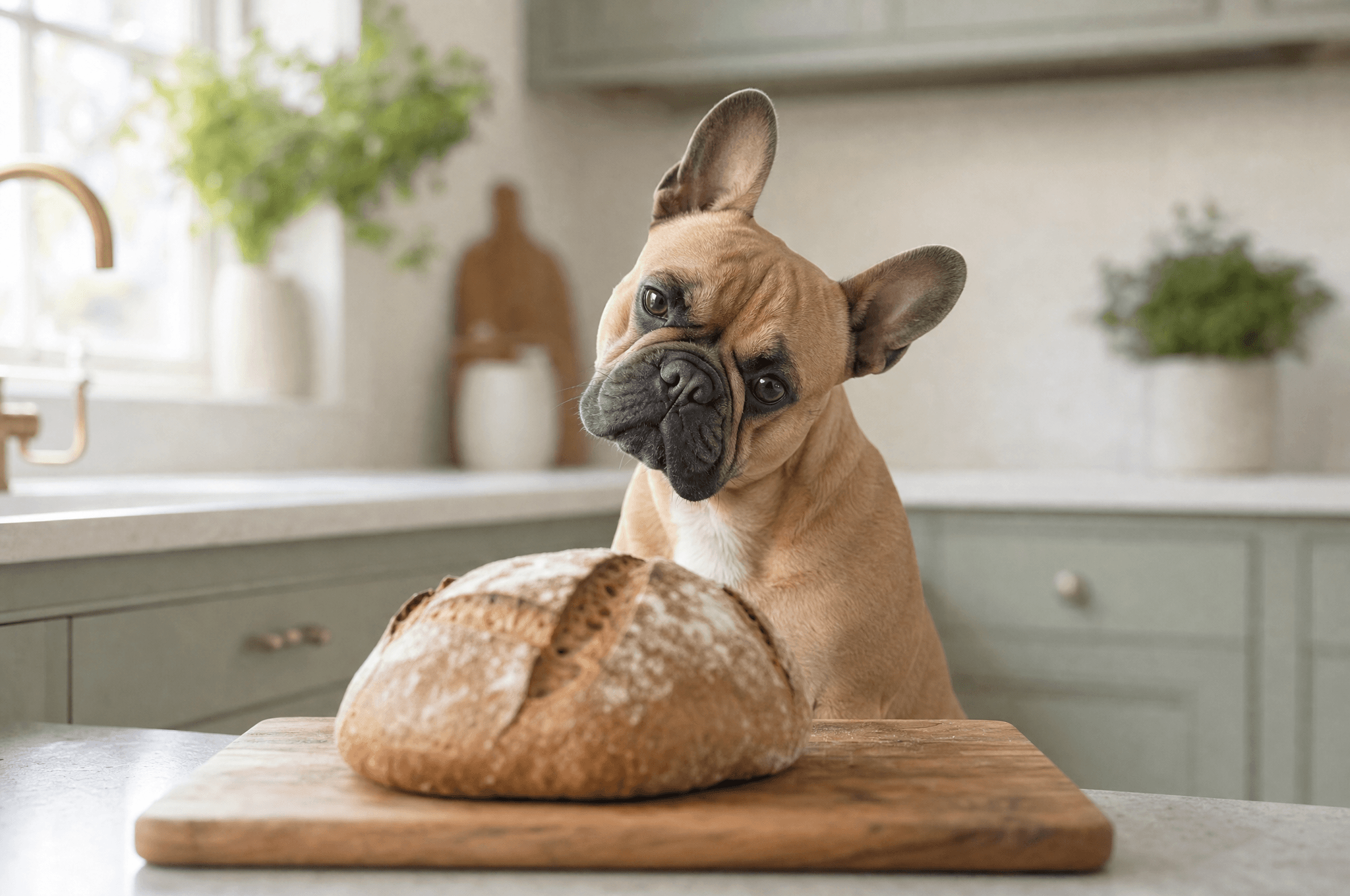
The detail
Plain baked bread sits in the amber category for a simple reason: it will not hurt a healthy dog, and it will not help one either. A medium slice of white bread carries around 95 calories and 0.4g of salt, which is a meaningful chunk of a small dog's daily allowance for no nutritional return.
The complete dog food in the bowl already covers everything bread would supply. So the honest answer to a begging face at the toaster is a corner of a slice at most, and not every day.
The reason this page is longer than that answer is what happens around bread. Raw yeast dough, mouldy crusts from the bin and loaves studded with raisins or garlic each turn a boring food into a vet call, and they are covered one by one below.
Risk by type of bread
| Plain white or brown, fully baked | Fine in small amountsAbout 95 calories and 0.4g of salt per medium slice |
| Toast with spreads | Depends entirely on the spreadChocolate spread and xylitol jams are toxic |
| Raisin bread, fruit loaf, hot cross buns | Toxic. Treat as a grape incident |
| Garlic and onion breads | Toxic to dogs in any form |
| Raw yeast dough | Emergency. Ring your vet now |
| Mouldy bread | Emergency. Mycotoxins can cause tremors and seizures |
How much is sensible
| Dog size | Sensible amount |
|---|---|
| Small (under 10kg)Chihuahua, Jack Russell | A corner of a slice, occasionally |
| Medium (10 to 25kg)Cocker spaniel, border collie | Up to half a slice, once or twice a week |
| Large (over 25kg)Labrador, German shepherd | Up to a slice, once or twice a week |
| Overweight or wheat-sensitive dogs | None. Bread is empty calories they can least afford |
Plain white and brown bread
Both are fine in small amounts and neither earns a place in the routine. White and brown slices are close cousins nutritionally, and the extra fibre in brown bread does nothing a complete dog food is not already doing.
The practical limit is calories. A slice of bread is roughly a tenth of a small dog's daily energy needs, so regular slices add up to a heavier dog fast.
Can dogs eat toast?
Toasting changes nothing important, so a plain dry corner is as fine as plain bread. The spreads are where toast goes wrong.
Butter adds fat that upsets many stomachs, chocolate spread is toxic, and Marmite is a salt question with its own page here. Jam is sugar your dog does not need, and anything labelled sugar-free may contain xylitol, which is extremely toxic to dogs.
Seeded, raisin, onion and garlic breads
Seeded loaves are mostly fine, since common bakery seeds like sunflower, pumpkin and sesame are not toxic to dogs. In quantity they are fatty, so treat a seeded slice as a smaller share than a plain one.
Fruit breads change the verdict completely. Raisins, sultanas and currants can cause kidney failure in dogs, so raisin bread, fruit loaf, teacakes and hot cross buns are a grape incident in disguise, and any stolen amount means a vet call.
Onion and garlic breads are also a no. The onion family damages dogs' red blood cells whether it arrives raw, cooked or as a powder in a butter, so garlic bread from the takeaway is off the menu too.
Raw bread dough is an emergency
If your dog eats rising yeast dough, ring your vet immediately. The warm stomach acts like a proving drawer, so the dough keeps expanding and can bloat or even twist the stomach, which is life-threatening on its own.
At the same time the yeast ferments sugars into alcohol, which is absorbed fast and can drop blood sugar, blood pressure and body temperature. The Pet Poison Helpline and VCA both treat this as a poisoning that needs immediate veterinary attention, not a wait-and-see.
Watch for a swollen belly, retching without producing anything, wobbliness or unusual quietness after a counter raid on dough. Do not wait for these signs to ring; the call comes first.
Mouldy bread
Mouldy bread is a poisoning risk, not a slightly stale snack. Some moulds produce tremorgenic mycotoxins, which the Pet Poison Helpline lists as causing vomiting, agitation, tremors and seizures in dogs, sometimes within hours.
The classic route in is the bin, the compost caddy or a bag of ducks' bread gone green. If your dog has eaten anything mouldy, ring your vet straight away rather than watching and waiting, and make the bin dog-proof afterwards.
Signs to watch for
- Swollen or tight belly after eating raw dough
- Retching without bringing anything up
- Wobbliness, tremors or unusual drowsiness
- Vomiting or agitation after mouldy food
If your dog overdoes it
For raw dough or mouldy bread, ring your vet now rather than waiting for symptoms. Note roughly how much was eaten and when. Do not make your dog vomit unless a vet tells you to. Out of hours, call Vets Now or the Animal PoisonLine on 01202 509000.
Common questions
My dog ate a slice of bread. Should I worry?
No. A plain baked slice is harmless for a healthy dog, just unnecessary. Fresh water and carry on.
My dog ate raw bread dough. What do I do?
Ring your vet immediately, even if your dog seems fine. Rising dough expands in the stomach and produces alcohol, and both effects can turn serious within hours.
Is bread good for a dog's upset stomach?
Not really. The bland meal vets actually suggest is plain boiled chicken and white rice in small portions. Bread adds salt and does less for a recovering gut.
Can dogs eat bread crusts?
Yes, the crust is the same food as the rest of the slice. The same limits apply: plain, small amounts, nothing spread on it.
Can dogs eat sourdough?
A small piece of baked sourdough is fine. Raw sourdough starter is live fermenting yeast, so a stolen bowl of it is the same emergency as raw dough and needs a vet call.
Can puppies have bread?
Best not. A puppy diet is balanced for growth, and bread spends calorie space on nothing useful. There is no upside to weigh against the habit it starts.