
Can dogs eat rice?
Updated 6 August 2026
Yes. Plain boiled rice is safe for dogs, and white rice with chicken is the bland meal vets have recommended for upset stomachs for decades. Keep it plain, fully cooked and freshly made. Egg fried rice, takeaway rice and anything cooked with onion, garlic or salt should stay on your plate.
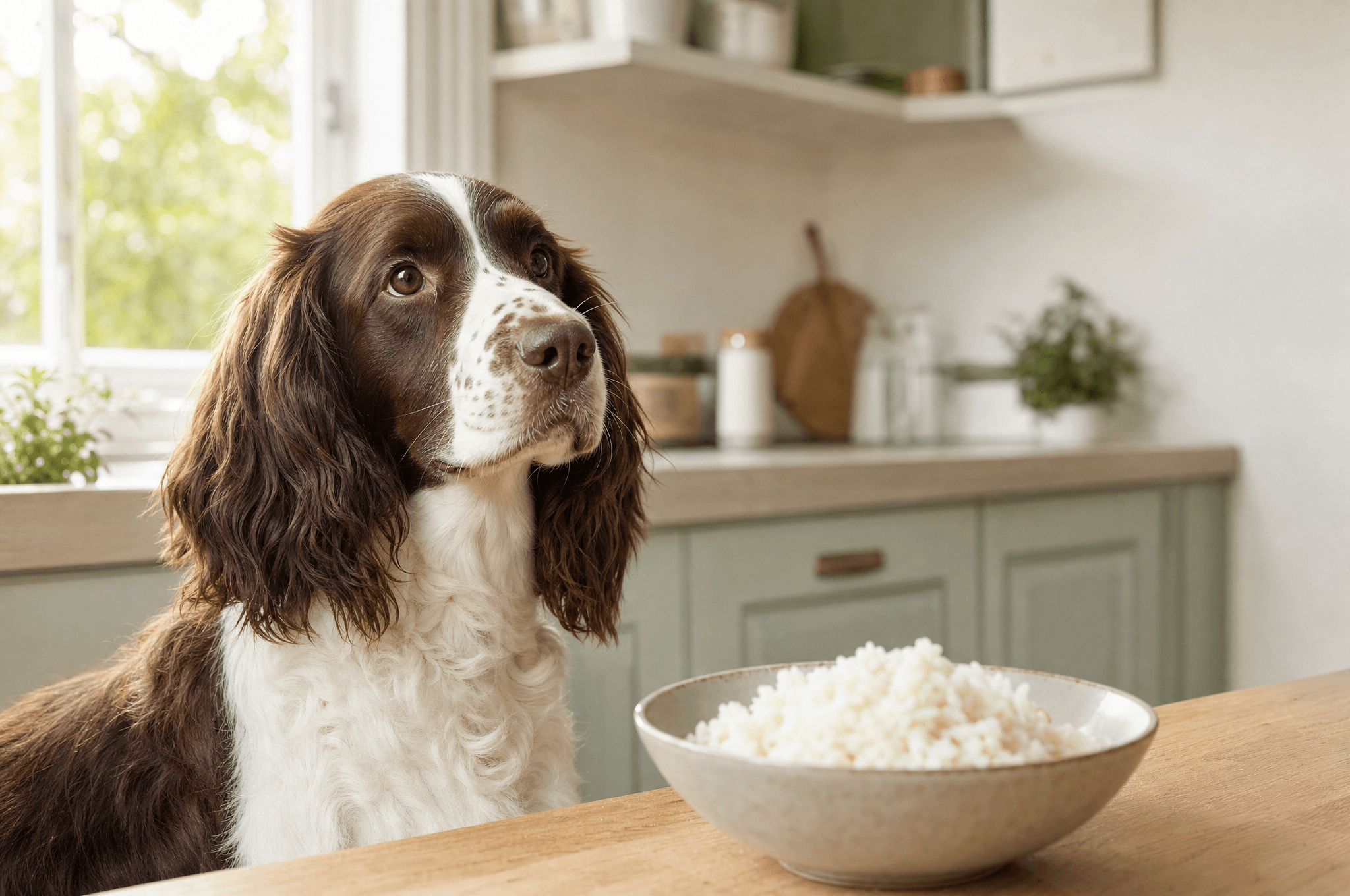
The detail
Rice is one of the few human foods with a genuine veterinary job. Vets Now includes plain rice in its advice for reintroducing food to a dog recovering from vomiting, alongside plain chicken or white fish, in small meals of one to three tablespoons.
Outside recovery duty, rice is a safe but unnecessary extra. A complete dog food already covers carbohydrate, so a healthy dog gains nothing from a daily scoop beyond calories. Many dry dog foods contain rice anyway.
The rules that matter are all about preparation. Boiled in plain water, cooled and served fresh, rice is as safe as food gets. Cooked with stock, salt, oil, onion or garlic, it stops being dog food.
Rice by form
| Plain boiled white rice | Safe, and the standard bland-diet base |
| Brown rice | Safe cooked plainMore fibre, harder work for a recovering stomach |
| Egg fried and takeaway rice | Avoid. Onion, garlic, salt and oil |
| Uncooked rice | Not toxic, but hard to digest. Keep the bag shut |
| Rice left out at room temperature | Bin it. Bacillus cereus risk applies to dogs too |
How much is sensible
| Dog size | Sensible amount |
|---|---|
| Small (under 10kg)Chihuahua, Jack Russell | A spoonful mixed into a meal, now and then |
| Medium (10 to 25kg)Cocker spaniel, border collie | Two to three tablespoons |
| Large (over 25kg)Labrador, German shepherd | Up to four tablespoons |
| Dog on a vet-advised bland diet | Small chicken-and-rice meals of one to three tablespoons, every hour or two |
Plain boiled white rice with chicken
This is the classic bland diet, and doing it properly matters more than people think. Boil white rice in plain water with nothing added, and pair it with skinless chicken breast, also boiled plain, at roughly one part chicken to two parts rice.
Vets Now suggests small meals of one to three tablespoons every hour or two for a recovering dog, after withholding food for six to eight hours from the last vomit. Build back to normal food over a day or two rather than in one bowl.
Brown, white or basmati?
All three are fine for dogs when cooked plain. Brown rice keeps its bran layer, so it carries roughly four times the fibre of white and takes more digesting, which is why it is the wrong pick for a poorly stomach.
White and basmati are interchangeable for dogs. For everyday sharing pick whichever is in the cupboard; for recovery duty, plain white is the standard.
Egg fried rice and takeaway rice
No. Takeaway rice dishes are built on onion, garlic, salt and oil, and the onion family damages dogs' red blood cells whether it is fresh, cooked or powdered. Battersea lists it among the most common toxic foods dogs actually get hold of.
The egg itself is not the problem, and plain cooked egg is a good share with its own page here. It is everything cooked around the egg that keeps fried rice off the menu, so treat a raided takeaway carton as worth a call to your vet.
Reheated and leftover rice
The same food hygiene rule you follow for your own plate applies to the dog bowl. Cooked rice left sitting at room temperature can grow Bacillus cereus, a bacterium whose toxins cause vomiting and diarrhoea, and reheating does not reliably destroy them.
So cook rice fresh, cool it quickly, and refrigerate anything you are keeping for the next meal. Rice that has sat out overnight goes in the bin, not the bowl.
When rice helps and when to ring the vet
Rice earns its keep for a mild, one-off upset in an otherwise bright adult dog. A day or two of small bland meals usually sees things settle.
It is not a treatment for anything worse. Repeated vomiting, blood in vomit or stools, a bloated belly, obvious pain or a dog who is flat and listless all mean ringing the vet rather than reaching for the rice pan. The same goes for puppies and elderly dogs, who dehydrate much faster.
Common questions
Can dogs eat rice every day?
They can, but there is no reason to. A complete dog food already covers carbohydrate, so daily rice just adds calories. Keep it for the odd meal topper or vet-advised bland diet.
How much chicken and rice for a dog with diarrhoea?
Vets Now suggests small meals of one to three tablespoons every hour or two once vomiting has stopped. Ring your vet instead if the upset lasts beyond a day or two, or if your dog is a puppy, elderly or clearly unwell.
My dog ate uncooked rice. Is that a problem?
A small amount is usually fine, though it digests poorly and can cause a gurgly day. Offer water and keep an eye out for vomiting or a swollen belly, and ring your vet if a large quantity went down.
Can dogs eat rice cakes?
A piece of a plain, unsalted rice cake is fine. Flavoured varieties carry salt and often onion or cheese powders, so leave those in the packet.
Are microwave rice pouches OK for dogs?
Check the label first. Many pouches are flavoured with onion, garlic, stock or added salt, and even plain ones carry oil. Rice boiled in plain water is the safe version.
Which rice is best for the bland diet?
Plain white rice. It is the easiest on a recovering stomach, which is exactly the point of a bland diet. Save brown rice for healthy days.
Can diabetic dogs eat rice?
Best avoided. White rice is a fast-release carbohydrate, which is unhelpful for a dog whose blood sugar is being managed. Ask your vet before adding any extras to a diabetic dog's diet.