
Can dogs eat olives?
Updated 5 August 2026
One or two, yes. A plain, pitted olive is safe for a healthy dog, and that is also the sensible ceiling. The catch is how olives are sold in the UK: sitting in brine that pushes the salt past 3g per 100g, sometimes stuffed with garlic, and sometimes with the stone still in.
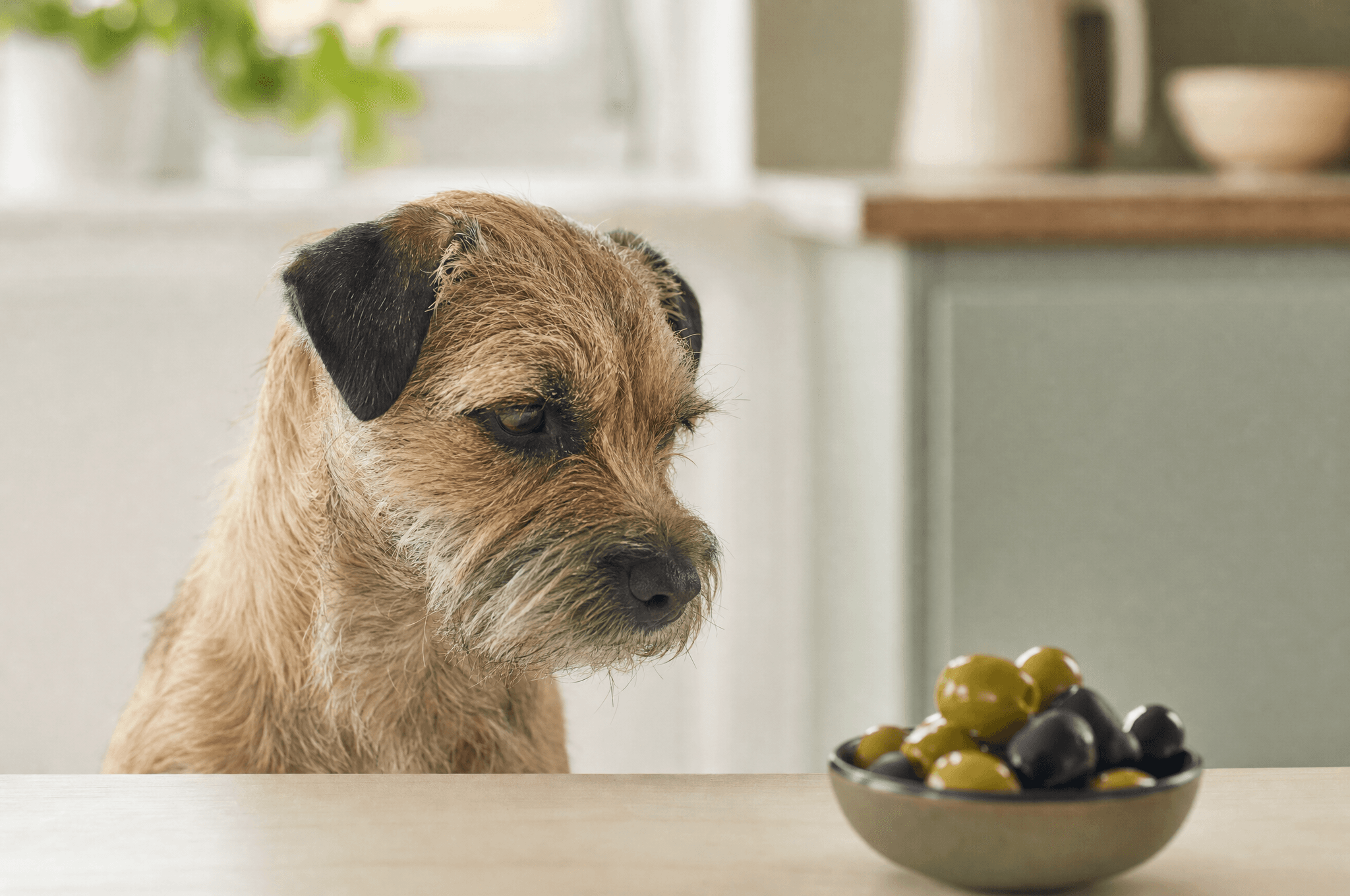
The detail
The olive itself is the easy part. There is nothing toxic to dogs in the fruit, and the small amount your dog would ever sensibly eat carries a little fat and not much else.
Salt is the real subject of this page. Typical brine-cured olives run 3g or more of salt per 100g, which makes them saltier gram for gram than most crisps. One or two olives are nothing; a raided bowl or a drunk dish of brine is a phone call.
The other two catches are mechanical and hidden. Stones crack teeth and can block a small dog's gut, and stuffed olives smuggle in garlic or blue cheese, which are problems in their own right.
The salt in the jar
| Typical brined olives | 3g or more of salt per 100gSaltier per gram than most crisps |
| One pitted olive (about 4g) | Roughly 0.1g of saltFine for a healthy adult dog |
| A raided 150g bowl | Around 4 to 5g of saltExpect serious thirst; ring your vet for a small dog |
| Risky dose (MSD Veterinary Manual) | Around 2 to 3g of salt per kg of body weight |
How much is sensible
| Dog size | Sensible amount |
|---|---|
| Small (under 10kg)Chihuahua, Jack Russell | One plain, pitted olive, occasionally |
| Medium (10 to 25kg)Cocker spaniel, border collie | One or two plain, pitted olives |
| Large (over 25kg)Labrador, German shepherd | Two or three plain, pitted olives |
| Any dog with heart or kidney disease | None. Brined olives carry exactly the sodium their diet restricts |
Plain olives
One or two plain, pitted olives are a fine occasional share. Rinse them first to wash off some of the brine, and treat them as a novelty rather than a regular treat.
There is no nutritional case for feeding more. The fats in olives are already covered by a complete dog food, so extra olives mostly add salt.
Brined and jarred olives
This is where the amber rating comes from. A typical jar of brine-cured olives runs 3g or more of salt per 100g, so a single olive weighing around 4g carries roughly 0.1g of salt.
That maths is kind at one olive and unkind at a bowlful. A 150g bowl carries 4 to 5g of salt, enough to leave a small dog very thirsty and possibly vomiting, and worth a call to your vet.
The brine itself is worse than the olives. A dog that drinks the liquid from the jar has taken salt with no food attached, so ring your vet with the amount and your dog's weight.
Stuffed olives
Check the stuffing before anything else. Garlic paste is toxic to dogs, damaging red blood cells over the days after eating, and garlic-stuffed olives concentrate it.
Blue cheese brings its own problem, because the moulds in it can cause tremors in dogs on top of the fat and salt. Pimento stuffing is the mild one, though the salt answer still applies.
Olive stones
Olive stones are small but genuinely hard, and vets see cracked teeth from stone-hard items just like this. A dog that crunches olives with stones in can chip a carnassial tooth, which usually means dental surgery.
Swallowed whole, one stone will usually pass through a medium or large dog. Several stones, or any stones in a very small dog, can block the gut, so buy pitted and treat a raided bowl of unpitted olives as worth a vet call.
Green olives against black olives
Same fruit, same answer. Green olives are picked earlier and black ones later, and both come to you cured in salt, so the one-or-two rule applies to either colour.
If anything, check green ones more carefully for stuffing and black ones for stones. Neither colour is more or less safe for a dog in itself.
Signs to watch for
- Marked thirst after a salty raid
- Vomiting or diarrhoea
- Dropping food or chewing on one side after crunching stones
If your dog overdoes it
One or two olives need nothing beyond fresh water. If your dog has emptied a bowl, drunk the brine, or swallowed several stones, ring your vet with the weight and a rough amount. Out of hours, Vets Now runs emergency clinics across the UK.
Common questions
My dog ate an olive with the stone in. What now?
A single stone usually passes through a medium or large dog without trouble. Watch for vomiting, straining or a sore belly over the next couple of days, and ring your vet sooner for a small dog.
Can dogs have olive oil?
A small drizzle on food is harmless for a healthy dog. It is still pure fat with calories a dog does not need, so keep it occasional and away from dogs prone to pancreatitis.
My dog drank the brine from the olive jar. Is that serious?
It can be, because brine is concentrated salt with nothing else attached. Ring your vet with your dog's weight and a guess at the volume, and put fresh water down in the meantime.
Can dogs eat olives off a pizza?
The olive slices are the least of it. Pizza commonly carries onion, garlic and a lot of salt and cheese, so judge the slice, not the olives. A stolen olive on its own is fine.
Are kalamata olives different?
Not for a dog. They are brine-cured like most jarred olives, so the same one-or-two ceiling and the same salt warning apply.
Are olives actually good for dogs?
Not meaningfully. The fats and vitamin E in olives are already covered by any complete dog food, and the salt arrives whether or not the good bits are needed. Treat them as a taste, never a supplement.