
Can dogs drink alcohol?
Updated 8 August 2026
No. Alcohol is toxic to dogs in any form, and Pet Poison Helpline lists beer, wine, spirits and cocktails among the sources it warns owners about. VCA Animal Hospitals says signs of alcohol poisoning usually appear within 15 to 90 minutes of exposure. Keep every drink, poured or not, out of reach, and ring your vet straight away if a dog gets to one.
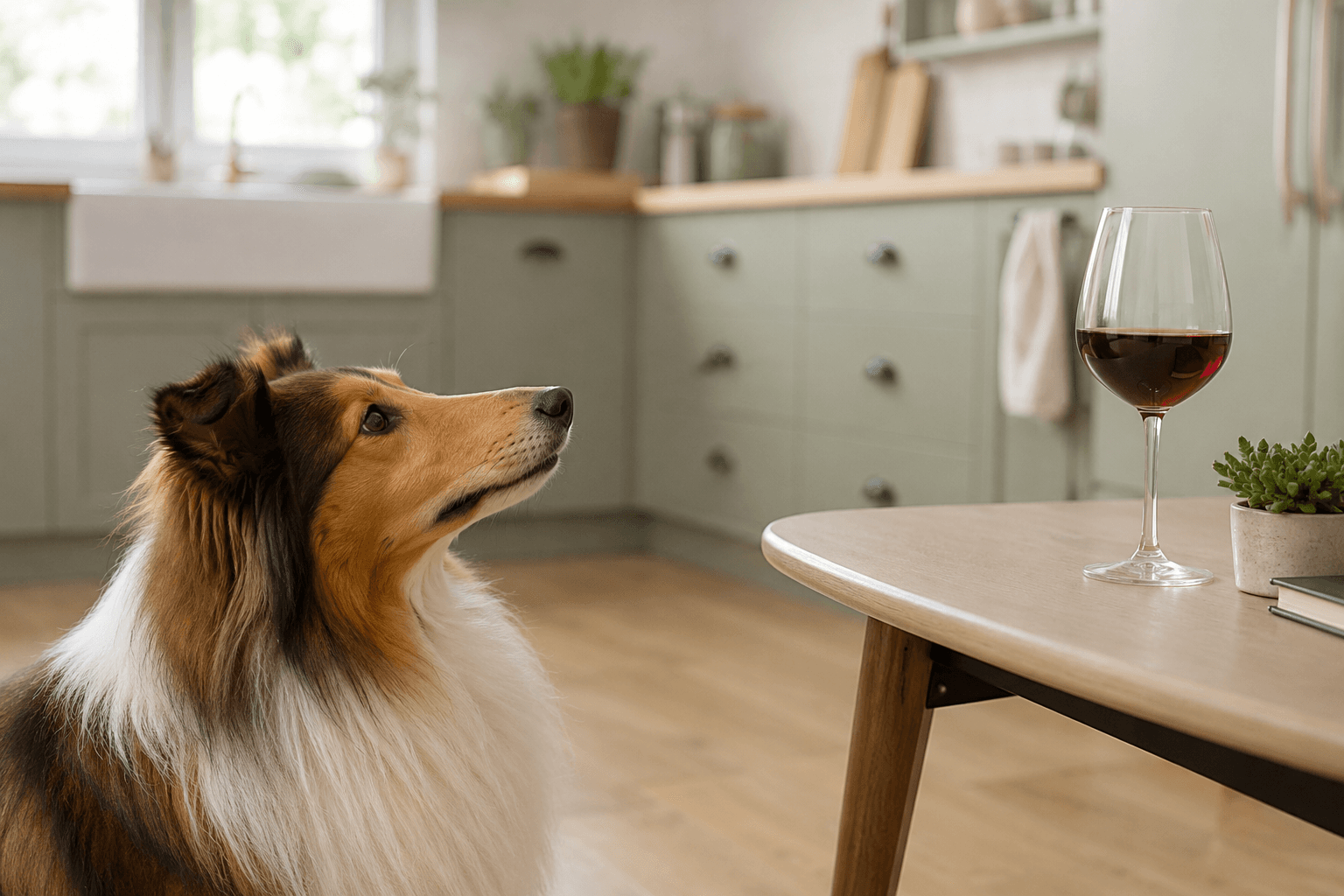
If your dog has eaten alcohol
Ring your vet now, even for a small lick, since signs can appear within 15 to 90 minutes. Do not try to make your dog vomit yourself. Move any remaining drink out of reach and have a rough idea of what and how much was swallowed ready for the phone call. Out of hours, Vets Now runs emergency clinics across the UK, and the Animal PoisonLine is on 01202 509000.
The detail
A dog's body handles ethanol very differently from a person's. VCA Animal Hospitals notes that all animals are at risk of alcohol poisoning, and that clinical signs usually occur quickly after exposure, likely within 15 to 90 minutes, which is much faster than most owners expect from a small amount spilled on the floor or licked from a glass.
The obvious sources are the ones on the drinks trolley. Pet Poison Helpline names mixed drinks, beer and wine specifically, along with liqueur-filled chocolates, as routes pets take a lick or a proper mouthful of ethanol, and a dog does not need to finish a can to be affected.
There are also non-drink sources worth knowing about. PDSA's guidance on hazards for pets notes that some household products contain alcohol, and rubbing alcohol, mouthwash and hand sanitiser are common examples that sit in bathroom cabinets and bags at exactly nose height for a curious dog.
Raw yeast bread dough is a separate but related danger. Pet Poison Helpline lists raw bread dough among alcohol exposure risks, because yeast continues to ferment sugar into ethanol inside a warm stomach, and a dog can end up both bloated and drunk from the same lump of rising dough.
How alcohol poisoning plays out in dogs
| Onset of symptoms | Usually within 15 to 90 minutesVCA Animal Hospitals |
| Drink sources | Beer, wine, spirits, cocktails, liqueur-filled sweets |
| Non-drink sources | Rubbing alcohol, mouthwash, hand sanitiser, raw yeast bread dough |
| Severe signs | Respiratory depression, tremors, seizures, coma |
| Prognosis with prompt treatment | Excellent, per VCA Animal Hospitals |
Can dogs drink beer?
No. Beer is one of the sources Pet Poison Helpline names directly, and even a splash left in the bottom of a can is enough ethanol to affect a small dog. The fizz and the hop content do not make beer any safer than spirits, only more likely to be left unattended within reach.
A dog that steals a mouthful from a can on the floor at a barbecue or in front of the football is still having a genuine ethanol exposure, not a harmless taste. Pick up glasses and cans as you go rather than leaving them at dog height.
Wine, prosecco and cocktails
Wine and sparkling wine carry the same ethanol risk as any other drink, and a dog lapping from a dropped glass of prosecco is not spared just because the alcohol content looks lower on the label than a spirit. Cocktails add sugar, cream and sometimes fruit on top, which can bring its own stomach upset alongside the alcohol.
Christmas and New Year gatherings are when full glasses get left on low coffee tables for the longest stretch, so a dog that is normally well supervised around drinks has more opportunity when the house is busy with guests.
Spirits: whisky, vodka, gin and rum
Spirits are more concentrated than beer or wine, so a smaller volume delivers more ethanol, and a knocked-over shot glass or an unattended tumbler is a meaningful dose for a dog under about 10kg. There is no spirit on this list that is safer than another; the deciding factor is how much ethanol per kilogram of the dog's weight ends up swallowed.
Baileys and other cream liqueurs are worth a specific mention, since the sweet, milky taste is genuinely appealing to dogs in a way neat spirits usually are not, which makes an unattended glass more likely to actually get finished rather than just sniffed.
Raw bread dough and alcohol poisoning
Raw yeast dough left to prove on a kitchen counter is a two-part problem. The dough itself can expand inside a warm stomach and cause a dangerous bloat, and at the same time the yeast keeps fermenting, producing ethanol that gets absorbed alongside the physical bulk of the dough.
This is a genuinely common route to accidental alcohol poisoning in dogs, more common in most UK kitchens than a spilled drink, so treat rising dough with the same out-of-reach rule as a bottle of wine.
My dog licked a drink once before and was fine
A single lick from a glass, caught quickly, is a much smaller dose than a spilled can lapped up over several minutes, and plenty of dogs genuinely do get away with a small taste without visible symptoms. That does not mean the next exposure carries the same odds, since the amount actually swallowed, the dog's size, and how quickly it was noticed all vary each time.
VCA Animal Hospitals' point that signs usually appear within 15 to 90 minutes cuts both ways: a dog that seems fine ten minutes after a real mouthful is not yet in the clear, and one that seemed unaffected after a genuine lick may simply have had a small enough dose that time. Treat every exposure as worth watching rather than assuming past luck predicts this one.
Signs to watch for
- Lethargy and poor coordination or wobbly walking
- Vomiting or gastrointestinal upset
- Low body temperature and low blood sugar
- Excessive thirst and urination
- Respiratory depression, tremors, seizures or coma in severe cases
Common questions
My dog licked my wine glass. Is that an emergency?
Ring your vet to be safe, since even a lick is a real ethanol exposure. VCA Animal Hospitals notes signs usually appear within 15 to 90 minutes, so watch closely rather than assuming a small lick is automatically harmless.
How much alcohol is dangerous for a dog?
There is no safe amount to give on purpose. Smaller dogs are affected by less ethanol, and spirits deliver more per mouthful than beer or wine, but any real quantity is worth a call to your vet with your dog's weight and what was drunk.
Can raw bread dough really make a dog drunk?
Yes. Pet Poison Helpline lists raw bread dough among the sources of alcohol poisoning, because the yeast keeps fermenting inside a warm stomach and produces ethanol on top of the physical bulk of the dough.
What are the signs of alcohol poisoning in dogs?
VCA Animal Hospitals lists poor coordination, lethargy, low body temperature, vomiting and, in severe cases, respiratory depression, seizures or coma. Signs usually start within 15 to 90 minutes of exposure.
Are mouthwash and hand sanitiser dangerous to dogs too?
Yes. PDSA notes that some household products contain alcohol, and rubbing alcohol, mouthwash and hand sanitiser are common examples that end up within a dog's reach in bathrooms and bags.
Should I make my dog vomit if they drank alcohol?
No, not at home. Ring your vet or the Animal PoisonLine straight away and let them decide the right treatment, since inducing vomiting is only appropriate within a short window after ingestion and is a job for a vet.
Is a small dog more at risk from alcohol than a large one?
Yes. The same amount of alcohol is a bigger dose relative to a small dog's body weight, so a chihuahua or dachshund reaches dangerous levels far faster than a Labrador given the same spilled drink.