
Can dogs eat ice cubes?
Updated 7 August 2026
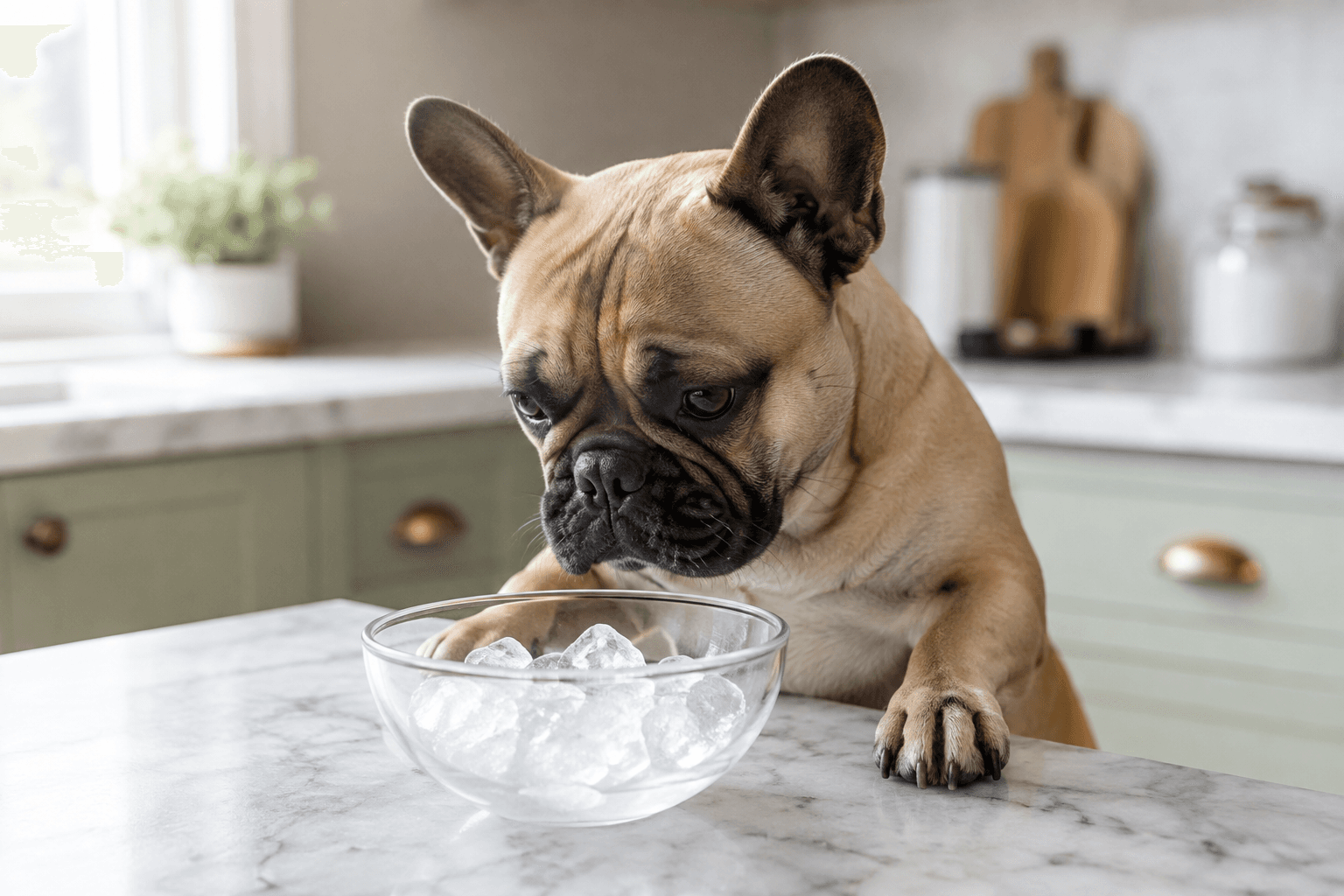
Yes, for most healthy dogs, in the right size piece. Blue Cross says a healthy, warm dog can safely have ice cubes, and there is no definitive evidence linking them to bloat despite the myth. The genuine risks are choking on a cube too big for your dog and, per Cornell University's veterinary dentistry team, cracked teeth from a dog that chomps rather than licks.
The detail
An ice cube is just frozen water, so there is no ingredient to worry about the way there is with most foods on this site. That makes this page different in shape from most of the others here: no toxin, no fact table full of grams of fat or salt, only two sensible precautions and one persistent myth worth clearing up. The real questions are mechanical, is the piece the right size, and does your dog lick and crunch gently or chomp down hard.
Blue Cross's guidance on ice cubes for dogs is direct: if your dog is healthy and feeling warm, you can give them ice cubes, and you can add them to a water bowl to keep it chilled. The size has to match the dog, since a small dog given a large cube faces a real choking risk.
The bloat myth is worth addressing head-on rather than skirting around. Blue Cross states there is no definitive evidence that ice cubes cause bloating in dogs, and that bloat is driven by gas building up in the stomach, often linked to eating too fast, not by the temperature or presence of ice.
The one genuine dental concern comes from Cornell University's Riney Canine Health Center, which quotes veterinary dentist Dr Nadine Fiani advising against letting a dog chomp on ice cubes, while noting that licking, chasing and playing with them is fine.
Ice cube risk by scenario
| Healthy dog, appropriately sized cube | Low riskBlue Cross: safe for a healthy, warm dog |
| Small dog given a large, whole cube | Choking riskBlue Cross recommends smaller cubes or shavings for small dogs |
| Dog chomping hard on ice repeatedly | Tooth fracture riskCornell: avoid letting a dog chomp on ice; licking and play are fine |
| Ice and bloat | No established linkBlue Cross: no definitive evidence connecting ice cubes to bloating |
| Dog already showing heatstroke signs | Do not give iceBlue Cross: cool with lukewarm water and call a vet immediately instead |
How much is sensible
| Dog size | Sensible amount |
|---|---|
| Small (under 10kg)Chihuahua, Jack Russell | Ice shavings or small chips rather than a whole standard cube, supervised |
| Medium (10 to 25kg)Cocker spaniel, border collie | One or two standard ice cubes, supervised, especially with a fast eater |
| Large (over 25kg)Labrador, German shepherd | Several standard ice cubes, or a few added to the water bowl |
| Dogs with existing dental disease or a fast-gulping habit | Shaved ice only, and discourage any hard chomping regardless of size |
Do ice cubes cause bloat in dogs?
This is the most searched question about ice cubes and dogs, and the honest answer is no, not according to the veterinary sources this site relies on. Blue Cross states there is no definitive evidence that ice cubes cause bloating, and describes bloat as being driven by a build-up of gas in the stomach, which can be triggered by eating too quickly.
If anything, ice can work the other way. Blue Cross and other sources note that offering ice cubes or shavings can slow down a dog that gulps its water too fast, which is one of the behaviours actually associated with a higher bloat risk.
It is worth being plain about this because the myth is persistent and repeated often enough online that it can sound like settled fact. Blue Cross's position, based on the studies into what actually causes bloat, is that gas building up from fast eating is the trigger, not the temperature of anything a dog eats or drinks.
Ice cubes and choking
The size mismatch between a standard ice cube and a small dog's mouth is the real everyday risk, not a hidden toxin. Blue Cross specifically flags that a small dog cannot safely be given a large ice cube because of the choking risk, and recommends smaller cubes or ice shavings instead.
This matters even more for a dog that tends to wolf down food and treats without chewing. Ice shavings or crushed ice remove the choking-sized chunk entirely while keeping the cooling effect.
Supervision matters as much as size. A dog playing with a couple of loose ice cubes on the kitchen floor, batting them around before crunching them, is a lower-risk picture than a whole cube tossed straight into the air and caught in one gulp.
Ice cubes and broken teeth
This is the risk most owners have never heard of. Cornell University's Riney Canine Health Center quotes veterinary dentist Dr Nadine Fiani saying fractured teeth are commonly caused by chewing very hard objects, and the same page advises against letting your dog chomp on ice cubes specifically.
The distinction is between how a dog interacts with the ice. Cornell's guidance is that licking, chasing and playing with ice cubes is fine, and the concern is only with a dog that bites down hard and crunches repeatedly, the same chewing style that also fractures teeth on antlers, hooves and hard bones.
If your dog is a determined chomper rather than a licker, shaved or crushed ice removes the hard, whole-cube shape that causes the problem while keeping the cooling benefit.
Ice cubes for dogs with heatstroke
Ice is a good everyday cooling treat, but Blue Cross is specific that it is the wrong tool for a dog already showing signs of heatstroke, such as excessive panting or drooling, low energy, collapse, or purple gums or reddened skin.
For a dog in that state, Blue Cross recommends cooling with a bath of cool, not ice-cold, water or by running cool water over them, and contacting a vet immediately, since heatstroke needs urgent treatment rather than a home remedy.
Flavoured ice cubes and frozen treats
A popular way to make ice more appealing is to freeze a small amount of food into the cube, and Blue Cross specifically suggests xylitol-free peanut butter, salmon, lean chicken or tuna in an ice cube tray with water as a tasty cooling treat.
Read our peanut butter page before using it in a frozen treat, since the xylitol warning applies here exactly as it does to a spoonful straight from the jar. Plain water, or water with a splash of low-salt meat stock, is the simplest and safest base if you would rather not think about ingredients at all.
Blue Cross also suggests a larger version of the same idea, an ice lick made by filling a bowl with low-salt meat stock and a few treats, then freezing the whole thing. This is a good option for a hot afternoon in the garden, since a large, shallow block melts more slowly than loose cubes and gives a dog something to work on for longer.
Signs to watch for
- Gagging, pawing at the mouth or distress shortly after swallowing a whole cube
- Chewing on one side, dropping food, or reluctance to bite down on hard treats, which can point to a cracked tooth
- Facial swelling or pawing at the mouth in the days after a hard-chewing session
Common questions
Can dogs eat ice cubes?
Yes, most healthy dogs can have ice cubes safely. Blue Cross confirms a healthy, warm dog can be given ice cubes, as long as the size suits the dog and they are not chomping hard on them.
Do ice cubes cause bloat in dogs?
No. Blue Cross states there is no definitive evidence linking ice cubes to bloating, which is instead driven by a build-up of gas in the stomach, often from eating too fast.
Can ice cubes hurt a dog's teeth?
Yes, if a dog chomps hard on them. Cornell University's veterinary dentistry team advises against letting dogs chew ice cubes forcefully, while noting that licking and playing with ice is fine.
Is ice a choking hazard for small dogs?
It can be if the cube is too big. Blue Cross recommends giving small dogs smaller cubes or ice shavings rather than a standard-sized cube.
Should I give my dog ice if they have heatstroke?
No. Blue Cross is specific that a dog showing signs of heatstroke, such as excessive panting, drooling or collapse, should not be given ice, and instead needs cooling with lukewarm water and urgent veterinary attention.
Can I freeze peanut butter or chicken into ice cubes for my dog?
Yes, and Blue Cross suggests xylitol-free peanut butter, salmon, lean chicken or tuna as tasty additions to an ice cube tray. Check any peanut butter used is xylitol-free first.
How much ice can I give my dog in hot weather?
A couple of appropriately sized cubes or some ice shavings a few times a day is a reasonable amount for most dogs. There is no toxic ingredient to limit, so size and chewing style matter far more than quantity.