
Can dogs eat melon?
Updated 5 August 2026
Yes. The flesh of honeydew, cantaloupe, galia and every other melon is safe for dogs in small cubes. It is mostly water with a fair amount of natural sugar, so treat it as an occasional share. The rind and seeds are the parts to bin.
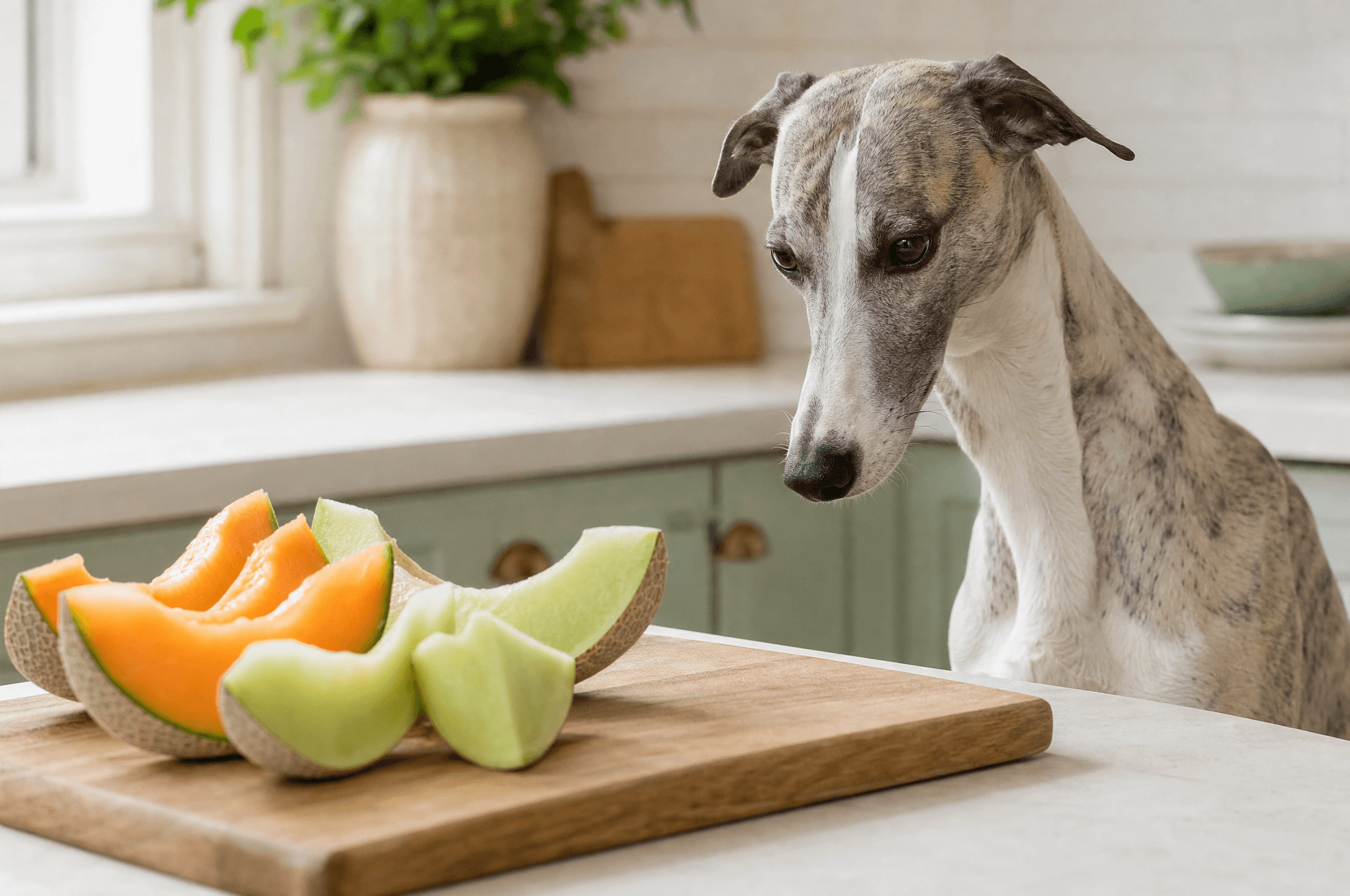
The detail
Melon flesh suits most dogs as a summer treat. It is around 90 percent water, which is why vets often mention it for hot days, though a water bowl in the shade still does the real work.
The sugar sets the limit. A 100g serving of cantaloupe carries around 8g of natural sugar, so a few cubes is a share and a whole wedge is a dessert.
Preparation matters more than variety. Cut the flesh away from the rind, flick out the seeds and cube it small, and any melon in the supermarket becomes a safe treat.
What is in 100g of melon flesh
| Water | Around 90 percent |
| Sugar | Around 8gThe reason portions stay at a few cubes |
| Calories | Around 35 |
| Anything toxic to dogs | Nothing in the fleshRind and seeds are a blockage risk, not a poison |
How much is sensible
| Dog size | Sensible amount |
|---|---|
| Small (under 10kg)Chihuahua, Jack Russell | One or two small cubes, a couple of times a week |
| Medium (10 to 25kg)Cocker spaniel, border collie | Three or four cubes |
| Large (over 25kg)Labrador, German shepherd | A small handful of cubes |
| Overweight or diabetic dogs | Skip it. Cucumber gives the same cool crunch with almost no sugar |
Honeydew, cantaloupe or galia?
The answer is the same for all of them. Honeydew, cantaloupe, galia and the rest of the melon shelf differ in sweetness and colour, but none of the flesh contains anything toxic to dogs.
Cantaloupe brings a little more beta-carotene, honeydew a little more sugar per bite. At the portion sizes above, the difference is trivia rather than a decision.
Can dogs eat melon skin and rind?
No, and this is the part of the fruit worth being firm about. Vets Now warns that melon rind may not digest fully and can cause an intestinal blockage, and the tough skin is a choking risk on the way down.
A dog that raids the compost or grabs a discarded wedge will often eat rind and all. If that happens, watch for vomiting, a hunched posture or refusing food over the next day or two, and ring your vet if any of those appear.
Melon seeds
Scoop them out before you share. The PDSA's advice for melon is flesh only, with rind and seeds removed, because a mouthful of seeds is a choking risk for smaller dogs.
A stray seed or two that slips through is nothing to worry about. It is the seed cavity eaten wholesale that earns a bin rather than a bowl.
Frozen melon cubes
A good warm-weather trick. Cube the flesh, freeze it on a tray and offer one or two as a slow, cooling chew.
Keep the portions from the table above, because freezing changes the texture and nothing else. For very small dogs, part-frozen is kinder on the teeth than rock solid.
Common questions
Can puppies eat melon?
Yes, in tiny amounts. A single small cube of soft flesh is plenty, and it makes a decent hot-day reward once a puppy is settled on solid food.
My dog ate melon rind. What should I do?
Watch rather than panic. Rind can block the gut, especially in small dogs, so look out for vomiting, straining or refusing food over the next day or two and ring your vet if any of those appear.
Is melon good for dogs in hot weather?
It helps a little because the flesh is around 90 percent water. Fresh water and shade matter far more, so treat melon as a bonus rather than a cooling strategy.
Can diabetic dogs have melon?
Best not. The natural sugar is exactly what their diet is trying to control. Cucumber gives the same cold crunch with almost none of it.
Can dogs drink melon juice?
Skip it. Juicing keeps the sugar and throws away the fibre, and shop juices often add more. Water is the drink; melon is a treat in cube form.
Which melon is safest for dogs?
They are all the same answer. Honeydew, cantaloupe and galia flesh are all safe in small cubes, and the rind and seeds of all of them go in the bin.