
Can dogs drink coffee?
Updated 8 August 2026
No. Coffee, in any form, is toxic to dogs, and Pet Poison Helpline lists coffee, coffee grounds and energy drinks among the sources it treats as poisoning risks. VCA Animal Hospitals warns that one or two caffeine pills can be fatal for a small dog. A quick lick of milky coffee is unlikely to cause harm, but beans, grounds and energy drinks are a genuine emergency.
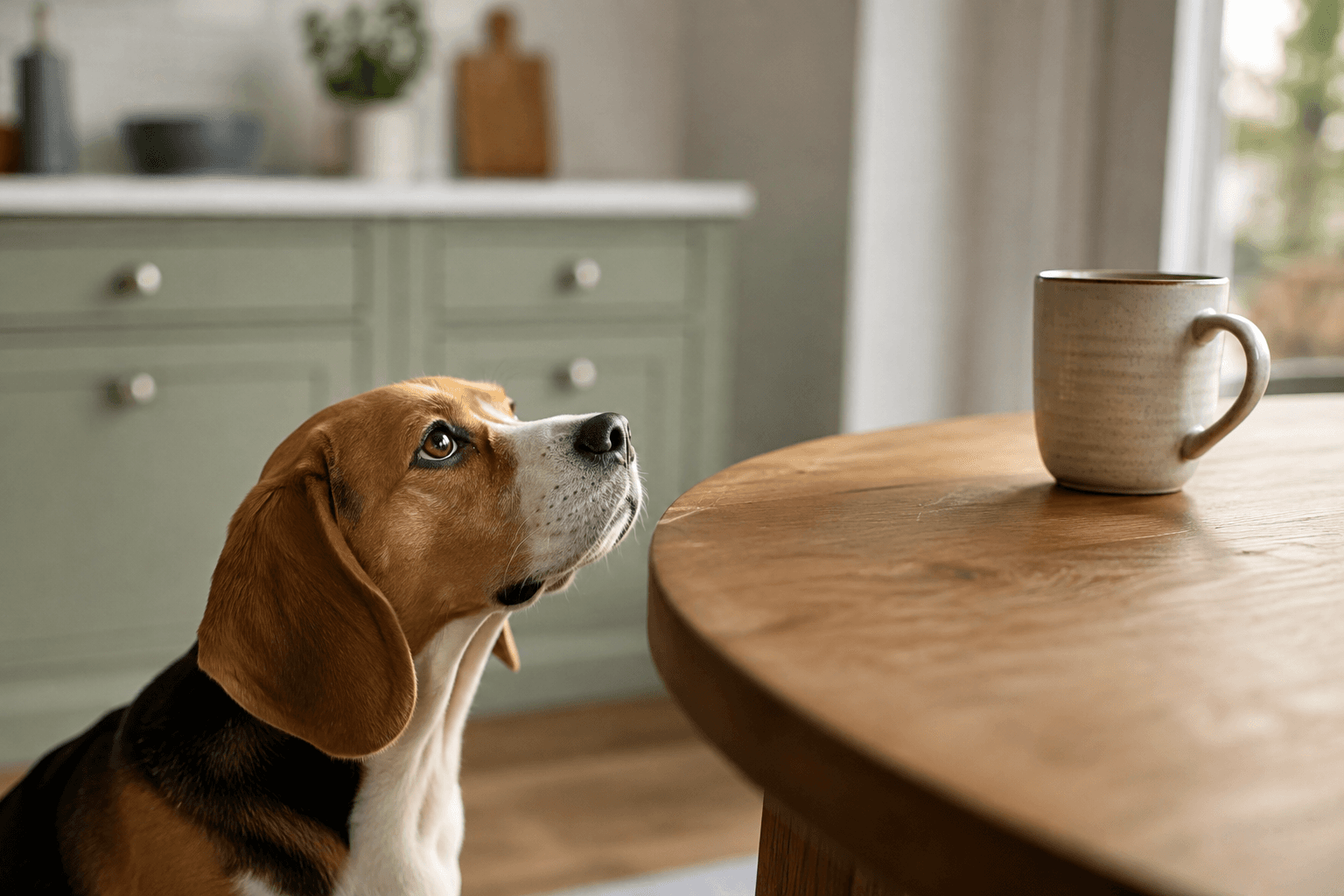
If your dog has eaten coffee
Ring your vet or the Animal PoisonLine straight away, since symptoms usually start within one to two hours. Do not wait to see if your dog seems fine, and try to work out roughly how much coffee, in what form, was eaten or drunk. Out of hours, Vets Now runs emergency clinics across the UK, and the Animal PoisonLine is on 01202 509000.
- The detail
- Caffeine content and toxic thresholds
- Can dogs eat coffee grounds or beans?
- Is decaf coffee safe for dogs?
- Coffee pods, capsules and instant sachets
- Coffee-flavoured food: ice cream, cake and tiramisu
- Energy drinks, pre-workout and caffeine pills
- My dog eats coffee grounds from the bin and seems fine
- Better things to share
- Common questions
The detail
Every form of coffee contains caffeine, and Pet Poison Helpline is clear that whole beans, grounds, brewed coffee, espresso and even used grounds tipped in the food caddy all carry it. Dogs are more sensitive to caffeine than people, so the same drink that gets an owner through a Monday morning is a genuine toxin for the dog under the table.
Concentration is what turns an everyday spill into an emergency. Pet Poison Helpline notes that one or two licks of coffee is unlikely to cause poisoning in most pets, but unused coffee grounds or beans are a different story, since used grounds still hold roughly 60 to 100mg of caffeine per tablespoon, and a dog eating several tablespoons from the bin can reach a toxic or even lethal dose.
Onset is fast. Pet Poison Helpline and VCA Animal Hospitals both put the start of symptoms at one to two hours after ingestion, with signs lasting anywhere from 12 to 36 hours, which is a long stretch to be watching a dog for tremors or an abnormal heart rhythm.
VCA Animal Hospitals also flags less obvious sources worth knowing, including coffee-flavoured ice cream, chocolate-covered coffee beans and coffee liqueurs, all of which pack caffeine into a form dogs find genuinely appealing rather than bitter and off-putting.
Caffeine content and toxic thresholds
| Used coffee grounds | Roughly 60 to 100mg caffeine per tablespoonPet Poison Helpline |
| Caffeine pills or supplements | One or two can be fatal for a small dogVCA Animal Hospitals |
| Symptom onset | Within 1 to 2 hours of ingestion |
| Symptom duration | 12 to 36 hours |
| A single lick of milky coffee | Unlikely to poison most petsPet Poison Helpline |
Can dogs eat coffee grounds or beans?
No, and this is the highest-risk form of coffee exposure. Pet Poison Helpline specifically warns that unused coffee grounds or beans could cause serious toxicity, since the caffeine is concentrated and a dog raiding a bag of beans or a used-grounds caddy can eat far more than it would ever drink as brewed coffee.
Keep a compost caddy or a bag of beans somewhere a dog genuinely cannot get into, rather than somewhere it merely seems unlikely to try, since the smell of coffee grounds is often enough to draw a food-motivated dog straight to the bin.
Is decaf coffee safe for dogs?
Decaffeinated coffee still contains a small amount of caffeine, typically a few milligrams per cup rather than none at all, so a lick from a decaf mug is a much lower risk than a regular one but is not automatically a zero-risk drink.
Milk, cream and sugar added to a decaf coffee are a separate, smaller concern for a dog's stomach, but the sensible habit is the same as with regular coffee: keep mugs off low tables and do not let a dog finish the dregs.
Coffee pods, capsules and instant sachets
A single coffee pod or capsule holds a concentrated dose of coffee in a small volume, and a dog that chews through the foil and plastic to get at the grounds inside is getting a meaningful amount of caffeine in one go, on top of a mouthful of plastic and foil.
Instant coffee granules and sachets are just as concentrated, so a torn-open jar or a handful of sachets pulled from a cupboard is closer to the risk of raw grounds than to a weak, milky cup.
Coffee-flavoured food: ice cream, cake and tiramisu
VCA Animal Hospitals specifically names coffee-flavoured ice cream and chocolate-covered coffee beans as tempting, caffeine-carrying foods, and tiramisu adds cocoa and often alcohol on top of the coffee-soaked sponge, stacking three separate toxins into one dessert.
These desserts are easy to underestimate because they read as a sweet treat rather than a coffee. Treat any coffee-flavoured pudding, cake or ice cream left on a low table the same way you would a mug of coffee.
Energy drinks, pre-workout and caffeine pills
Energy drinks and caffeine or pre-workout supplements pack far more caffeine into a can or a tablet than a cup of coffee does, and VCA Animal Hospitals warns that one or two caffeine pills can be fatal for a small dog, which makes a dropped supplement pot a genuine emergency rather than a curiosity.
Gym bags and kitchen counters are the two places these turn up most in a UK household, so treat a can of energy drink or a tub of pre-workout with the same care as any medicine bottle.
My dog eats coffee grounds from the bin and seems fine
A dog that has raided the caddy before without visible symptoms has likely had a smaller dose than the amount that actually causes poisoning, not proof that coffee grounds are safe for that dog specifically. Used grounds still carry a meaningful amount of caffeine, and the exact quantity swallowed varies every single time depending on how much was in the bin and how long the dog had access to it.
Treat every raid on the bin as a fresh risk rather than a repeat of a story that ended fine last time, and move to a bin the dog cannot open rather than relying on luck holding.
Signs to watch for
- Hyperactivity, restlessness or excessive pacing
- Increased heart rate or abnormal heart rhythm
- Vomiting and excessive thirst or urination
- Tremors or seizures in more serious cases
Common questions
My dog licked my coffee cup. Should I worry?
Pet Poison Helpline says one or two licks of coffee is unlikely to cause poisoning in most pets, so a quick lick is a lower risk than eating grounds or beans. Still watch for restlessness, vomiting or a fast heart rate over the next couple of hours.
Can dogs eat coffee grounds from the caddy?
No. Used grounds still hold roughly 60 to 100mg of caffeine per tablespoon according to Pet Poison Helpline, and a dog eating several tablespoons can reach a toxic dose. Ring your vet if a dog gets into the caddy.
Is decaf coffee dangerous for dogs?
It carries far less caffeine than regular coffee but is not completely caffeine-free, so a lick is a low risk while a proper serving is still worth avoiding on purpose.
How much caffeine is fatal to a dog?
VCA Animal Hospitals warns that one or two caffeine pills can be fatal for a small dog, and the same logic applies to concentrated sources like beans, grounds and energy drinks. Weight matters a great deal, so always tell your vet how much your dog ate and how big they are.
What are the signs of caffeine poisoning in a dog?
VCA Animal Hospitals lists increased heart rate, hyperactivity, restlessness, vomiting and increased urination, usually starting within one to two hours of ingestion and lasting 12 to 36 hours. Tremors or seizures point to a more serious dose.
Are energy drinks worse than coffee for dogs?
Generally yes, since energy drinks and pre-workout supplements pack more caffeine into a smaller volume than brewed coffee. Treat a dropped can or supplement tub as a genuine emergency.
Can puppies have coffee?
No. Puppies are smaller, so the same amount of caffeine is a bigger relative dose, and their nutrition should come entirely from puppy food, not from anything containing caffeine.