
Can dogs drink tea?
Updated 7 August 2026
Best avoided as a rule, though a stray lick is not an emergency. Tea contains caffeine, which Pet Poison Helpline lists as toxic to pets. A dropped cup of milky tea rarely harms a dog, but a mug on its own, a handful of dry tea bags, or a caffeine supplement is a genuine hazard, especially for a small dog.
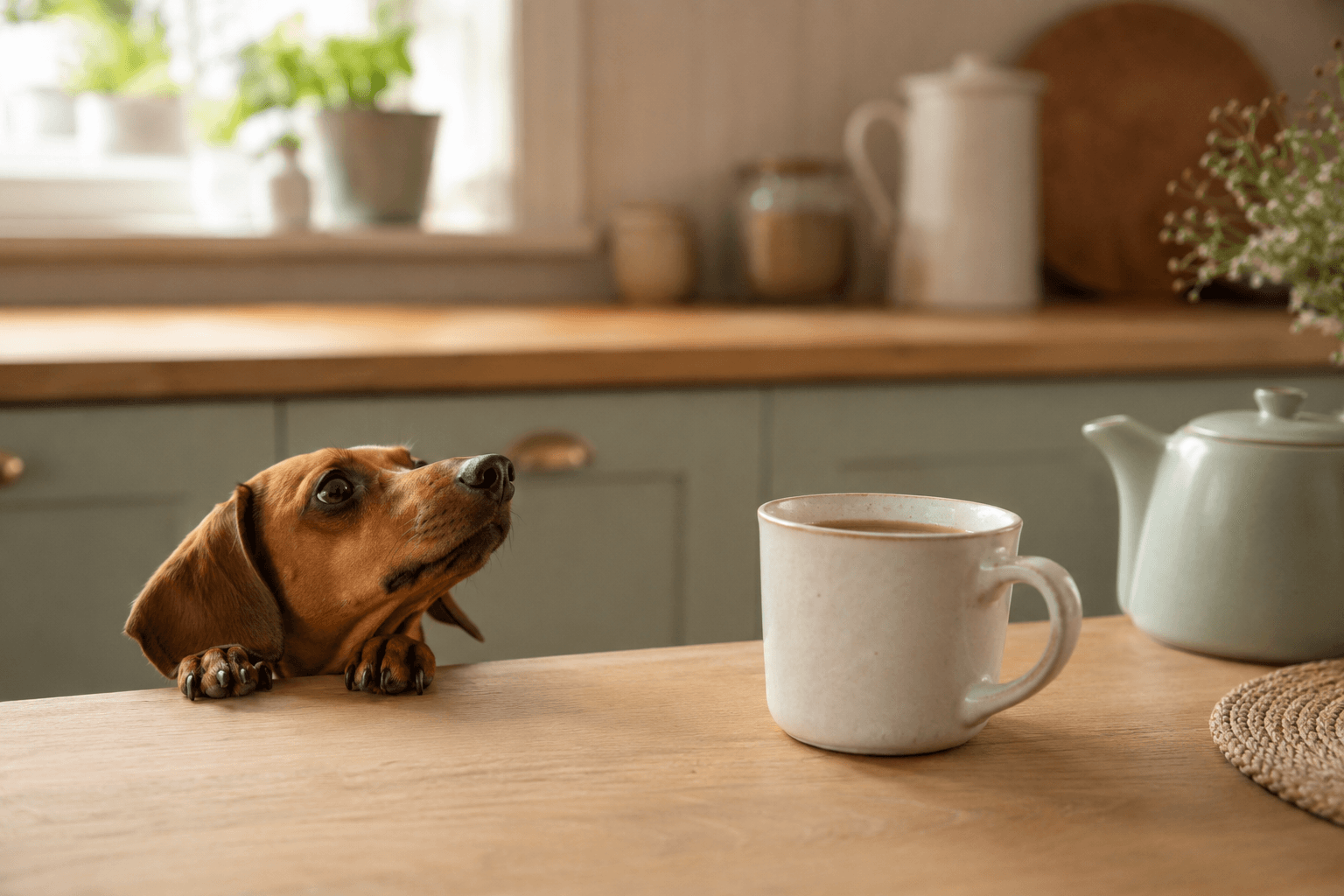
The detail
Tea leaves, whether loose or in a bag, come from the Camellia sinensis plant, and that is where the caffeine comes from. Black, green, white and oolong teas are all the same plant processed differently, so all of them carry caffeine; herbal infusions such as chamomile or peppermint are not made from true tea and do not contain it. NHS guidance puts an average cup of brewed tea at around 75mg of caffeine, close to three-quarters the amount in a cup of instant coffee.
Caffeine is a central nervous system stimulant, and Pet Poison Helpline notes dogs are more sensitive to it than people. Pet Poison Helpline's caffeine poisoning guidance puts the threshold for mild signs at around 9mg per lb of bodyweight, roughly 20mg per kg, so a 5kg dog reaches that on about 100mg, not far off the caffeine in a single strong mug. VCA Animal Hospitals goes further, warning that one or two caffeine pills or supplements can be fatal for a small dog or cat.
A splash of milky tea from a dropped mug is a different matter from the dry product. Vets Now says a couple of laps of tea or coffee are unlikely to do any harm, but a dog that swallows a handful of loose leaves or several dry tea bags is taking in caffeine that has not been diluted by water, a far bigger dose in a much smaller volume.
Caffeine by source
| Average cup of brewed tea | About 75mg of caffeineNHS estimate; roughly three-quarters the caffeine in a cup of instant coffee |
| Threshold for mild signs in dogs | About 9mg per lb (20mg per kg) of bodyweightPet Poison Helpline; a 5kg dog reaches this on around 100mg |
| A used tea bag | Still holds a share of its caffeineLess than an unused bag, more than a cup of the brewed liquid |
| Decaffeinated tea | Not toxicPet Poison Helpline: adds nothing water does not |
| Green tea extract in supplements or diet pills | Highly concentratedVCA: one or two caffeine pills can be fatal for a small dog |
How much is sensible
| Dog size | Sensible amount |
|---|---|
| Small (under 10kg)Chihuahua, Jack Russell | Best avoided; a stray lick of milky tea from a dropped cup is not a concern |
| Medium (10 to 25kg)Cocker spaniel, border collie | Best avoided; a mouthful needs watching rather than panic |
| Large (over 25kg)Labrador, German shepherd | Best avoided; caffeine still adds up, just at a higher threshold |
| Dogs with a heart condition, or known caffeine sensitivity | None. A racing heart is exactly what caffeine causes |
My dog drank tea. Should I worry?
A few laps from a dropped mug of milky tea is rarely a problem. Vets Now says a couple of laps of tea or coffee are unlikely to do any harm, and the amount a dog can realistically drink in one go dilutes the caffeine a lot.
The picture changes with a full mug drunk in one sitting, especially for a small dog. Watch for restlessness, a racing heart or panting that does not settle within an hour or two, and ring your vet if any of those appear rather than waiting it out.
Tea bags and loose tea leaves
This is the version that actually causes trouble. A dry tea bag or a spoonful of loose leaves carries the full caffeine load of the leaf with none of the dilution that comes from brewing, and Vets Now specifically warns that a dog swallowing a handful of tea bags or coffee beans could be in danger.
Bin raiding is the usual route in, since a used tea bag still holds a share of its caffeine even after one brew. Keep the kitchen bin lidded and count how many bags are missing if your dog gets into it, since your vet will want an estimate.
A swallowed tea bag also carries its own choking and blockage risk on top of the caffeine, particularly in small dogs.
Herbal and decaf tea
True tea, black, green, white or oolong, all comes from the same Camellia sinensis plant and all of it carries caffeine. Herbal infusions such as chamomile, peppermint and rooibos are not made from that plant and are a much lower risk on the caffeine front, though they are not a food dogs need.
Decaffeinated tea removes most of the caffeine, and Pet Poison Helpline says it is not toxic to dogs, but it still adds nothing a dog needs over fresh water.
Check the full ingredients list on any blended herbal or fruit tea rather than assuming the word 'herbal' rules out every risk, since some blends carry other plant extracts or flavourings worth a second look.
Tea with milk and sugar
A splash of milk in a builder's brew adds little a dog cannot already handle in small amounts, though a lactose-sensitive dog may still get a loose stool from it. Sugar in a typical UK cup is not an emergency at a teaspoon or two, though it adds up in a dog that regularly gets tea instead of water.
Sweeteners are the one to check for. If the tea has been sweetened with a sugar-free product containing xylitol, treat it as a xylitol incident rather than a tea one, since Pet Poison Helpline lists xylitol as capable of causing life-threatening low blood sugar within 10 to 15 minutes.
Green tea extract and caffeine supplements
Green tea extract turns up in some weight-management supplements and in far more concentrated diet pills and pre-workout powders made for people. VCA Animal Hospitals warns that as little as one or two caffeine pills can be fatal for a small dog, which makes a spilled tub of supplements a bigger worry than the teapot.
Check any tub of pills, powder or capsules for caffeine or green tea extract on the label before assuming it is harmless, and ring your vet with the packaging in hand if your dog has swallowed a real quantity.
Signs to watch for
- Restlessness, pacing or hyperactivity within one to two hours of drinking tea or eating dry leaves
- A racing heart, panting or a raised temperature
- Vomiting or diarrhoea
- Tremors, seizures or collapse after a large amount, particularly a swallowed tea bag or supplement
Common questions
Can dogs drink tea with milk?
A small splash of milky tea is unlikely to harm a dog, since the caffeine is diluted by the amount of liquid a dog can lap in one go. It is still not something to offer on purpose, and the milk can upset a lactose-sensitive stomach on top of the caffeine.
My dog ate a tea bag. What should I do?
Ring your vet with an estimate of how many bags and whether they were used or fresh, since a fresh bag carries more caffeine than a used one. Watch for restlessness, a racing heart or vomiting over the next couple of hours, and do not wait for symptoms if a small dog has swallowed several bags.
Is green tea safer than black tea for dogs?
No. Both come from the same plant and both carry caffeine, so neither is a safe choice to offer on purpose. Herbal infusions such as chamomile or peppermint carry no caffeine, which makes them the lower-risk option if you want to share a warm drink.
Can dogs have chamomile tea?
Chamomile is not made from the tea plant and contains no caffeine, so it carries a much lower risk than black or green tea. It is not something a dog needs, and any blended herbal product should be checked for other added ingredients before sharing.
Is decaf tea safe for dogs?
Pet Poison Helpline says decaffeinated tea is not toxic to dogs, since most of the caffeine has been removed. It still adds nothing a dog needs over fresh water, so there is little reason to offer it on purpose.
How much tea is dangerous for a dog?
Pet Poison Helpline puts the threshold for mild caffeine signs at around 9mg per lb of bodyweight, about 100mg for a 5kg dog, close to the caffeine in a single average mug. A dry tea bag or a spoonful of loose leaves carries a bigger dose in a smaller volume than the same amount brewed into a cup.
Can puppies have tea?
No. Puppies are smaller and more sensitive to caffeine than adult dogs, and their complete puppy food already covers everything they need without a hot drink on top.