
Can dogs eat honey?
Updated 5 August 2026
Yes, for healthy adult dogs in small amounts. Honey is not toxic, but it is nearly pure sugar, so a teaspoon is the ceiling for a medium dog and less for a small one. Puppies, diabetic dogs and dogs with weakened immune systems should have none at all.
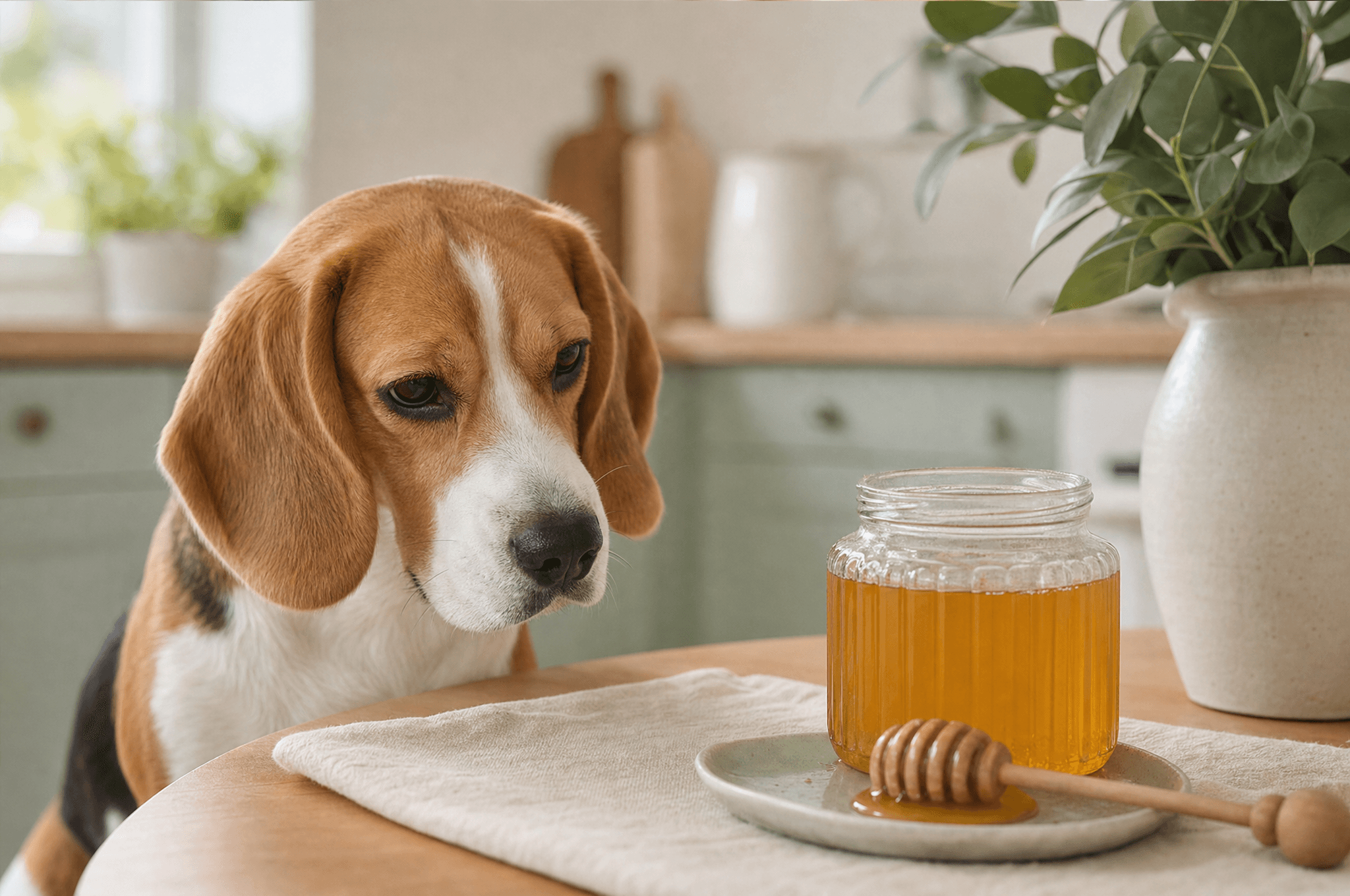
The detail
Honey is about 80g of sugar per 100g, which makes it the most concentrated sweet thing most dogs will ever be offered. Nothing in it is toxic; the entire question is dose.
A teaspoon holds roughly 6g of sugar and around 20 calories. For a 6kg terrier that is a serious slice of the day's treat budget, which is why the ceiling drops to half a teaspoon for small dogs.
The exceptions matter more than the rule. Diabetic and overweight dogs have no room for concentrated sugar, and raw honey can carry Clostridium botulinum spores, which is why it is kept from human infants and why the same caution applies to puppies.
The sugar maths
| Sugar in honey | About 80g per 100g |
| A teaspoon (about 7g) | Roughly 6g of sugar, around 20 caloriesThe occasional ceiling for a medium dog |
| A tablespoon (about 21g) | Roughly 17g of sugarToo much for any dog in one sitting |
| Anything toxic to dogs | Nothing in plain honeySugar-free honey substitutes can contain xylitol, which is an emergency |
How much is sensible
| Dog size | Sensible amount |
|---|---|
| Small (under 10kg)Chihuahua, Jack Russell | Half a teaspoon at most, and not every day |
| Medium (10 to 25kg)Cocker spaniel, border collie | Up to a teaspoon, occasionally |
| Large (over 25kg)Labrador, German shepherd | A teaspoon, occasionally |
| Puppies, diabetic, overweight or immunocompromised dogs | None |
Healthy adult dogs and the teaspoon ceiling
For a healthy adult dog, a little honey is a harmless treat: smeared thinly on a lick mat, stirred into plain yogurt, or straight off a spoon. The teaspoon ceiling exists because of what a teaspoon already contains.
That teaspoon is roughly 6g of sugar. Sugary extras are how UK dogs end up overweight, so honey works best as an occasional trick rather than a daily ritual.
Puppies and immunocompromised dogs
Raw honey can carry Clostridium botulinum spores. A healthy adult gut deals with them, which is the same reasoning behind the human rule that infants under one get no honey.
VCA Animal Hospitals describes botulism in dogs as paralysis that starts as rear-leg weakness, and it is not an illness to gamble on. Puppies and dogs with weakened immune systems get no honey, raw or otherwise.
Can dogs have maple syrup?
Pure maple syrup gets the same answer as honey: not toxic, mostly sugar, small occasional amounts only. The sugar maths are near enough identical.
The trap is the imitation bottle. Maple-flavoured and sugar-free syrups can be sweetened with xylitol, which the Pet Poison Helpline has found in syrup products, and xylitol is an emergency at tiny doses. Read the label before anything reaches the dog.
Honey for allergies and kennel cough
The claim that local honey eases pollen allergies circulates every spring, and the evidence behind it is thin. None of the veterinary sources cited on this page endorses honey as an allergy treatment for dogs.
For a coughing dog, honey may soothe a throat the way it does for humans, but it treats nothing. Kennel cough is infectious and worth a vet call, both for treatment and because your dog is contagious to others.
Is manuka honey worth it for dogs?
Eaten off a spoon, manuka is the same sugar as any other honey at several times the price. There is no feeding reason to buy it for a dog.
The honey vets actually use is a sterilised medical-grade product applied to wounds under supervision, which VCA notes is safe if licked. That is a treatment your vet chooses, not a jar to self-prescribe.
If your dog overdoes it
Plain honey needs no first aid; a sticky dog and a reduced treat budget cover it. If your dog eats a sugar-free honey substitute or syrup, check the label for xylitol and ring your vet immediately if it is listed. Diabetic dogs that get into honey need a vet call the same day, because the sugar hit matters alongside insulin.
Common questions
How much honey can a dog have?
Half a teaspoon for a small dog, up to a teaspoon for a medium or large one, and occasionally rather than daily. A teaspoon already carries about 6g of sugar.
Can puppies have honey?
No. Raw honey can carry botulism spores, which is the same reason human infants under one are kept away from it. Wait for adulthood, then keep it occasional.
Does local honey help dogs with hay fever?
The evidence for that idea is thin, and no veterinary source cited on this page supports it. Itchy, allergy-prone dogs do better with a vet conversation than a honey jar.
Does honey help kennel cough?
It may soothe the throat, but it cures nothing. Kennel cough is infectious, so ring your vet for advice and keep your dog away from others while it lasts.
Can dogs have maple syrup?
Pure maple syrup follows the honey rules: small, occasional, adults only. Maple-flavoured and sugar-free syrups can contain xylitol, which is severely toxic to dogs, so check every label.
Is manuka honey better for dogs?
Not for eating. It is the same sugar at a higher price. The medical-grade honey vets use on wounds is a supervised treatment, not a cupboard purchase.
My diabetic dog ate honey. What should I do?
Ring your vet the same day with your dog's weight and the amount eaten. Concentrated sugar interacts with insulin dosing, so this one is worth a call rather than a wait.