Can dogs drink milk?
Updated 6 August 2026
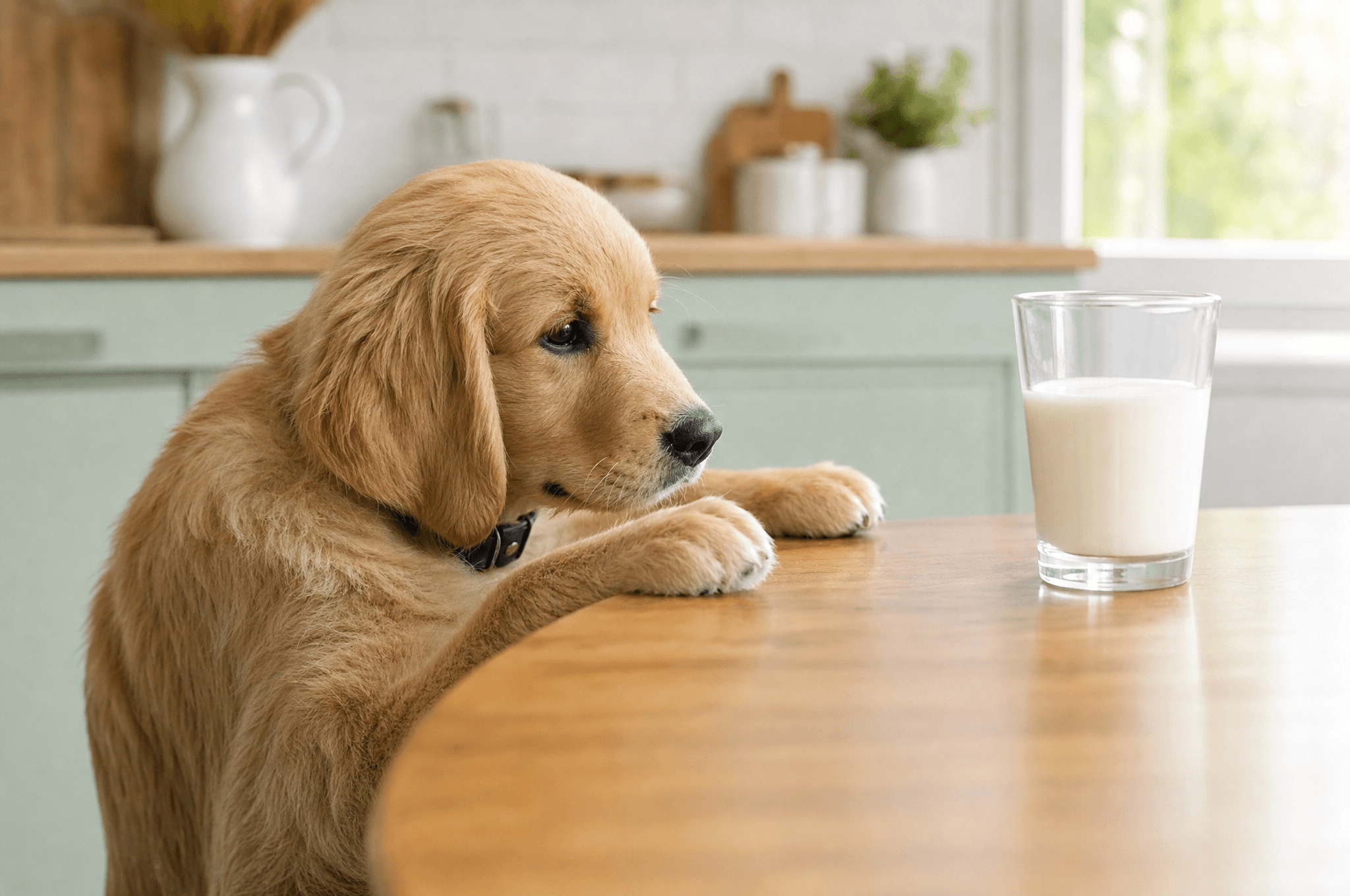
Not really. Most adult dogs lose the enzyme that digests lactose after puppyhood, so milk causes loose stools, wind and stomach ache rather than poisoning. A splash left in a cereal bowl is unlikely to do harm. A bowl of it is a bad evening for both of you.
The detail
Puppies cope with milk because they make lactase, the enzyme that splits lactose into sugars the gut can absorb. Production drops off after weaning, so an adult dog handles a saucer of milk far worse than the puppy it used to be.
The lactose that goes undigested carries on into the large intestine and ferments there. That is where the wind, the gurgling and the soft stool the following morning come from.
Whole milk adds about 3.6g of fat per 100ml on top, which matters for dogs that have had pancreatitis. Semi-skimmed and skimmed cut the fat and keep the lactose, so they fix the smaller half of the problem.
There is also nothing in milk a dog needs. A complete dog food already covers the calcium, the protein and the B vitamins, so the only thing milk adds is a digestive gamble.
What is in 100ml of cow's milk
| Lactose | About 4.7gThe sugar most adult dogs no longer digest |
| Fat (whole milk) | About 3.6g |
| Fat (skimmed) | About 0.1gLess fat, same lactose |
| Anything toxic to dogs | NothingThe trouble is digestive, not poisonous |
How much is sensible
| Dog size | Sensible amount |
|---|---|
| Small (under 10kg)Chihuahua, Jack Russell | A teaspoon at most, and only if your dog has had milk before without trouble |
| Medium (10 to 25kg)Cocker spaniel, border collie | A tablespoon now and then, never a bowl |
| Large (over 25kg)Labrador, German shepherd | The splash left in a cereal bowl, occasionally |
| Puppies and dogs with a pancreatitis history | None. Puppies need a proper puppy milk replacer, and fat-sensitive dogs need neither the fat nor the sugar |
Can dogs drink cow's milk?
This is the version most dogs get offered, and the answer is that a splash is not poison but a bowl is a mistake. Most adult dogs make very little lactase, so the sugar in the milk goes undigested.
A cereal bowl's worth for a small dog usually means a soft stool within a day. A mug of it can mean vomiting and a night of getting up to let your dog out.
If your dog has drunk a lot, leave fresh water down and skip the next meal if the stomach is unsettled. Ring your vet if the diarrhoea runs past a day or two, sooner for a puppy or a small dog.
Lactose-free milk
Lactose-free milk takes out the part most dogs struggle with, so it goes down better and is less likely to end in loose stools. It is otherwise still cow's milk: the same fat, the same calories, the same absence of anything your dog is short of.
Better tolerated is not the same as needed. If you give it at all, treat it as a treat with a size limit rather than a drink, and keep water as the thing in the bowl.
Puppies and cow's milk
Cow's milk is not a substitute for a proper puppy milk replacer. The PDSA's hand-rearing guidance says plainly that cow's milk is unsuitable and that newborn puppies need an artificial formula made for puppies, and it rules out the kitten and puppy milk drinks sold in supermarkets too.
If you are hand-rearing orphan puppies, ring a vet the same day. Feeding volume, feeding frequency, keeping the litter warm and helping them toilet all matter in the first weeks, and there is no way to work that out from a shopping list.
Weaned puppies sit in the same place as adults. A saucer of cow's milk is a stomach upset waiting to happen, and a puppy has less body weight to absorb it.
Oat, almond and soy milk
Plant milks are not toxic to dogs, and they are also unnecessary. They bring calories and sugar to a diet that already covers everything, and nut milks bring fat with them.
Sweetened cartons are the ones to check. Anything labelled sugar-free may be sweetened with xylitol, which causes a life-threatening drop in blood sugar in dogs and can cause liver failure, so read the ingredients before a drop goes near a bowl.
Soy is worth a second thought as well. VCA Animal Hospitals lists soy among the proteins that most often cause food allergy in dogs, alongside dairy, beef, chicken, egg and wheat gluten.
Milk in tea and the leftover cereal bowl
The PDSA is clear that adding milk to tea does not make tea safer for a dog and makes it worse, because the milk upsets the stomach on top of the caffeine. Tea stays yours.
Cereal leftovers are the commonest route in around a UK kitchen. A bowl of milky Weetabix left within reach is the classic version, and the milk causes more trouble than the biscuit does.
Put bowls straight in the sink rather than on the coffee table. That one habit removes most of the milk a dog ever drinks.
Signs to watch for
- Loose stools, usually within a day
- Wind and a gurgling stomach
- Vomiting after a large amount
If your dog overdoes it
A splash needs no action beyond fresh water. If your dog has drunk a lot and is vomiting or has diarrhoea that carries on past a day, ring your vet, sooner for puppies and small dogs. Out of hours, Vets Now runs emergency clinics across the UK.
Common questions
My dog drank a bowl of milk. What should I do?
Leave fresh water down and expect wind or a soft stool within a day. Ring your vet if vomiting or diarrhoea carries on past a day or two, and sooner if your dog is a puppy or under 10kg.
Can dogs have lactose-free milk?
It is better tolerated because the lactose has been broken down already. It is still cow's milk with the same fat and calories, so keep it to a small amount and do not make it a routine.
Is goat's milk better for dogs than cow's milk?
Not meaningfully. VCA Animal Hospitals names cow's and goat's milk together when it describes lactose intolerance in dogs, so both can cause diarrhoea and bloating.
Can puppies drink cow's milk?
No. The PDSA says cow's milk is unsuitable for puppies and that newborns need an artificial formula made for puppies. If you are hand-rearing orphan puppies, speak to a vet the same day.
Can dogs have oat milk or almond milk?
Neither is toxic, and neither does anything useful for a dog. Check the label first, because anything sold as sugar-free may contain xylitol, which is severely toxic to dogs.
Does milk settle a dog's upset stomach?
No, it usually makes things worse, because undigested lactose ferments in the gut. Water and a bland meal are the safer route, and a vet call if the upset lasts more than a day or two.
Can dogs have milk in tea?
No. The PDSA says milk makes tea worse for a dog rather than safer, and tea itself carries caffeine that dogs are sensitive to. Keep the mug out of reach.