
Can dogs eat steak?
Updated 9 August 2026
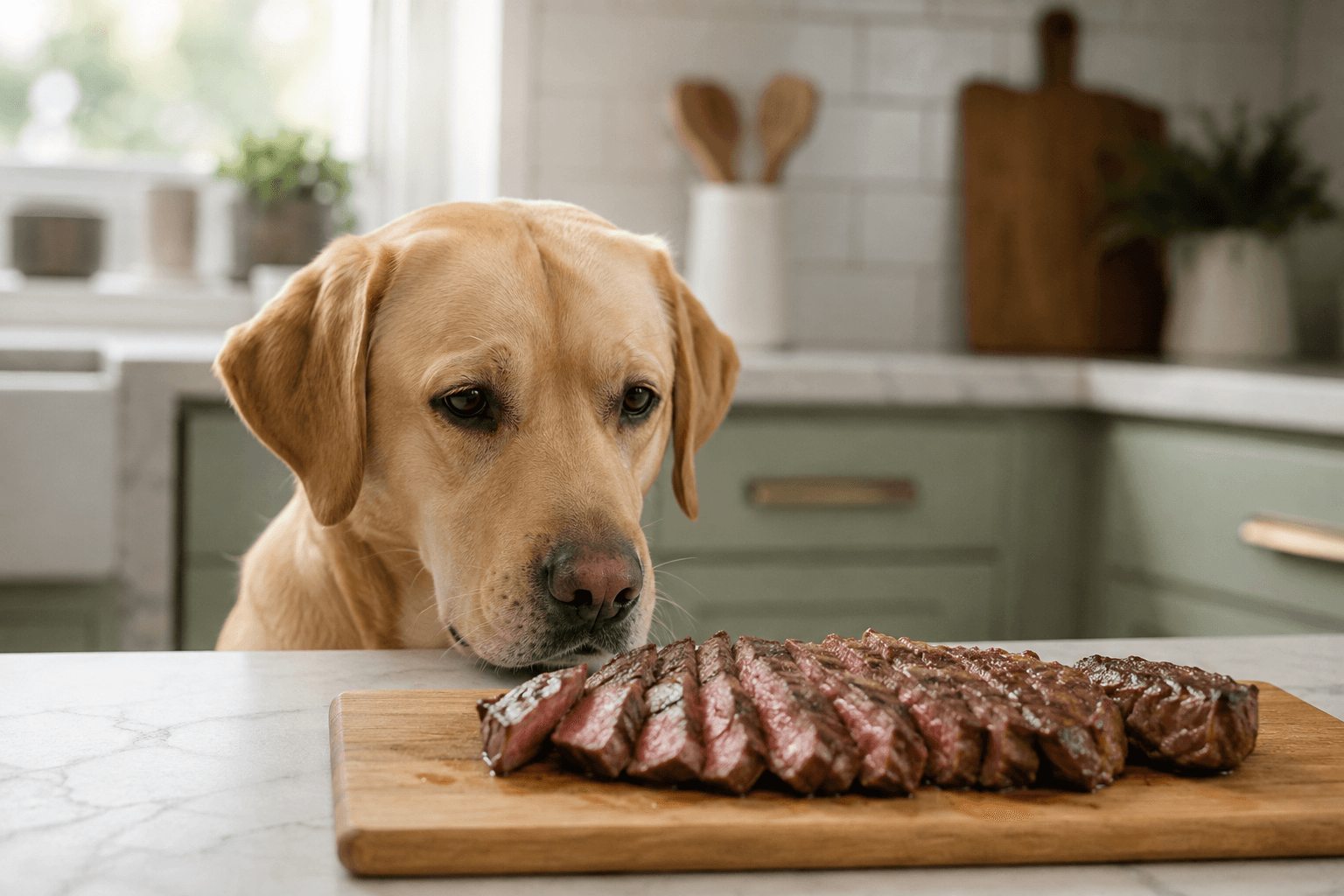
Yes, in moderation. Plain cooked lean steak, unseasoned, is a fine occasional protein treat for most dogs and generally well tolerated. The real risks are fat trimmings and steak fat, which are linked to pancreatitis in a large amount, and any seasoning, marinade or salt used in cooking it for people, rather than the meat itself.
- The detail
- Fat content: lean steak vs steak fat and trimmings
- How much is sensible
- Can dogs eat steak fat and trimmings?
- Can dogs eat raw steak?
- What about seasoned, marinated or salted steak?
- My dog stole a steak off the counter or plate, what now
- Is a bone-in steak safe for dogs?
- Better things to share
- Common questions
The detail
A plain, cooked, lean piece of steak is mostly protein, and vets generally have no objection to it as an occasional treat. Cutting it small, cooking it through and leaving out any seasoning turns a Sunday roast leftover into a reasonable training reward or plate topper, in the same way a plain piece of chicken breast is.
Fat is the main thing to watch, and it sits mostly in the trimmings rather than the lean meat itself. VCA Animal Hospitals notes that pancreatitis may be triggered in some cases by a fatty meal, and PDSA's pancreatitis guidance lists high-fat foods among the recognised risk factors. A ribeye's marbling or the strip of fat trimmed off a sirloin carries far more fat gram for gram than the lean muscle meat, so trimming visible fat before offering steak is a simple way to keep it on the safer side.
The seasoning is usually the real hazard, not the steak. A steak cooked for people is often salted generously, and some marinades use garlic or onion for flavour, both of which PDSA confirms damage a dog's red blood cells and can cause anaemia. A plain, unseasoned piece of steak avoids all of that, so the safest approach is cooking a small piece separately rather than trimming the salt and garlic off a piece meant for the family plate.
Raw steak is more debated. Vets are generally cautious about recommending raw meat without proper raw-feeding hygiene knowledge, since raw or undercooked steak carries the same bacterial risk, salmonella and E. coli, as any raw meat does for a dog or the people handling it. Some raw feeders include raw steak as part of a carefully managed raw diet, but plain cooked steak remains the safer, more mainstream vet-endorsed default for anyone not already following raw-feeding hygiene practices.
Bone-in cuts add a separate hazard on top of everything above. A T-bone or a steak still attached to a rib bone carries the same splintering and choking risks covered on this site's beef bones page, and that risk exists whether the steak itself is otherwise a fine occasional treat or not.
Fat content: lean steak vs steak fat and trimmings
| Trimmed lean steak (sirloin, fillet) | Relatively lean once trimmedA reasonable occasional protein treat, plain and unseasoned |
| Visible fat, trimmings and fatty cuts | Much higher in fatLinked to pancreatitis in a large amount, per VCA and PDSA |
| Raw or undercooked steak | Carries the same salmonella and E. coli risk as any raw meatVets are cautious without proper raw-feeding hygiene |
| Seasoning, marinades and salt | The actual hazard in most casesGarlic and onion marinades or heavy salting, not the meat itself |
How much is sensible
| Dog size | Sensible amount |
|---|---|
| Small (under 10kg)Chihuahua, Jack Russell | A few small cubes of plain, trimmed, cooked steak occasionally, unseasoned |
| Medium (10 to 25kg)Cocker spaniel, border collie | A handful of small cubes of plain, trimmed, cooked steak now and then |
| Large (over 25kg)Labrador, German shepherd | A larger handful of plain, trimmed, cooked steak occasionally, still not a daily addition |
| Fat trimmings and steak fat | Best left off the plate entirely, or offered only in a token, pea-sized amount |
Can dogs eat steak fat and trimmings?
Not in any real quantity. Steak fat, whether it is the strip trimmed off a sirloin or the marbling running through a ribeye, is far more concentrated in fat than the lean meat itself, and VCA Animal Hospitals' guidance on pancreatitis names a fatty meal as a recognised trigger for the condition.
A token, pea-sized taste of fat trimmed off a well-cooked steak is unlikely to cause a problem for most healthy dogs, but offering the fat deliberately, or a large piece of it in one go, is where the real risk sits. Trim the fat off before sharing steak, and bin it rather than adding it to a dog's bowl.
Can dogs eat raw steak?
This is more debated than a flat yes or no. Raw and undercooked steak carries the same bacterial risk, salmonella and E. coli, as any raw meat, and vets are generally cautious about recommending raw meat to owners who are not already following proper raw-feeding hygiene, since these bacteria can make both dogs and the people handling their food unwell.
Some raw feeders include raw steak as part of a carefully sourced and handled raw diet, and that is a genuine choice some owners make with their vet's knowledge. For anyone not already set up that way, a plain, thoroughly cooked piece of steak is the safer, more straightforward option, and it is the version most vets would recommend by default.
What about seasoned, marinated or salted steak?
This is usually the actual hazard rather than the meat itself. Salt used generously in cooking a steak for people, and marinades built around garlic or onion, are both genuine risks, and PDSA's guidance on onion and garlic poisoning is clear that alliums damage a dog's red blood cells and can cause anaemia even in cooked or dried form.
A plain piece of steak, grilled or fried with nothing added, avoids this problem entirely. If you want to share a bit of your dinner, it is worth cooking a small, separate, unseasoned piece rather than trying to pick the salt and garlic off a piece meant for your own plate.
My dog stole a steak off the counter or plate, what now
A single stolen piece of plain or lightly seasoned steak is unlikely to be a genuine emergency for most healthy adult dogs, though it is still worth keeping an eye on them. The bigger the piece, and the more heavily seasoned, salted or fatty it was, the more worth watching your dog is over the following day.
Watch for vomiting, diarrhoea, a painful or tense abdomen, or lethargy, which are the signs PDSA and VCA both associate with pancreatitis, and call your vet if any of these appear or if your dog ate a garlic or onion-heavy marinade along with the meat.
Is a bone-in steak safe for dogs?
No, treat a bone-in cut like a T-bone or a rib steak as a separate hazard from the meat itself. Cooked bones splinter, and this site's beef bones page covers why vets advise against cooked bones generally, whatever animal or cut they came from.
If you want to share steak with your dog, cut a piece of the meat away from the bone rather than letting them chew on or swallow the bone itself, and keep the bone well out of reach once the meal is over.
Signs to watch for
- Vomiting or diarrhoea after a fatty or seasoned piece
- A painful, tense or bloated-looking abdomen
- Lethargy or reduced appetite, suggesting pancreatitis rather than simple stomach upset
- Vomiting or diarrhoea a day or two after raw or undercooked steak, suggesting a bacterial upset
Common questions
Can dogs eat steak?
Yes, in moderation. Plain, cooked, lean steak with no seasoning is a fine occasional treat for most dogs, as long as visible fat is trimmed off first.
Can dogs eat steak fat?
Not in any real quantity. Steak fat is far more concentrated than the lean meat, and VCA Animal Hospitals names a fatty meal as a recognised pancreatitis trigger, so trim it off before sharing.
Can dogs eat raw steak?
It is more debated than a flat no, since raw steak carries the same salmonella and E. coli risk as any raw meat. Plain, thoroughly cooked steak is the safer, more mainstream default unless you already follow proper raw-feeding hygiene.
Is seasoned or marinated steak safe for dogs?
No, treat the seasoning as the real hazard rather than the meat. Garlic or onion marinades are genuinely toxic, per PDSA, and heavy salting is a separate concern, so a plain, unseasoned piece is the safer option.
My dog stole a steak off the table, should I worry?
A single stolen piece is unlikely to be an emergency for most healthy dogs, but watch for vomiting, a painful abdomen or lethargy over the next day or two. Call your vet if your dog seems unwell or the steak was heavily marinated.
Is a bone-in steak safe for a dog to chew?
No, a T-bone or rib steak bone carries the same splintering and choking risk as any cooked bone. Cut the meat away from the bone rather than letting your dog have the bone itself.
How much steak can I give my dog?
A few small cubes of plain, trimmed, cooked steak now and then is a reasonable occasional treat for most healthy dogs. It should not replace a balanced main meal or become a daily addition.