
Can dogs eat beef bones?
Updated 7 August 2026
No. Cooked beef bones splinter like any other cooked bone, and Battersea advises avoiding cooked bones at all cost because of the risk of constipation or a fatal gut perforation. Raw beef marrow bones are sold as a chew, but PDSA does not recommend feeding pets bones at all, cooked or uncooked, and VCA Animal Hospitals names marrow bones among the common causes of fractured teeth. If your dog has already swallowed a piece, ring your vet now.
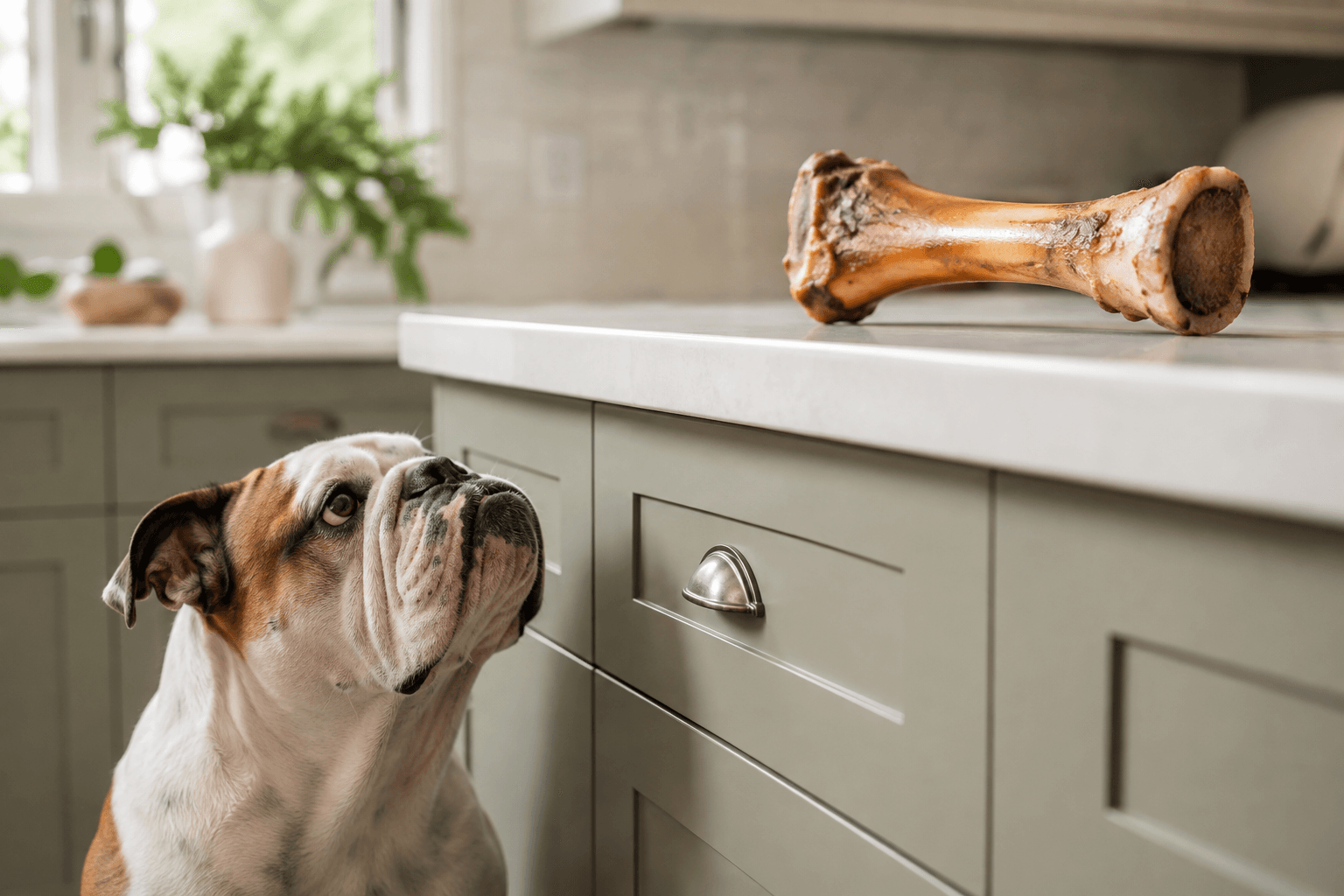
If your dog has eaten beef bones
Remove any remaining bone and ring your vet now, even if your dog seems fine. Note roughly how much bone was eaten and when. Do not induce vomiting and do not feed anything unless your vet tells you to. Out of hours, call Vets Now or the Animal PoisonLine on 01202 509000.
The detail
Cooking dries a bone out and makes it brittle, which is what turns it from something a dog gnaws down into something that cracks into sharp-edged shards. Battersea's toxic food guidance says to avoid cooked bones at all cost, because they can splinter and, at worst, perforate the gut, and that applies to a roasted beef rib or an oxtail from a stew exactly as it does to a chicken carcass.
Raw beef bones are marketed differently, often as a natural recreational chew, but the picture is more divided than the marketing suggests. PDSA's raw feeding guidance does not recommend feeding pets bones ever, regardless of whether they are cooked or uncooked, citing blockages, splinters and broken teeth among the reasons.
Marrow bones deserve their own mention, because they are usually cut from the densest, hardest part of a cow's leg. VCA Animal Hospitals lists chewing on hard objects, including bones, among the main causes of fractured teeth in dogs, and a raw beef marrow bone is hard enough to break a tooth even though it rarely splinters the way a cooked bone does.
Risk by form
| Cooked rib, roast or oxtail bone | No. Splinters like any cooked boneBattersea: avoid cooked bones at all cost |
| Raw marrow or knuckle bone | PDSA advises against feeding any bone, cooked or uncookedVCA Animal Hospitals names bones among the common causes of fractured teeth |
| Bones boiled for stock or broth | No. Boiling makes bone brittle tooStrained bone broth without bone fragments is a different, lower-risk food |
| Swallowed fragments, any form | Ring your vet now. Do not induce vomiting |
Cooked beef bones: rib, brisket and roast joint bones
Every cooked beef bone follows the same rule, whether it is a rib bone left on a barbecue plate, the bone from a roast joint, or an oxtail bone from a slow-cooked stew. Battersea's guidance to avoid cooked bones at all cost does not carve out an exception for beef, and the splintering risk is the same regardless of which animal the bone came from.
There is no safe way to serve a cooked beef bone. Bin it in a container your dog cannot reach, and treat a begged-for rib bone from a barbecue the same way you would a chicken carcass.
Raw beef marrow bones and knuckle bones
Butchers and pet shops commonly sell raw beef marrow bones and knuckle bones as a long-lasting chew, and they are genuinely less likely to splinter into sharp shards than a cooked bone. That does not make them risk-free, and PDSA's position on bones, cooked or uncooked, does not treat raw as the safer option.
The marrow inside is largely fat, and that alone can trigger stomach upset or, in a dog prone to it, pancreatitis. If a vet has agreed a raw marrow bone is appropriate for your particular dog, keep sessions supervised and short, and take the bone away once it starts to splinter or shrink to a swallowable size.
Beef bones and broken teeth
This is the risk that raw beef bones carry more than most other bones, because they are cut from a large, weight-bearing leg bone and are genuinely hard. VCA Animal Hospitals lists bones among the hard objects most likely to fracture a dog's back teeth, and treatment for a fractured tooth usually means root canal therapy or extraction.
A fractured tooth is painful, and VCA notes that dogs hide pain well, particularly in the mouth, so a chipped or cracked tooth can go unnoticed for a while. If your dog has been chewing a hard beef bone and starts pawing at its mouth, dropping food or chewing on one side only, that is worth a vet check.
Oxtail and beef bone broth
Oxtail is sold both raw and, more commonly, pre-cooked for stews, and a cooked oxtail bone carries exactly the same splintering risk as any other cooked beef bone. Keep any oxtail bones, raw or cooked, out of a dog's reach once the meat is off.
Beef bone broth, simmered for a long time and strained so no bone or fragment remains, is a different question and is generally considered a low-risk, plain liquid to add to a dog's dinner in small amounts, provided it has no onion, garlic or added salt. The bones themselves, once boiled, become brittle and splinter like any other cooked bone, so do not let a dog chew the bones used to make the broth.
My dog swallowed a beef bone fragment. What now?
Ring your vet now, even if your dog seems fine. Fragments can take hours or days to cause a problem, and getting advice early is better than waiting for symptoms to appear. Do not try to make your dog vomit, since a shard that scraped on the way down can scrape again coming back up.
Vets Now lists loss of appetite, vomiting, an absence of faeces or diarrhoea, dehydration and signs of abdominal discomfort such as reluctance to move or crying out among the signs of a swallowed object causing a blockage. Gagging, drooling or pawing at the mouth straight after eating points to something stuck higher up and needs a same-day visit.
Take any remaining bone away and have a rough idea of how much was eaten and when, since your vet will ask. They may examine, x-ray or simply monitor, and that decision is theirs to make.
Signs to watch for
- Gagging, drooling or pawing at the mouth soon after eating
- Vomiting or retching
- Loss of appetite
- No stools, straining, or blood in the stools over the following days
- A tense, painful tummy, reluctance to move, or crying out
- Pawing at the mouth, dropping food or chewing on one side only, which can point to a fractured tooth
Common questions
My dog ate a cooked beef rib bone. Should I panic?
Not panic, but do ring your vet now rather than waiting to see. Battersea warns that cooked bones can splinter and cause constipation or a fatal gut perforation, and fragments can take hours or days to cause a blockage. Do not make your dog vomit.
Are raw beef marrow bones safer than cooked ones?
They are less likely to splinter into sharp shards, but PDSA's raw feeding guidance says it does not recommend feeding pets bones ever, cooked or uncooked. Raw marrow bones also carry a real risk of fracturing a tooth, since VCA Animal Hospitals names bones among the common causes.
Can a beef bone break my dog's teeth?
Yes, this is a genuine risk with raw marrow and knuckle bones specifically, because they are cut from a hard, weight-bearing leg bone. VCA Animal Hospitals lists chewing on hard objects, including bones, among the main causes of fractured teeth in dogs.
Is beef bone broth safe for dogs?
Broth that has been simmered a long time and strained, with no bone fragments left and no onion, garlic or added salt, is generally a low-risk addition in small amounts. The bones used to make it should never be given to a dog to chew, since boiling makes them brittle too.
How long after swallowing a bone fragment would symptoms show?
Mouth and throat trouble like gagging or drooling shows immediately. Gut signs such as vomiting, no stools or a painful tummy can take 24 to 72 hours to appear, so keep watching for several days even if the first evening seems fine.
Can dogs have an oxtail bone?
Not once it is cooked, since it splinters like any other cooked bone. A raw oxtail bone carries the same general caution as other raw beef bones, so it is not a straightforward yes either.
Is plain beef meat itself safe for dogs?
Yes, plain cooked beef with the fat trimmed and no bone or seasoning is a fine occasional share for most dogs. It is the bone and any added fat or salt that cause the problems, not the meat itself.