
Can dogs eat raw bread dough?
Updated 8 August 2026
No. Raw bread dough is toxic to dogs, because the live yeast keeps fermenting once it reaches the warm, moist stomach. Fermentation produces carbon dioxide, which can bloat or twist the stomach, and ethanol, which causes genuine alcohol poisoning. Ring your vet straight away if your dog eats any raw dough.
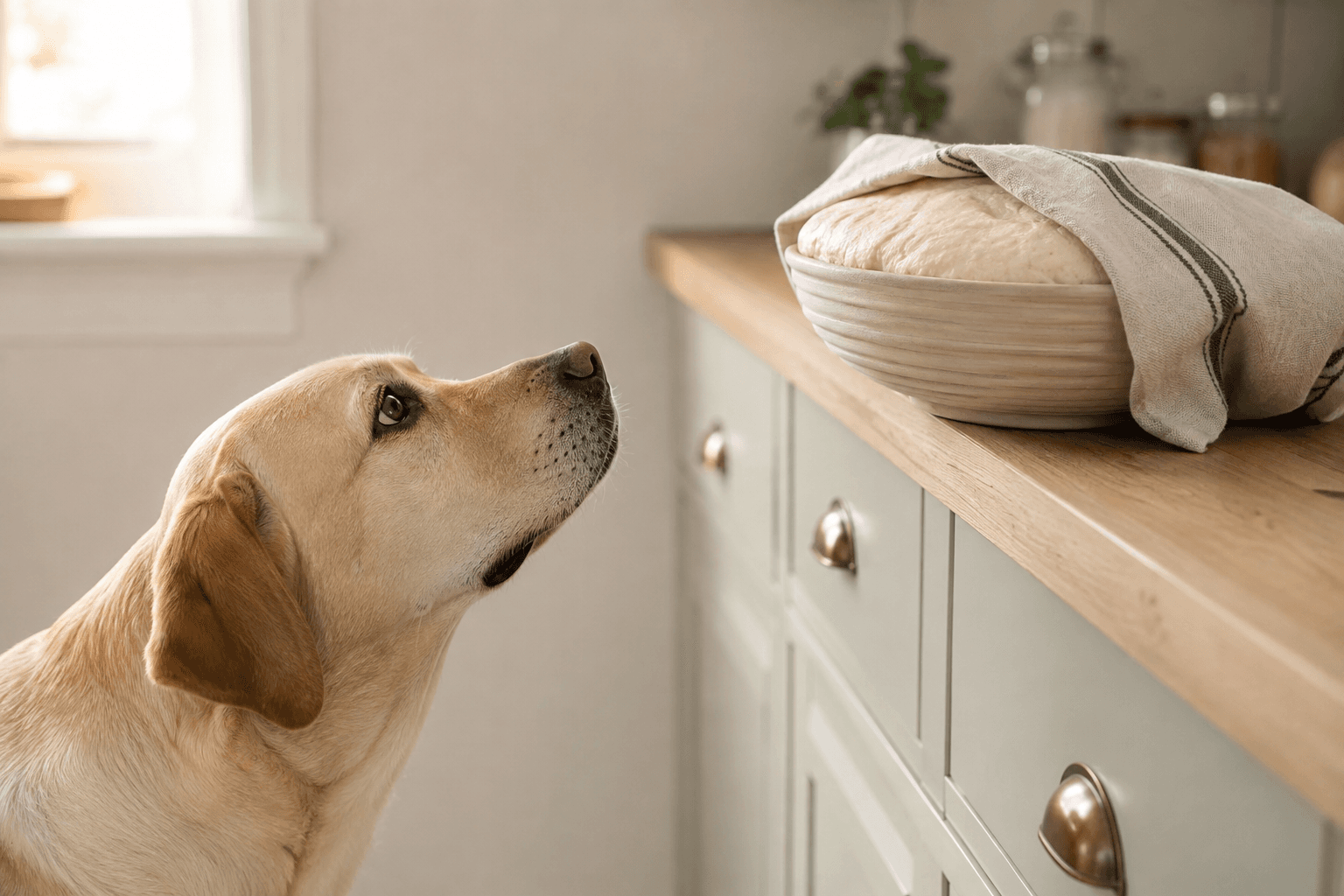
If your dog has eaten raw bread dough
Ring your vet or the Animal PoisonLine now, even before symptoms appear. Do not try to make your dog vomit yourself unless a vet tells you to. Note roughly how much dough was eaten and when. Out of hours, Vets Now runs emergency clinics across the UK, and the Animal PoisonLine is on 01202 509000.
The detail
Bread dough made with live yeast is a genuinely different food from baked bread, and the difference is entirely about what happens after it is swallowed. A dog's stomach sits at close to body temperature and is moist, which the MSD Veterinary Manual describes as an efficient incubator for the yeast to keep working exactly as it would on a kitchen counter.
As the yeast ferments the sugars in the dough, it produces carbon dioxide and ethanol. The gas has nowhere to go, so the dough and the dog's stomach both expand, which VCA Animal Hospitals says can progress to gastric dilatation volvulus, a twisted stomach that is a genuine emergency on its own, separate from the alcohol building up alongside it.
The ethanol produced during fermentation is absorbed into the bloodstream quickly, and Pet Poison Helpline states this results in real alcohol poisoning, with dangerous drops in blood sugar, blood pressure and body temperature layered on top of the physical bloating. Both problems can be happening in the same dog at the same time, which is why this is treated as a genuine emergency rather than a wait-and-see food.
How raw dough causes harm
| Mechanism | Live yeast ferments sugars into carbon dioxide and ethanolMSD Veterinary Manual |
| Physical risk | Stomach bloating, possibly progressing to a twisted stomach (GDV)VCA Animal Hospitals |
| Chemical risk | Ethanol absorbed into the bloodstream causes alcohol poisoningPet Poison Helpline |
| Toxic dose | No established safe amountPet Poison Helpline: moderate to severe toxicity depending on amount eaten |
| Baked bread | A different, much lower-risk food once cookedBaking kills the yeast and stops fermentation |
Pizza dough and homemade bread dough
Pizza dough left to prove on a kitchen counter is one of the most common ways dogs get into raw dough, since it is often left uncovered at exactly nose height for a determined dog. It carries the same live yeast and the same fermentation risk as a loaf of bread dough, regardless of whether it ends up as a pizza base, a bread roll or a batch of rolls.
Shop-bought pizza dough balls and the ready-to-bake dough sold in supermarket chiller cabinets are no safer, since they still contain live yeast until they are baked. Keep any dough covered and out of reach the whole time it proves, from the moment it is mixed until it goes in the oven.
Is baked bread safe once the dough has risen and cooked?
Baking stops the fermentation completely. Heat kills the yeast and drives off the alcohol and gas that raw dough produces, which is why a slice of plain baked bread is a genuinely different, much lower-risk food from the dough it started as.
Our separate bread page covers plain baked bread in detail, including why it is fine only in small amounts and why raisin bread, garlic bread and heavily salted loaves need their own caution. The distinction that matters here is simple: dough is dangerous, bread is not, and the oven is what separates the two.
Sourdough starter and proving dough
A sourdough starter is a jar of live yeast and bacteria kept bubbling on a counter specifically to ferment, which makes it at least as risky as ordinary bread dough if a dog gets into it, and arguably more so given how established the fermentation already is by the time a starter is ready to use.
Treat a knocked-over sourdough starter exactly as you would a bowl of rising dough. Ring your vet with an estimate of how much was drunk or eaten, since a liquid starter can be swallowed quickly and in a larger volume than a dog could manage with solid dough.
How much bread dough is dangerous for a dog?
Pet Poison Helpline is clear that there is no known toxic dose, and rates bread dough as moderate to severe toxicity depending on how much a dog eats. That is a less precise answer than for foods with an established gram-per-kilogram threshold, but it reflects how quickly a small amount of dough can expand once swallowed.
A small dog that gets into a bowl of proving dough can end up with a genuinely large volume in its stomach once the dough expands, out of proportion to how much it looked like on the counter. Treat any amount as worth a call to your vet rather than trying to judge whether it was enough to matter.
My dog ate raw dough. What should I do?
Ring your vet or the Animal PoisonLine straight away rather than waiting for symptoms, since the fermentation and gas production continue inside your dog for as long as the dough sits in the stomach. VCA Animal Hospitals says the best treatment is removing the dough from the stomach before poisoning sets in, which is easiest the sooner it happens.
Watch for a bloated or tense belly, unproductive retching, weakness, stumbling or acting drunk, and vomiting, and get to a vet urgently if you see any of these rather than continuing to wait at home. Do not try to make your dog vomit yourself unless a vet specifically tells you to, since a distended stomach can complicate this.
Signs to watch for
- A bloated, tense or swollen belly
- Vomiting or unproductive retching
- Weakness, stumbling or acting drunk
- Disorientation or abnormal crying
- Low body temperature, collapse or seizures in severe cases
Common questions
Can dogs eat pizza dough?
No. Raw pizza dough contains the same live yeast as bread dough, and it will keep fermenting in a dog's stomach whether it was destined for a pizza base or a loaf. Keep any proving dough covered and out of reach.
Is baked bread safe for dogs even though raw dough isn't?
Yes, plain baked bread in small amounts is a much lower-risk food, since baking kills the yeast and stops the fermentation that makes raw dough dangerous. Our bread page covers how much is sensible to share.
How much raw dough is dangerous for a dog?
Pet Poison Helpline says there is no known toxic dose and rates bread dough as moderate to severe toxicity depending on the amount. Because dough expands so much once swallowed, even a small piece can become a larger problem than it looked like on the counter.
What are the signs of bread dough poisoning?
Watch for a bloated or tense belly, vomiting or unproductive retching, weakness, stumbling or acting drunk, and disorientation. VCA Animal Hospitals lists these alongside low blood sugar, low body temperature and, in severe cases, coma or seizures.
My dog ate a small piece of raw dough. Is that still an emergency?
Yes, call your vet or the Animal PoisonLine straight away rather than waiting to see. There is no established safe amount, and the dough will keep expanding and fermenting inside the stomach regardless of how small the piece looked.
Can dogs eat sourdough starter?
No. A sourdough starter is actively fermenting yeast and carries the same risk as bread dough, if not more, since it is often already well established by the time it is ready to use. Treat a spilled starter the same way you would a bowl of rising dough.
Can puppies eat bread dough?
No. Puppies are smaller, so the same amount of expanding dough and ethanol represents a much bigger relative dose, and the bloat risk is just as serious. Keep any dough well away from puppies.