
Can dogs eat gherkins?
Updated 9 August 2026
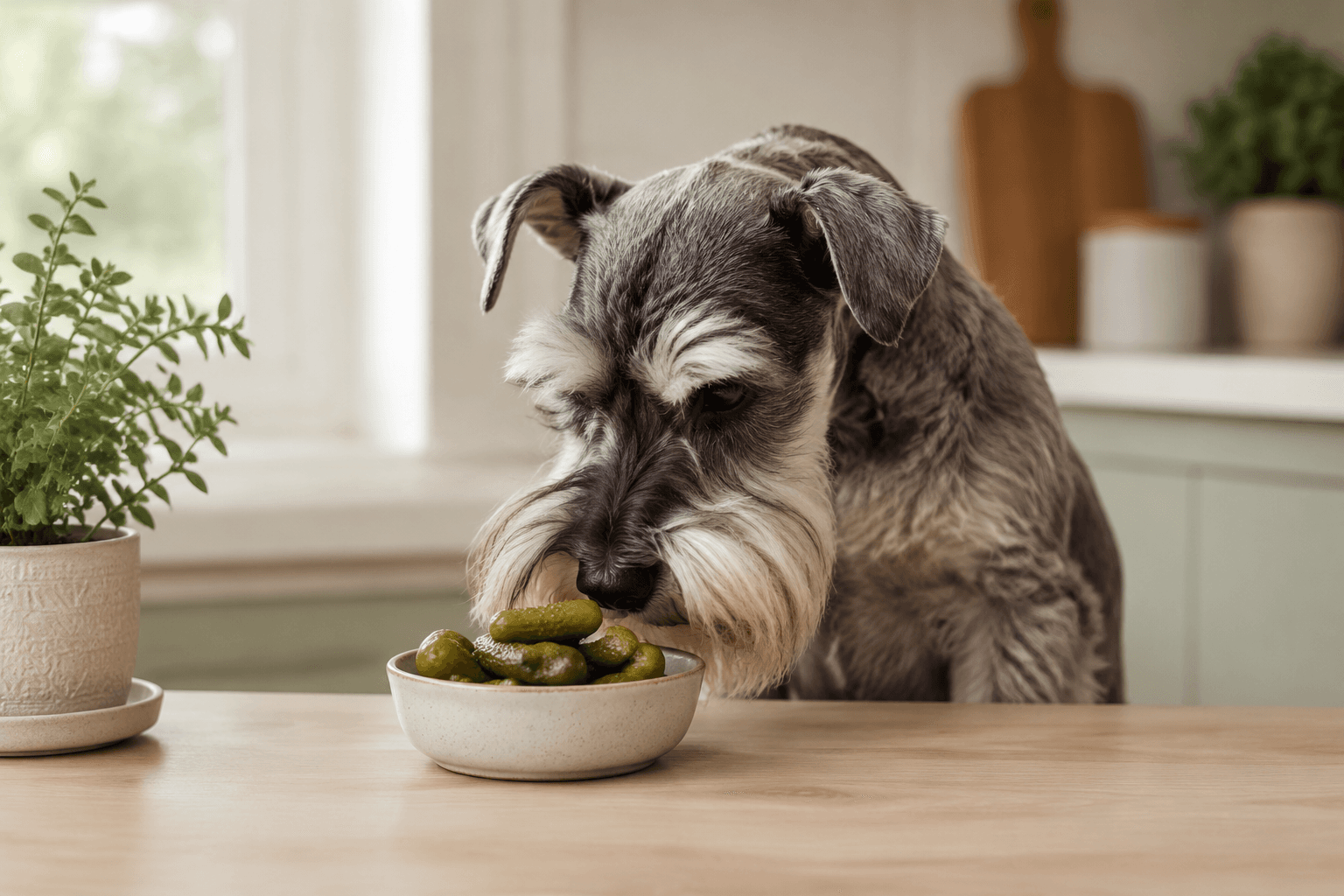
With caution, yes. Plain cucumber itself is safe and low-calorie for dogs, but pickling it into a gherkin changes the picture: brine is typically high in salt, and some recipes add garlic, onion, mustard seed or other spices. A small taste of a plain gherkin is unlikely to cause harm, but it is not something to offer regularly.
- The detail
- What is in pickling brine
- How much is sensible
- Can dogs eat pickles?
- Is plain cucumber safer than a gherkin?
- What is actually in pickling brine, and why is salt the main concern?
- Can dogs eat garlic or dill pickles specifically?
- My dog ate a whole gherkin or drank pickle juice, what now
- Better things to share
- Common questions
The detail
Cucumber on its own is one of the more low-risk vegetables a dog can eat, mostly water with very little fat, sugar or sodium. Once it is pickled into a gherkin, that changes: the cucumber sits in a brine of vinegar, salt and often sugar for weeks, and it absorbs a meaningful amount of that brine as it pickles.
Salt is the everyday concern with any gherkin or pickle. Brine recipes vary, but salt is often the largest single ingredient by weight after the vinegar and water, and the MSD Veterinary Manual notes that clinical signs of salt toxicosis in dogs can appear from around 2 to 3g of sodium chloride per kg of body weight. A jar of gherkins eaten whole, brine included, is a far bigger sodium dose than a single sliced gherkin on the side of a plate.
Vinegar itself is generally fine for a dog in a tiny amount, the sort found clinging to a rinsed slice, but a larger quantity can upset a sensitive stomach. This is a milder concern than the salt or any garlic in the brine, more likely to cause a bit of digestive discomfort than a genuine emergency.
Garlic and onion are the ingredients to actually worry about, and they show up in plenty of pickling recipes for flavour. PDSA's guidance on onion and garlic poisoning is clear that alliums damage a dog's red blood cells and can cause anaemia, with all parts of the plant toxic even when cooked, pickled or dried, so a garlic-heavy dill pickle is a genuinely different risk from a plain gherkin.
In the UK, 'pickle' sometimes means something quite different from a gherkin. A jar of Branston-style pickle or piccalilli is a chunky, chutney-like condiment that usually includes onion as a main ingredient, alongside vinegar, sugar and spices, which puts it in a different, more concerning category than a plain pickled cucumber. Check what you actually mean by pickle before assuming this page's caution verdict applies evenly to every jar in the cupboard.
What is in pickling brine
| Vinegar | Generally fine in tiny amountsCan upset digestion in a larger amount |
| Salt | Often the main ingredient by weight in brineMSD: salt toxicosis signs from around 2 to 3g of sodium chloride per kg of body weight |
| Garlic and onion (some recipes) | A genuine toxin riskPDSA: alliums damage a dog's red blood cells and can cause anaemia |
| Mustard seed and spices | Not a major toxin on their ownAdd to the overall seasoning load rather than a specific danger |
How much is sensible
| Dog size | Sensible amount |
|---|---|
| Small (under 10kg)Chihuahua, Jack Russell | A small slice of plain gherkin, rinsed of brine, at most, and only now and then |
| Medium (10 to 25kg)Cocker spaniel, border collie | A slice or two of plain gherkin occasionally, rinsed of excess brine |
| Large (over 25kg)Labrador, German shepherd | A couple of slices of plain gherkin now and then, still not a regular snack |
| Garlic or onion-brined pickles | Skip entirely; treat any allium-flavoured brine as off limits regardless of size |
Can dogs eat pickles?
Broadly the same answer as gherkins, since a pickle in this sense is a pickled cucumber, the same food by another name. A small taste of a plain dill or sweet pickle, rinsed of excess brine, is unlikely to cause harm for most healthy dogs, though the salt and any garlic in the brine mean it is not a snack to offer regularly.
It is worth checking what kind of pickle you actually mean, since in the UK the word sometimes refers to a chutney-style condiment like Branston pickle or piccalilli rather than a pickled cucumber. Those chunkier pickles usually contain onion as a core ingredient and deserve more caution than a plain gherkin does.
Is plain cucumber safer than a gherkin?
Yes, considerably. Cucumber itself is one of the lower-risk vegetables a dog can eat, low in calories and sodium, and this site's cucumber page treats it as a safe, crunchy snack in reasonable amounts.
A gherkin starts as that same cucumber but spends weeks absorbing a salty, vinegary brine, which is the entire reason the verdict changes. If you want to share cucumber with your dog, a plain, unpickled slice straight from the fridge is the simpler, lower-risk choice.
What is actually in pickling brine, and why is salt the main concern?
A basic pickling brine is vinegar, water and salt, often with sugar, and salt is usually present in a meaningful quantity to help preserve the cucumber and give it that classic sharp flavour. The MSD Veterinary Manual's salt toxicosis figures show why this matters at scale: a whole jar's worth of gherkins, brine included, adds up to a genuinely large sodium dose for a small dog.
Vinegar and any sugar in the brine are milder concerns by comparison, more likely to cause a bit of digestive upset in a larger amount than a serious problem. Salt is the ingredient worth paying closest attention to if your dog has got into a jar.
Can dogs eat garlic or dill pickles specifically?
Dill itself, the herb, is not a significant concern in the small amounts used to flavour a pickle. Garlic is the ingredient that changes things, and PDSA's guidance is clear that garlic damages a dog's red blood cells and can cause anaemia, so a garlic-heavy dill pickle recipe carries a real risk beyond the salt that a plain gherkin does not.
Check the ingredients on a jar of dill pickles before assuming they are the same low-level risk as a plain gherkin. Some recipes lean heavily on garlic and whole garlic cloves in the jar, which is worth keeping well away from a dog entirely.
My dog ate a whole gherkin or drank pickle juice, what now
A single whole gherkin is unlikely to be a genuine emergency for most healthy dogs, but pickle juice is worth more caution, since it is essentially the concentrated brine with all its salt and any garlic dissolved into it. A dog that drinks from a jar of pickle juice has had a much bigger sodium dose than one that eats a rinsed slice.
Offer fresh water, watch for vomiting, diarrhoea or excessive thirst over the following day, and call your vet if your dog drank a significant amount of brine, ate a garlic-heavy jar, or seems unwell. Tell them roughly how much was involved either way.
Signs to watch for
- Excessive thirst or urination from the salt content
- Vomiting or diarrhoea, especially after brine or a larger amount
- Lethargy, suggesting anaemia after a garlic or onion-heavy pickle
- Pale gums, worth an urgent vet check after a garlic-heavy pickle
Common questions
Can dogs eat pickles?
In a small amount, a plain, rinsed pickle or gherkin is unlikely to harm most healthy dogs, though the brine's salt content means it is not a snack to offer regularly. A chunkier, onion-based pickle like Branston pickle deserves more caution.
Can dogs eat gherkins?
A small taste of a plain gherkin, rinsed of excess brine, is a low risk for most dogs, but it offers no real benefit and adds salt to their diet. Garlic or onion in the brine is the bigger concern to check for.
Is cucumber safer than a gherkin for dogs?
Yes. Plain cucumber is low in calories and sodium, while a gherkin has absorbed weeks of salty, vinegary brine, which is the whole reason the verdict changes between the two.
Can dogs drink pickle juice?
It is best avoided, since pickle juice is the concentrated brine itself, carrying more salt, and potentially garlic, than a rinsed slice. A dog that drinks a significant amount should have access to fresh water and a call to the vet if they seem unwell.
Are garlic pickles dangerous for dogs?
Yes, more so than a plain gherkin. PDSA's guidance confirms garlic damages a dog's red blood cells and can cause anaemia, so a garlic-heavy dill pickle carries a genuine toxin risk on top of the salt.
Is Branston pickle the same as a gherkin for dogs?
No, treat it as a different, more concerning food. Branston-style pickle and piccalilli are chutney-like condiments that usually contain onion as a main ingredient, unlike a plain pickled cucumber.
My dog ate a whole jar of gherkins, is that an emergency?
Call your vet and let them know roughly how much brine was involved as well as the gherkins themselves, since the salt content of a whole jar adds up. Watch for vomiting, excessive thirst or diarrhoea over the following day.