
Can dogs eat walnuts?
Updated 8 August 2026
No. Plain fresh walnuts are not toxic the way macadamia nuts are, but they are high in fat, easily upset a dog's stomach and can cause pancreatitis or a blockage whole. Mouldy walnuts are a separate, genuinely dangerous problem: the MSD Veterinary Manual names walnuts among the foods that grow tremorgenic mycotoxins, which cause rapid-onset tremors and seizures.
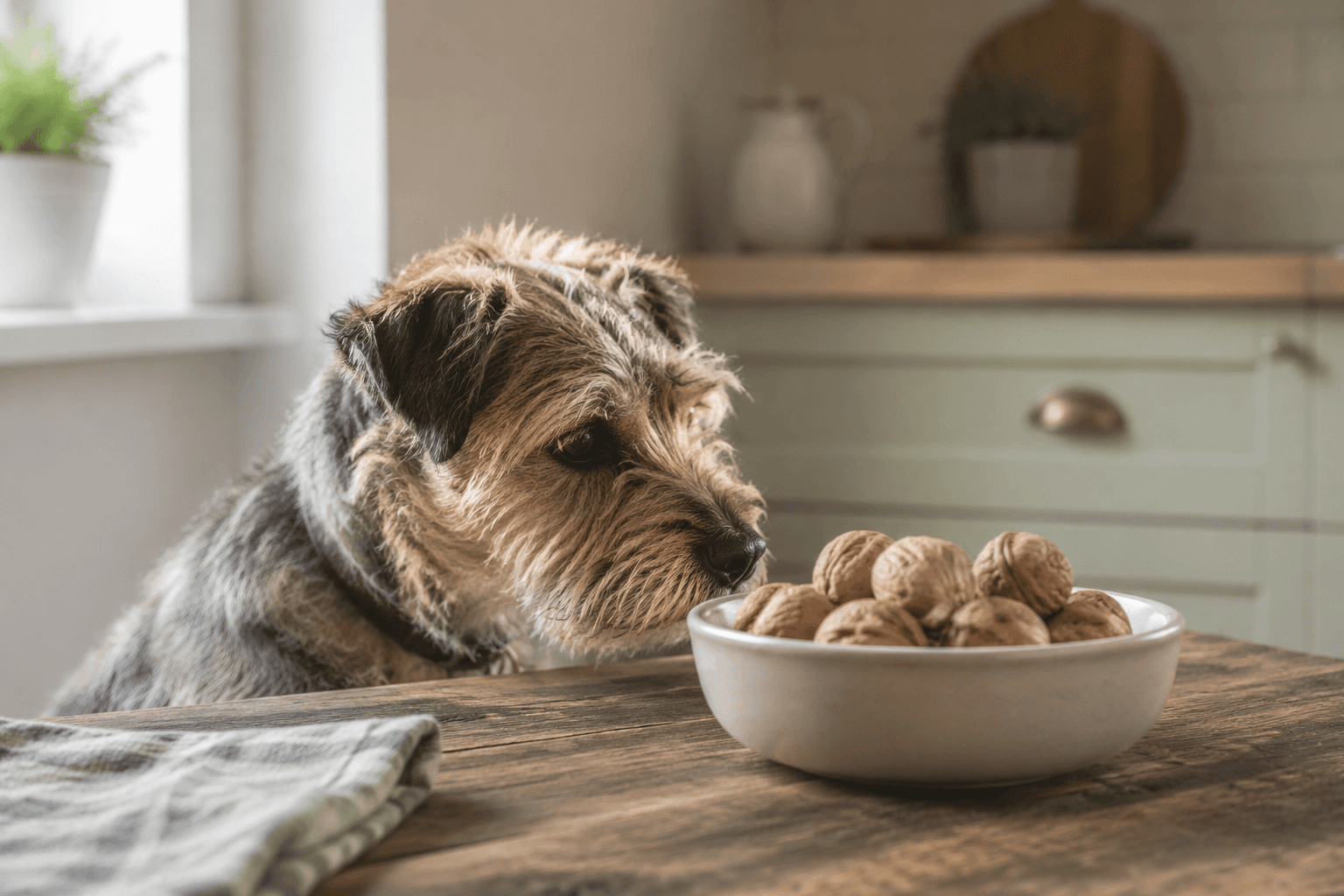
If your dog has eaten walnuts
For a small amount of fresh walnut, watch for vomiting or an upset stomach and call your vet if it doesn't settle. For anything mouldy, windfall, or if your dog shows tremors, wobbliness or agitation, ring your vet or the Animal PoisonLine now rather than waiting. Out of hours, Vets Now runs emergency clinics across the UK, and the Animal PoisonLine is on 01202 509000.
The detail
Walnuts split into two separate questions once you look past the shell. A plain, fresh English walnut is not classed as toxic to dogs, but it is roughly two-thirds fat by weight, and eating more than a small amount can trigger vomiting, diarrhoea or, in a dog prone to it, pancreatitis.
Black walnuts are a step up in risk even before mould enters the picture. The ASPCA lists black walnut as toxic, with an unknown toxic principle, and clinical signs including gastrointestinal upset from the nut itself and, if the wood or hulls are chewed, incoordination from compounds in the bark and roots as well as the nut.
Mould is where the real danger sits, for any walnut. The MSD Veterinary Manual names walnuts specifically, alongside peanuts and dairy products, as a food where Penicillium mould can grow and produce tremorgenic mycotoxins, and a documented New Zealand case saw a dog develop severe tremors and ataxia after eating walnuts that had been lying on the ground for five months.
Walnuts by type and condition
| Fresh English walnut, small amount | Not classed as toxic, but high in fatRisk is stomach upset or pancreatitis, not a specific toxin |
| Black walnut | Listed as toxic by the ASPCAToxic principle unknown; nuts, wood and hulls all implicated |
| Mouldy or windfall walnuts, any type | Genuinely dangerousMSD Veterinary Manual: tremorgenic mycotoxins, onset within hours |
| Onset of mycotoxin symptoms | 15 minutes to a few hoursPet Poison Helpline |
| Whole walnut in shell | Choking and blockage riskSeparate from the fat or mould question |
Are plain walnuts as dangerous as macadamia nuts for dogs?
No, and this is worth separating clearly. Macadamia nuts cause a specific, documented toxicosis in dogs from a small amount, with a known onset and recovery pattern. A single fresh, unmouldy walnut does not carry that same defined toxic reaction, and the concern with plain walnuts is closer to the fat content of any rich nut, which can upset a stomach or trigger pancreatitis in a dog that eats a handful.
That distinction is why walnuts sit at unsafe rather than toxic on this page. The genuinely dangerous scenario with walnuts is mould, not the fresh nut itself, but since it is rarely obvious to a dog owner whether a walnut on the ground or at the back of a cupboard has started growing mould, the sensible rule is to keep walnuts away from dogs altogether.
Mouldy walnuts and windfall walnuts in the garden
A walnut tree drops far more nuts than anyone collects, and the ones left on the lawn or under hedges sit through wet British autumns for weeks, which is exactly the damp, undisturbed condition Penicillium mould needs to grow. This is the scenario behind most of the genuinely serious walnut poisoning cases, including a documented New Zealand case where a dog developed severe tremors after eating walnuts that had been on the ground for five months.
If you have a walnut tree, or a neighbour's overhangs your garden, check the ground regularly during autumn and clear windfall nuts before they sit long enough to mould. A dog that forages in leaf litter is at more risk than one that only sees walnuts from a fruit bowl.
Black walnut trees, wood and mulch
Black walnut is a different species from the English walnut most people eat, and it turns up in gardens as an ornamental tree and in some wood shavings and mulch products. The ASPCA lists black walnut as toxic, and cases involving dogs chewing the wood, bark or shavings, as well as the nuts, have caused incoordination on top of the gastrointestinal upset the nuts themselves can cause.
If you have a black walnut tree, keep fallen nuts, bark and any pruned branches away from a dog that likes to chew, and be cautious with any bagged mulch or bedding product that lists walnut shell or black walnut among the ingredients.
Walnut shells and whole walnuts in shell
A whole walnut in its shell is a choking and blockage risk on top of everything else, since the shell is hard, sharp-edged once cracked, and not something a dog's gut can break down. This is the same physical risk that applies to any hard, whole nut in shell, separate from the fat or mould question.
British Christmases often bring out a bowl of mixed nuts in their shells with a nutcracker on the side, and that bowl left within reach over a long, distracted afternoon is a realistic way for a dog to get hold of several whole walnuts, shell included.
My dog ate walnuts. What should I do?
For a small amount of fresh, clearly unmouldy walnut, watch for vomiting, diarrhoea or a painful, hunched tummy over the next day or two, and call your vet if any of these appear or if your dog seems unwell. For anything that might have been mouldy, windfall or from the back of a cupboard, treat it as more urgent.
Tremors, wobbliness, a raised temperature or agitation starting anywhere from fifteen minutes to a few hours after eating point to tremorgenic mycotoxicosis, and this needs an urgent vet visit, not a wait-and-see approach. Take a sample of what was eaten if you can, since it helps your vet confirm what they are treating.
Signs to watch for
- Vomiting, diarrhoea or a painful tummy from fresh walnut fat content
- Tremors, wobbliness or a raised temperature from mouldy walnuts
- Agitation, incoordination or seizures in more severe mycotoxin cases
- Gagging, drooling or reluctance to eat if a whole shell is stuck
Common questions
Are walnuts poisonous to dogs?
Fresh, unmouldy walnuts are not classed as toxic the way macadamia nuts are, but they are high in fat and can cause an upset stomach or pancreatitis. Mouldy or black walnuts are a genuinely different, more dangerous problem, which is why this page's verdict is unsafe rather than a plain yes or no.
What is different about mouldy walnuts?
Mould, particularly Penicillium species, can grow on walnuts and produce tremorgenic mycotoxins such as penitrem A. The MSD Veterinary Manual and Pet Poison Helpline both list walnuts among the foods where this happens, with symptoms starting within fifteen minutes to a few hours of eating.
Can dogs eat a small amount of plain walnut?
A small taste of a fresh, unmouldy walnut is unlikely to cause serious harm in a healthy adult dog, but the high fat content still makes it a poor regular treat. There is no benefit that makes the risk worth taking deliberately.
Are black walnuts more dangerous than English walnuts?
Yes. The ASPCA lists black walnut as toxic in its own right, with an unknown toxic principle, separate from the mould risk that applies to any walnut. Keep dogs away from black walnut trees, fallen nuts, bark and wood shavings.
How quickly do symptoms show after a dog eats a mouldy walnut?
Pet Poison Helpline puts the latency period at fifteen minutes to two to three hours. Watch for tremors, wobbliness, agitation or a raised temperature in that window and treat any of these as an urgent vet visit.
Is walnut shell dangerous on its own?
Yes, as a physical risk. A cracked walnut shell is hard and sharp-edged, and swallowing pieces can cause choking or a blockage regardless of whether the nut inside was fresh or mouldy.
Can puppies eat walnuts?
No. Puppies are smaller, so both the fat content and any mycotoxin exposure represent a bigger relative dose, and puppy food already provides balanced nutrition. Keep walnuts away from puppies entirely.