
Can dogs eat vinegar?
Updated 8 August 2026
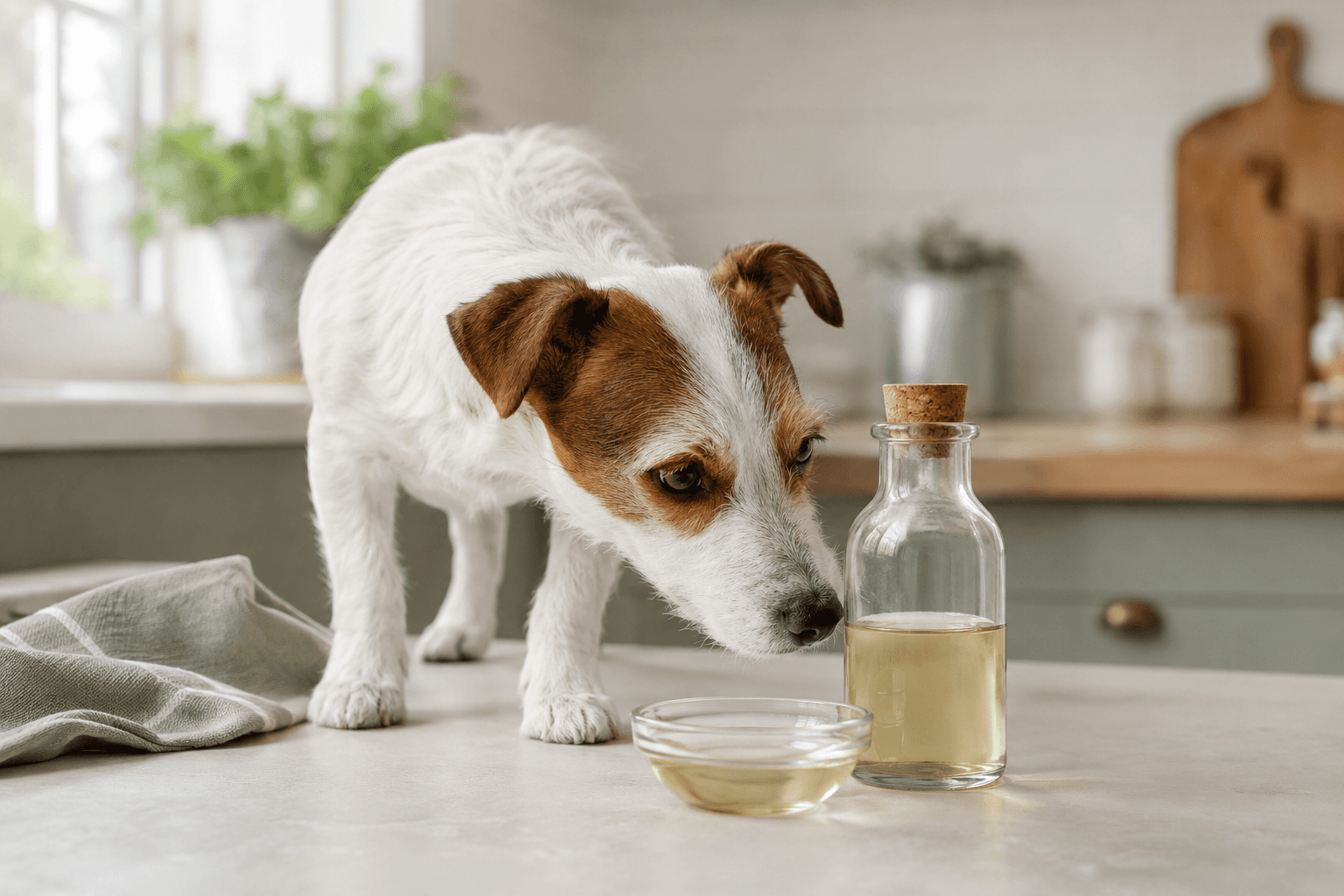
In tiny, diluted amounts, yes, but don't give it deliberately. A splash of vinegar on a dropped chip is unlikely to cause harm, but undiluted vinegar is acidic enough to irritate a dog's mouth, throat and stomach, and a dog that drinks a meaningful amount neat can become genuinely unwell.
The detail
Vinegar is dilute acetic acid, made by fermenting alcohol into acid, and every kitchen vinegar shares that same acidic base at different strengths, from the malt vinegar splashed on chips at a UK chip shop to apple cider vinegar and balsamic. Pet Poison Helpline classes acids as anything with a pH below 7, and notes that the severity of an exposure ranges from mild irritation to serious chemical burns depending on the acid's strength and how long it's in contact with tissue.
Table vinegar is a mild acid next to the genuinely dangerous acidic products vets deal with, things like car battery acid, rust remover and pool chemicals, which the Merck Veterinary Manual groups under the same corrosive-acid category. That's the useful context: vinegar from your cupboard is a world away from those products, but mild still isn't the same as harmless in any real quantity.
A small amount, a splash from a dropped chip or a lick from a spilled bottle, is unlikely to cause more than a moment of interest and maybe a slightly upset stomach. A dog that drinks a genuine mouthful of neat vinegar, or gets into a bottle left open, is a different situation and worth a call to your vet.
Some people add a small, well-diluted amount of apple cider vinegar to a dog's water or food on the theory that it helps digestion or coat condition. There's no strong evidence behind that habit, and it's not something vets recommend over feeding a dog a normal, balanced diet.
Acidity of common vinegars
| Malt and white vinegar | Around 5 to 6% acetic acidThe most common UK cooking and chip-shop vinegar |
| Apple cider vinegar | Around 5 to 6% acetic acidSimilar strength to malt vinegar, different flavour |
| Balsamic vinegar | Around 6% acetic acidAlso contains grape must; treat with the same caution as other grape products |
| Cleaning-strength vinegar | Up to 20% acetic acidSold for household cleaning, not food; keep well away from dogs |
| Anything else toxic in plain vinegar | NoThe acid itself, not a separate toxin, is what causes irritation at high concentrations |
How much is sensible
| Dog size | Sensible amount |
|---|---|
| Small (under 10kg)Chihuahua, Jack Russell | A few drops mixed into a large bowl of water, if at all; most dogs don't need vinegar in their diet |
| Medium (10 to 25kg)Cocker spaniel, border collie | No more than a teaspoon of vinegar heavily diluted in water or food, occasionally |
| Large (over 25kg)Labrador, German shepherd | No more than a tablespoon of vinegar heavily diluted in water or food, occasionally |
| Dogs with acid reflux, kidney disease or on medication | Skip vinegar altogether and check with your vet before adding anything acidic to their diet or water |
Apple cider vinegar in a dog's water or food
This is the most common way vinegar ends up in a dog's diet deliberately, usually a capful stirred into a water bowl or drizzled over food. If you do this, dilute it properly, roughly a teaspoon in a full bowl of water for a medium-sized dog, rather than adding it neat.
There's no strong veterinary evidence that apple cider vinegar improves digestion, coat condition or joint health in dogs, despite the claims that circulate online. It isn't dangerous at that dilution for most healthy dogs, but it's also not a supplement worth building a routine around.
Dogs with kidney disease, acid reflux, or those on regular medication are the group worth being more careful with, since an acidic addition to food or water is a change worth clearing with your vet first rather than starting on your own.
Vinegar in a dog's ears
Vinegar solutions are sometimes suggested as a home ear-cleaning remedy, but this is genuinely mixed territory. Undiluted vinegar can irritate the sensitive skin lining a dog's ear canal, and if the eardrum isn't intact, an acidic solution reaching the middle ear can cause real damage.
PDSA recommends speaking to your vet before cleaning a dog's ears at home and using a proper dog-safe ear cleaner rather than a home remedy, particularly if the ears look red, inflamed or smell unusual, since those signs can mean an infection needing treatment rather than a vinegar rinse.
Pickles, pickle brine and pickled vegetables
Pickled foods combine vinegar with a meaningful amount of salt, and some recipes, particularly pickled onions or bread-and-butter pickles, add onion too. Pet Poison Helpline lists salt as capable of causing vomiting, diarrhoea, tremors and worse at high doses, the bigger concern in a jar of pickles than the vinegar itself.
A single dropped pickle slice is unlikely to be an emergency, but don't offer pickle brine as a treat, and check the ingredients on any jar before letting a dog anywhere near a spill, since pickled onions specifically carry the same risk as any other onion product.
Piccalilli and other mixed pickle relishes, common on a UK ploughman's lunch, usually add mustard and turmeric on top of the vinegar, salt and onion, which is more ingredients working against a dog than for one. Keep the whole jar out of reach rather than checking each ingredient in your head.
Is balsamic vinegar riskier than other vinegars?
Balsamic vinegar starts as grape must, cooked and reduced grape juice, before it ferments into vinegar, which puts it in a different category from malt or white vinegar. Grapes and raisins are toxic to dogs, and Battersea's list of toxic foods names them as capable of causing severe liver and kidney damage even in small amounts.
It isn't settled whether the vinegar-making process removes that risk entirely, since the toxic compound in grapes hasn't been identified and no safe threshold has ever been established for any grape product. Given that, it's sensible to treat balsamic vinegar and balsamic glaze with the same caution as any other grape-based food rather than assume the fermentation makes it safe.
My dog drank vinegar, what do I do?
For a lick or a small taste, watch for drooling, lip-smacking or a brief refusal to eat, and offer fresh water. Most dogs settle within an hour or two with nothing more needed.
For a genuine mouthful of neat vinegar, or if your dog got into an open bottle, call your vet or an out-of-hours service like Vets Now rather than waiting. Don't try to make your dog sick, since bringing an acid back up a second time only repeats the irritation.
Signs to watch for
- Drooling, lip-smacking or pawing at the mouth after tasting undiluted vinegar
- Vomiting or refusing food after a larger amount
- Signs of mouth or throat irritation, including reluctance to eat or drink, after a genuine mouthful of neat vinegar
If your dog overdoes it
For a lick or small taste, offer fresh water and watch for an hour or two; most dogs settle on their own. For a genuine mouthful of neat vinegar or access to an open bottle, call your vet or an out-of-hours service like Vets Now, and don't try to make your dog sick.
Common questions
Is apple cider vinegar good for dogs?
There's no strong veterinary evidence that it helps digestion or coat health, despite common online claims. A small, well-diluted amount isn't dangerous, but it isn't a supplement worth relying on either.
Can I put vinegar in my dog's ears?
PDSA recommends a proper dog-safe ear cleaner and speaking to your vet first rather than a home remedy. Undiluted vinegar can irritate the ear canal, and it can cause real harm if the eardrum isn't intact.
Is balsamic vinegar bad for dogs?
It's made from grape must, and grapes are toxic to dogs with no established safe amount. Since it isn't settled whether fermentation removes that risk, it's sensible to treat balsamic vinegar with the same caution as other grape products.
My dog licked up some vinegar from the floor, is that an emergency?
Usually not. A small lick or taste is unlikely to cause more than brief drooling or a moment of interest. Offer fresh water and keep an eye on them for an hour or two.
Can dogs have vinegar on chips?
A light splash that a dog licks off a dropped chip is unlikely to cause harm. It isn't something to add deliberately, and a heavily vinegared portion is more likely to cause stomach upset.
Is vinegar poisonous to dogs?
Not at typical kitchen dilutions. Undiluted vinegar is acidic enough to irritate a dog's mouth, throat and stomach in a genuine mouthful, but it isn't in the same category as the strong corrosive acids found in cleaning products.