
Can dogs eat sultanas?
Updated 8 August 2026
No. Sultanas are dried grapes, and they carry the same toxin as fresh grapes and raisins, concentrated into a smaller, denser mouthful. There is no established safe amount, and sultanas turn up in far more UK kitchen cupboards than fresh grapes do, in cereal, baking and lunchbox snacks. Any amount eaten by a dog is a same-day vet call.
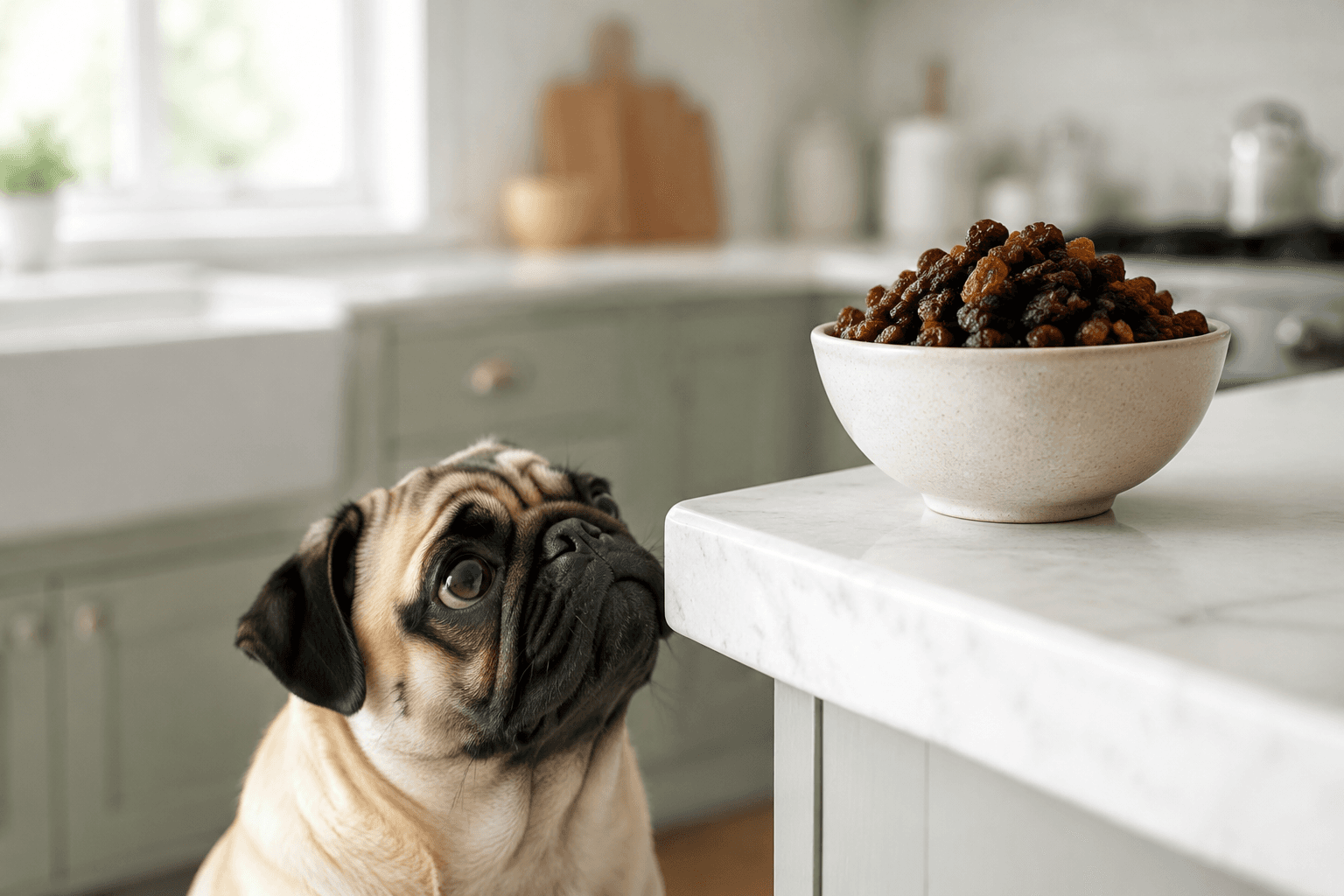
If your dog has eaten sultanas
Call your vet now, even if your dog seems fine. Estimate how many sultanas or how much of the dish they ate and when. Do not wait for symptoms, and do not induce vomiting unless a vet tells you to. Out of hours, call Vets Now or the Animal PoisonLine on 01202 509000.
- The detail
- Sultanas: risk by where they hide
- Sultanas in breakfast cereal and granola
- Christmas pudding, Christmas cake and mincemeat
- Trail mix, flapjacks and lunchbox snacks
- Sultana scones and rock cakes
- How does a sultana compare to a fresh grape, and what happens at the vet
- Better things to share
- Common questions
The detail
Sultanas are grapes that have been dried, usually from pale green varieties, which makes them sweeter and softer than raisins. Drying does not remove or weaken the toxin; it concentrates it, so a handful of sultanas represents considerably more grape than the same handful of fresh fruit.
The exact mechanism of grape and raisin toxicity is still not fully confirmed, though tartaric acid is the leading suspect. What is well established is that the effect on the kidneys is unpredictable between individual dogs, so a dog that has eaten sultanas before without harm is not proof they are safe next time.
Sultanas are also easier to miss than grapes, because they hide inside cooked and packaged food rather than sitting in a fruit bowl. That makes reading labels and keeping cupboards secure the practical difference for most households.
This page focuses on where sultanas specifically show up in a UK kitchen. For the underlying toxicology, including how a vet diagnoses and treats grape and raisin poisoning in general, the site's grapes page covers that in full and applies equally here.
Sultanas: risk by where they hide
| Breakfast cereal, muesli, granola | Toxic; a spilled box can hold a large quantity |
| Christmas pudding, cake, mincemeat | Toxic and highly concentrated per slice or spoonfulThe biggest UK spike in cases is around Christmas baking |
| Trail mix, flapjacks, lunchbox snacks | Toxic; often mixed with other hazards like chocolate |
| Home baking: scones, rock cakes, tea loaf | Toxic; cooking does not neutralise the toxin |
Sultanas in breakfast cereal and granola
Bran flakes, muesli and granola with sultanas mixed through are an everyday breakfast in a lot of UK homes, and a dropped bowl or an unattended cereal box is a realistic way for a dog to get into a serious quantity at once.
A full box of a sultana-bran cereal can hold well over 100g of dried fruit. If a dog empties even part of a box, treat it the same as any other sultana ingestion and ring your vet.
Homemade granola and flapjack-style breakfast bars often add extra sultanas on top of what a shop-bought cereal already contains, which is worth remembering if your dog gets into the baking tin rather than the cereal cupboard.
Christmas pudding, Christmas cake and mincemeat
A traditional Christmas pudding or fruit cake can contain several hundred grams of mixed dried fruit, mostly sultanas, raisins and currants, packed into a single dense item that is often left cooling within a dog's reach.
Jars of mincemeat are just as concentrated and just as easy to knock off a worktop during Christmas baking. If your dog gets into either, guess the weight of dried fruit in the recipe and give your vet that estimate.
Christmas pudding is worth calling out on its own, separate from mince pies, because a whole pudding left to cool on a side represents one of the single largest concentrations of dried fruit likely to appear in a UK kitchen all year.
Trail mix, flapjacks and lunchbox snacks
Trail mix and flapjacks with sultanas stirred through are common in school bags and gym bags, and both travel well, which means they end up in coat pockets and car door pockets where a dog can find them.
These snacks often mix sultanas with raisins, chocolate chips or nuts in the same bag, so an ingestion here can mean dealing with more than one hazard at once.
A dropped lunchbox on a dog walk or a school run is a genuinely common route in, precisely because nobody thinks of a granola bar as a poisoning risk the way they would a bag of grapes.
Sultana scones and rock cakes
Home baking with sultanas, scones, rock cakes, tea loaves, is popular precisely because sultanas keep well and do not need preparation, which also means a batch left to cool is a batch a dog can reach.
Baking does not destroy the toxin. A stolen scone counts as sultana ingestion in exactly the same way as raw fruit would.
Cooling racks left on a low counter or kitchen table are a common spot for a dog to reach a whole batch rather than a single item, so treat a missing scone the same as a missing handful of sultanas from the packet.
How does a sultana compare to a fresh grape, and what happens at the vet
Drying removes most of the water from a grape, so weight for weight a sultana packs in considerably more grape material than the fresh fruit does. A small handful of sultanas can represent a meaningful quantity of grape once you account for that concentration, which is why vets treat dried forms as at least as dangerous as fresh grapes, gram for gram.
There is no reliable weight-based table for converting sultanas eaten into a risk level, because individual sensitivity varies so much between dogs. Any amount is treated the same way: a call to the vet.
Vets Now notes there is no direct antidote for grape or raisin toxicity, so treatment focuses on limiting absorption and protecting the kidneys: induced vomiting if the ingestion is recent, activated charcoal, and intravenous fluids, with blood tests to track kidney values over the following days. PDSA is direct about the stakes: treatment needs to start quickly because untreated poisoning can be fatal, while dogs treated early generally recover fully.
Signs to watch for
- Vomiting, often within a few hours
- Diarrhoea, sometimes with blood
- Lethargy and reduced appetite
- Increased or decreased thirst and urination over the following days
Common questions
Are sultanas more dangerous than fresh grapes?
Gram for gram, yes, because drying concentrates the toxin into a smaller amount of fruit. A small handful of sultanas can represent more grape material than it looks like.
My dog ate a couple of sultanas from a scone. Do I need to call the vet?
Yes. There is no confirmed safe amount, so every major poisoning service advises a same-day vet call for any quantity, however small.
Does cooking or baking destroy the toxin?
No. Sultanas in Christmas pudding, cake or scones are just as dangerous as raw ones; heat does not neutralise the toxin.
How is sultana poisoning different from currant or raisin poisoning?
It is not. Sultanas, raisins and currants are all dried grapes of different varieties, and vets treat ingestion of any of them the same way.
How quickly do symptoms show up?
Vomiting can start within a few hours, but kidney effects can take one to three days to appear. A dog looking fine on the day tells you nothing about the following 48 hours.
What will the vet do if my dog eats sultanas?
For a recent ingestion, usually induced vomiting followed by activated charcoal and a period on intravenous fluids to protect the kidneys, with blood tests to track kidney values afterwards.
Is sultana bread or malt loaf just as risky?
Yes, any baked good with sultanas mixed through carries the same risk as the raw fruit. Check the ingredients on anything your dog has stolen from the counter.