
Can dogs eat rawhide?
Updated 8 August 2026
Caution. Rawhide is not a food so much as a processed chew, and the real danger is physical: dogs bite off chunks that can choke them or swell in the stomach and cause a blockage needing surgery. The chemicals used to process the hide are a smaller worry than the size of the piece your dog swallows. Supervise every chew, or choose something else.
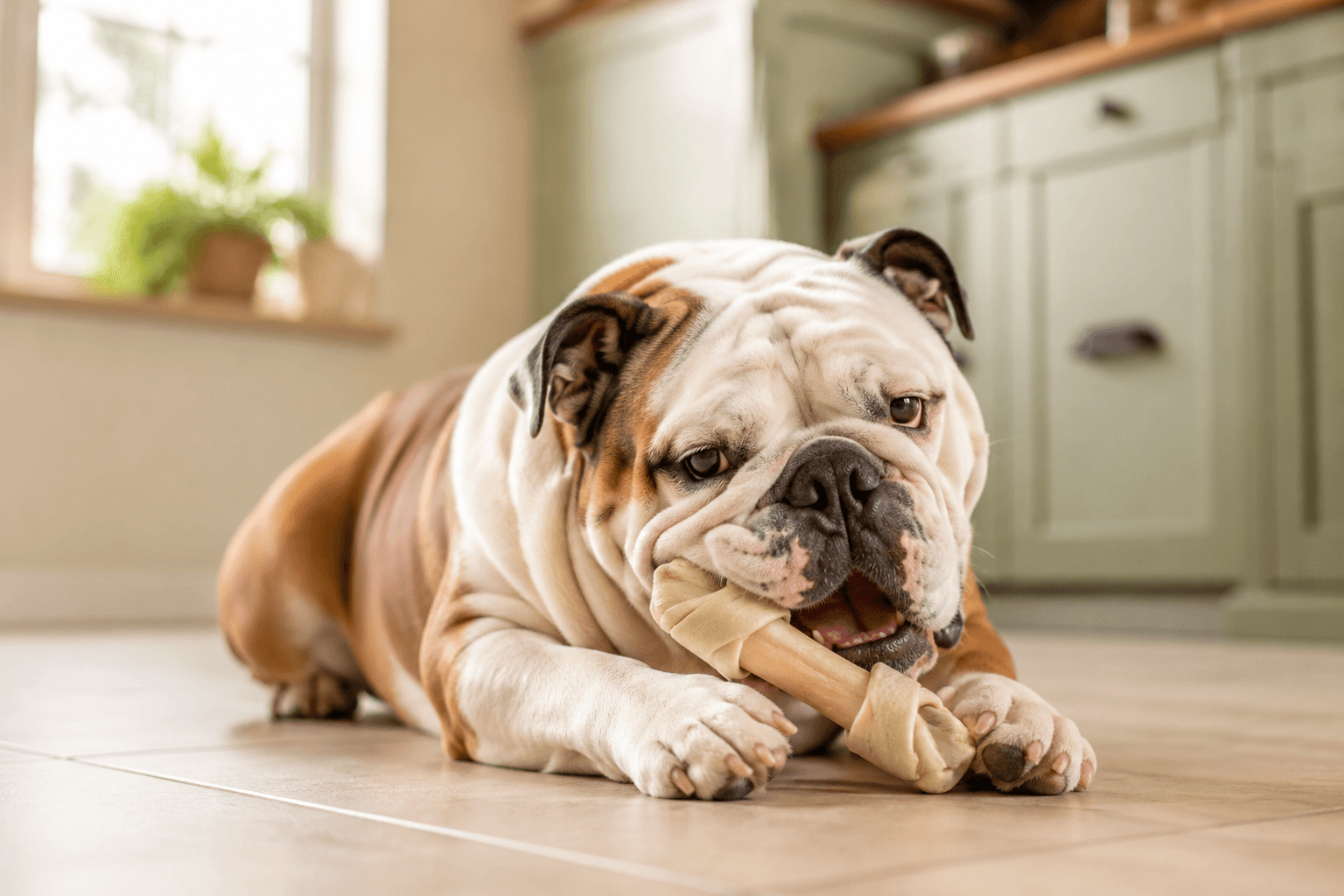
The detail
Rawhide is dried animal hide, usually cattle, that has been cleaned, treated and pressed or rolled into bones, sticks and knotted shapes. It is not a treat in the way a piece of chicken is; it is closer to a chew toy your dog is allowed to eat, and that is where the trouble starts.
The hide is soaked in lime to strip the hair, then washed, bleached and sometimes flavoured or coated before it is shaped and dried. Most of what is sold in the UK is imported, and the processing chemicals used vary a lot between manufacturers.
None of that is the main hazard, though. Rawhide barely breaks down in stomach acid, so a swallowed chunk can sit there for weeks, and a piece that lodges in the throat or gut is a genuine emergency regardless of what it was treated with.
It also helps to be clear about what rawhide is not. It carries no nutritional value worth mentioning, it is not a dental product in any tested sense despite the marketing, and it does not belong in the same category as a food like chicken or carrot that this site otherwise covers. Treating it as a chew to manage rather than a treat to hand over freely is the safer mindset.
Rawhide: risk by type
| Rolled rawhide sticks | Frays into stringy pieces that swallow easily |
| Pressed or compressed chips | Softens fast for some dogs, hard shards for others |
| Knotted bones | The dense knot is the piece most often bitten off wholeA common cause of blockages that need surgery to clear |
| Flavoured or coated rawhide | Coating adds appeal, not safety; check for added salt |
How much is sensible
| Dog size | Sensible amount |
|---|---|
| Small (under 10kg)Jack Russell, dachshund, pug | A thin, single-layer chew sized for a small mouth, supervised the whole time, taken away once it softens. |
| Medium (10-25kg)Cocker spaniel, border collie, bulldog | A single knotted bone or roll from a reputable brand, chewed under watch, never left in the crate overnight. |
| Large (over 25kg)Labrador, German shepherd, Rottweiler | Thicker, denser rawhide that takes longer to reduce, still supervised, still removed once it becomes soft and swallowable. |
Rolled and pressed rawhide vs knotted bones
Rolled rawhide sticks are a single strip wound tight, and they tend to fray into long, stringy pieces a determined dog can swallow whole. Pressed rawhide is made from smaller offcuts glued and compacted together, which some dogs reduce to mush quickly and others crack into hard shards.
Knotted bones have a thicker, dense knot at each end that resists chewing longer, but the knot is also the piece most likely to get bitten off whole and cause a blockage.
None of the three shapes is a clearly safer default. The chewing style of the individual dog matters more than which shape you buy, which is why supervision is the constant recommendation across every type.
Is rawhide safe for puppies?
Puppies have smaller mouths and throats, weaker chewing muscles, and less judgement about what to swallow, which stacks the choking and blockage risks against them. A puppy is also more likely to gulp down a piece out of excitement rather than working it down slowly.
If you give a puppy rawhide at all, use the smallest, thinnest option made for their size, watch every second of the chew, and stop the moment they start biting off pieces rather than gnawing.
Teething puppies often reach for anything firm to chew on, and rawhide can seem like an obvious answer. A frozen wet cloth or a soft rubber teething toy meets the same need without the swallowing risk.
Does rawhide damage a dog's teeth?
Rawhide is often sold on a dental-health claim, but the reality cuts both ways. Vets Now notes that pressed or glued rawhide can be dense and hard enough to fracture teeth in a determined chewer, despite the marketing around dental benefits.
A dog with a history of cracked or worn teeth is a poor candidate for any hard chew, rawhide included. If you are choosing a chew specifically for dental reasons, ask your vet for one with actual evidence behind it rather than assuming rawhide qualifies.
My dog swallowed a chunk of rawhide
Watch for retching, drooling, repeated swallowing, or a sudden refusal to eat. A piece stuck in the throat is an immediate emergency; call your vet or Vets Now straight away rather than waiting to see if it passes.
If the dog seems fine, a blockage further down can still show up hours or days later as vomiting, a swollen abdomen, straining without producing anything, or lethargy. Any of those after a rawhide chew is worth a same-day vet call.
Do not try to make your dog vomit at home without veterinary guidance, and do not assume a small dog swallowing a small piece is automatically low risk. Size relative to the dog's own throat and gut is what matters, not the absolute size of the chunk.
Rawhide alternatives that carry less risk
Raw meaty bones, given large and supervised so they cannot be swallowed whole, break down differently to processed hide and many vets consider them a lower-risk chew for the right dog. Firm rubber chew toys stuffed with something tasty give a similar occupation without anything to swallow at all.
None of these are risk-free either. The common thread across every good alternative is the same one that applies to rawhide: size it to the dog, and watch while they chew.
If you already have rawhide in the house and want to keep using it, the American Kennel Club recommends rinsing it in water before handing it over, to reduce any surface residue from processing, and throwing away small chewed-off pieces before your dog gets the chance to swallow them. Choosing a thicker chew that takes longer to reduce, and stopping the session the moment it turns soft, are the other practical steps that actually reduce risk rather than just feeling like they do.
Signs to watch for
- Retching, drooling or repeated swallowing during or after a chew
- Vomiting, or refusing food, in the hours or days after
- Straining to pass stool, or a swollen, tender abdomen
- Lethargy or unusual quietness
Common questions
Is rawhide toxic to dogs?
No, rawhide is not a poison. The danger is physical, not chemical: choking on a large piece, or a swallowed chunk swelling and blocking the gut.
How long should I let my dog chew rawhide?
Take it away once it turns soft and mushy, usually after 15 to 30 minutes, before it is small enough to swallow in one go. Never leave a dog with rawhide unattended, however long the session.
Are natural or 'human-grade' rawhide brands safer?
They may carry fewer processing chemicals, but they still swell and still choke the same way as any other rawhide. The physical risk does not change with the label.
Can rawhide cause an allergic reaction?
It is uncommon, but some dogs react to processing chemicals or added flavourings with itching or an upset stomach. Stop the chew and speak to your vet if you notice either.
Is compressed rawhide better than the rolled kind?
Neither is clearly safer. Compressed chips can crack into hard shards, and rolled sticks fray into swallowable strings; the right choice depends on how your individual dog chews.
What should I give my dog instead of rawhide?
A large raw bone chewed under supervision, or a rubber toy stuffed with food, both give a dog something to work at without a piece that can lodge or swell.
My dog has chewed rawhide for years with no problem. Is it still risky?
Yes, past incidents without a problem do not remove the risk for the next chew. Blockages often happen on an otherwise ordinary day, which is why supervision matters on every single chew.