
Can dogs eat chickpeas?
Updated 7 August 2026
In moderation, yes. Plain cooked or tinned chickpeas are a useful low-fat source of fibre and plant protein for dogs, but raw ones are hard to digest and salted, spiced or wasabi-coated snack chickpeas carry a real dose of sodium. Hummus is a separate problem, since it is usually made with garlic, which is toxic to dogs.
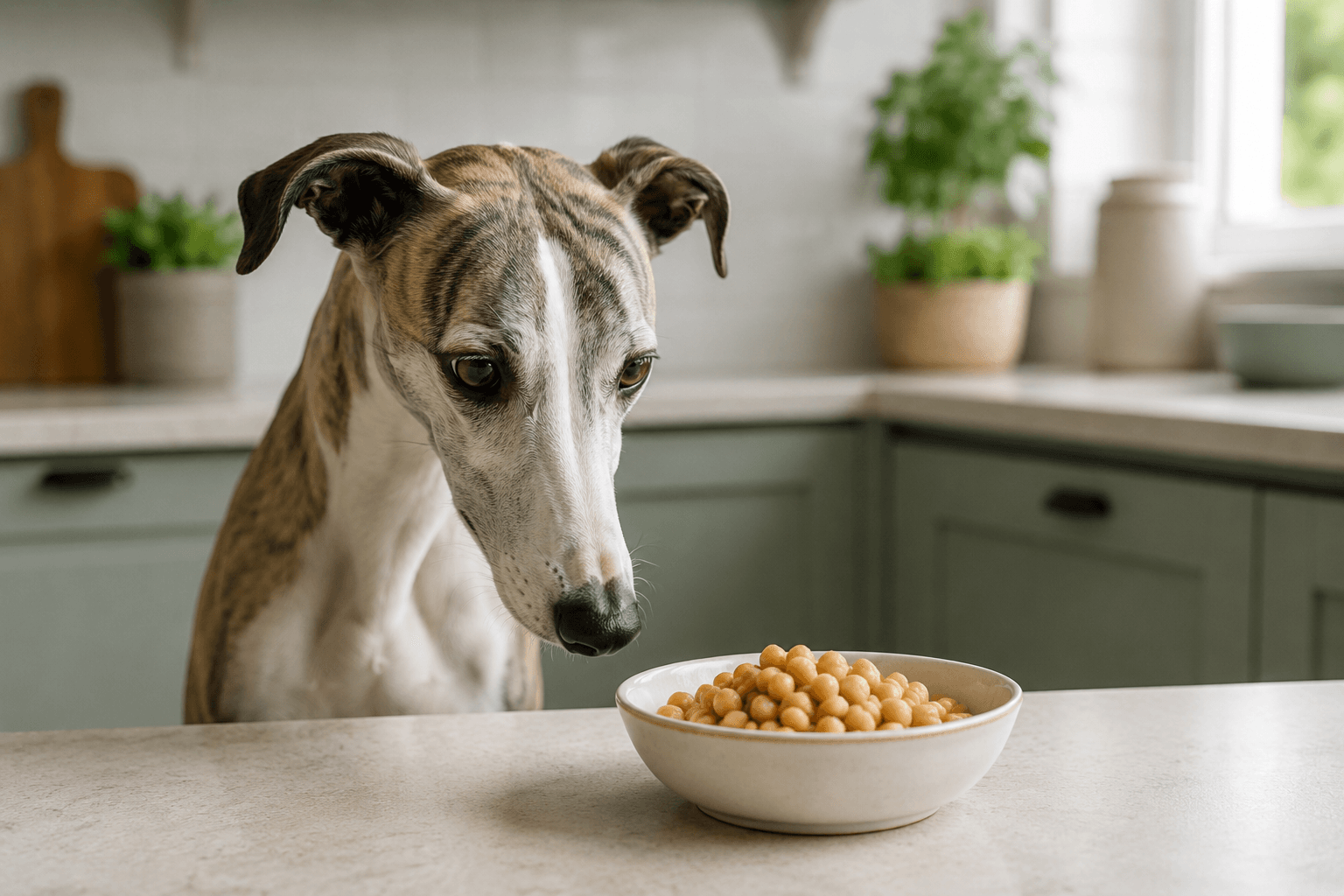
- The detail
- What is in 100g of plain cooked chickpeas
- How much is sensible
- Tinned chickpeas vs dried and soaked
- Salted, spiced and wasabi-coated chickpea snacks
- Can dogs eat hummus or falafel?
- Are chickpeas linked to heart disease in dogs?
- Chickpea flour, gram flour and chickpea pasta
- Better things to share
- Common questions
The detail
A chickpea is a pulse, not a vegetable in the everyday sense, and that changes what it brings to a dog's bowl. Plain cooked chickpeas are roughly a fifth protein by weight, carry a good amount of fibre, and have very little fat, which is why they turn up as a filler ingredient in some complete dog foods.
Raw, dried chickpeas are the version to avoid. They are dense and starchy and very difficult for a dog to break down, and they can swell once eaten, which is uncomfortable at best. Cooking softens the starch and makes the pulse digestible, so this is a food that needs a pan or a tin before it reaches the bowl.
What happens to the chickpea after cooking is the other half of the story. A plain tinned or home-cooked chickpea is a fair, low-risk treat. The same chickpea roasted in oil and salt, turned into a spiced snack, or blended into hummus with garlic and lemon is a different food carrying a different risk.
What is in 100g of plain cooked chickpeas
| Protein | Around 9g |
| Fibre | Around 7 to 8g |
| Fat | Around 2.5gLow compared with most nuts and seeds |
| Salt (tinned, drained and rinsed) | Well under 0.1gRinsing removes most of the brine salt |
| Anything toxic to dogs | Nothing in the plain pulseGarlic in hummus and salt in flavoured snacks are the real risks |
How much is sensible
| Dog size | Sensible amount |
|---|---|
| Small (under 10kg)Chihuahua, Jack Russell | A teaspoon of plain cooked chickpeas, rinsed if from a tin, a couple of times a week |
| Medium (10 to 25kg)Cocker spaniel, border collie | A tablespoon, mixed into their usual dinner |
| Large (over 25kg)Labrador, German shepherd | Two tablespoons, mixed into their usual dinner |
| Overweight or diabetic dogs | A teaspoon at most; the fibre is useful, but the calories still count |
Tinned chickpeas vs dried and soaked
Tinned chickpeas are the easy, low-effort choice. The canning process cooks them thoroughly, so a rinsed spoonful from a tin is ready to share with none of the raw pulse's digestibility problem.
Dried chickpeas soaked and boiled at home work just as well, as long as they are cooked all the way through and served plain. Rinsing tinned chickpeas under the tap first cuts down on the brine salt clinging to them, which is worth doing even for an occasional spoonful.
Salted, spiced and wasabi-coated chickpea snacks
Roasted snack chickpeas sold as a crunchy bar snack are a different food from a plain cooked pulse. Most are fried or oven-roasted in oil and finished with a heavy coat of salt, chilli, or a spice mix, and the Pet Poison Helpline lists salt among the substances that can cause vomiting, diarrhoea, tremors and worse at high doses.
Wasabi-coated versions add a genuinely unpleasant irritant on top of the salt, since wasabi is a strong mustard-oil compound that causes mouth and gut irritation in dogs the way it does in people, only worse because dogs cannot spit it out. Keep the snack bowl out of reach rather than handing one over as a taster.
Can dogs eat hummus or falafel?
No, not as a rule. Hummus starts as chickpeas, tahini and olive oil, which are individually fine, but almost every recipe and every shop-bought tub adds garlic, and PDSA's guidance is clear that garlic and onion damage a dog's red blood cells and can cause anaemia, with symptoms sometimes taking a few days to appear.
Falafel carries the same garlic problem, usually with onion added too, plus the fact that it is deep fried. A dropped chip of falafel is unlikely to be an emergency, but do not spread hummus on a dog's dinner as a treat, and check any tub's ingredients before letting a dog anywhere near a dropped cracker.
Are chickpeas linked to heart disease in dogs?
This question comes from the FDA's investigation into grain-free pet food and dilated cardiomyopathy, which named peas, lentils, chickpeas and other pulses among the ingredients under review when they sit high on the ingredient list of a complete, grain-free diet fed for months or years.
That is a question about how a dog's whole daily diet is formulated, not about a dog having a spoonful of chickpeas as an occasional extra. If your dog eats a grain-free food built heavily around pulses, that is worth raising with your vet at a routine check-up rather than a reason to avoid chickpeas as a treat.
Chickpea flour, gram flour and chickpea pasta
Chickpea flour, also sold as gram flour or besan, is ground chickpeas and nothing else, so a small taste of something made plainly with it carries the same low-fat, high-fibre profile as the whole pulse. The problem, as usual, is what else went into the recipe.
Chickpea pasta is a reasonable occasional swap for a dog already having a small amount of pasta, but a sauce built on garlic, onion, cheese or a lot of oil turns a fine base ingredient into a different food. Serve any of these plain if you are sharing at all.
Signs to watch for
- Loose stools, wind or a bloated tummy after a large or raw portion
- Vomiting or diarrhoea after a salted or spiced snack chickpea binge
- Pale gums, lethargy or dark urine in the days after eating hummus or another garlic-containing chickpea dish
Common questions
Can dogs eat chickpeas every day?
A small amount most days is unlikely to cause harm in a healthy dog, but a couple of times a week is the more sensible habit given the fibre content. Watch stools and cut back if they become loose or gassy.
Are tinned chickpeas safe for dogs?
Yes, if you rinse them under the tap first to remove the brine salt. Plain tinned chickpeas are cooked thoroughly in the can, so they carry none of the digestibility problem raw chickpeas have.
Can dogs eat hummus?
No, not deliberately. Most hummus recipes and shop-bought tubs contain garlic, and PDSA's guidance says garlic and onion can damage a dog's red blood cells and cause anaemia. A small lick off a plate is unlikely to be serious, but do not spread it on a dog's food.
Can dogs eat raw chickpeas?
No. Raw, dried chickpeas are hard and starchy and very difficult for a dog to digest properly. Cook them first, whether from dried or straight from a tin.
Are chickpeas bad for a dog's heart?
An occasional spoonful is not the concern the FDA investigated. That review looked at complete grain-free diets built heavily around pulses like peas, lentils and chickpeas over months or years, which is a different question from feeding chickpeas as an occasional extra.
My dog ate a bag of wasabi peas or spiced chickpea snacks. What now?
Watch for vomiting, diarrhoea or excessive thirst, which point to the salt content, and call your vet if your dog seems unwell or ate a large amount. The wasabi coating can also irritate the mouth and gut on its own.
Can puppies eat chickpeas?
A small amount of plain cooked chickpea is fine as an occasional taste, but puppy food already provides balanced nutrition. Keep any pulse to a small extra rather than a regular addition while a puppy's digestion is still settling.