
Can dogs eat peas?
Updated 6 August 2026
Yes. Peas are safe for dogs, low in calories and one of the easiest treats in the house to portion. Fresh, frozen and podded peas are all fine, raw or cooked. Tinned and mushy peas are the ones to leave alone, because of the salt and sugar added to them.
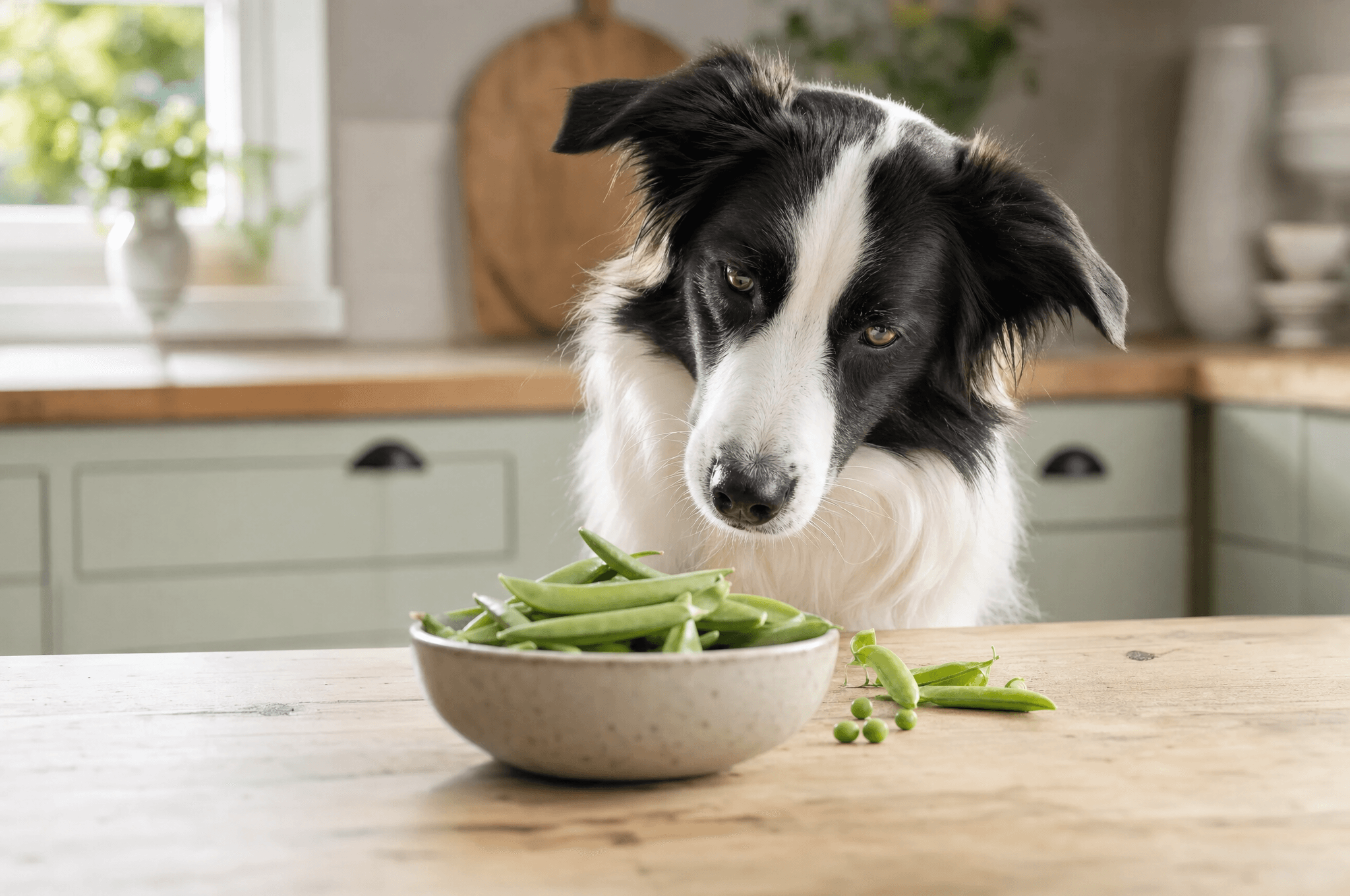
The detail
Peas work as a dog treat for a dull reason: they are small, cheap and already the right size. One garden pea is roughly 1 kcal, so twenty of them come to about the same as a single small dog biscuit.
Straight from the freezer they double as a hot-weather treat. Frozen peas hold their shape in a pocket, do not go sticky, and most dogs treat the cold as a bonus rather than a problem.
Nutritionally they bring fibre, vitamin K and plant protein, none of which is missing from a complete dog food. Use peas because they are convenient, not because your dog is short of anything.
The one question worth taking seriously is the grain-free food and heart disease story, which is covered further down this page. It concerns complete diets built largely on legumes rather than a handful of peas from the freezer bag.
What is in a tablespoon of peas (about 20 peas)
| Calories | About 10 kcalRoughly one small dog biscuit |
| Fibre | About 0.8g |
| Sugar | About 0.6g |
| Salt in fresh or frozen peas | NoneTinned and mushy peas have salt added in the tin |
| Anything toxic to dogs | NothingTough garden pea pods are a digestion problem, not a poison |
How much is sensible
| Dog size | Sensible amount |
|---|---|
| Small (under 10kg)Chihuahua, Jack Russell | Six to ten peas at a time |
| Medium (10 to 25kg)Cocker spaniel, border collie | A rounded tablespoon, roughly 20 peas |
| Large (over 25kg)Labrador, German shepherd | Two tablespoons, roughly 40 peas |
| Dogs on a prescription dietKidney, urinary or weight-loss diets | Ask your vet first. Those diets are calculated tightly and extras change the sums |
Fresh and frozen peas
Frozen peas are the version most UK owners actually have, and they need no preparation at all. Take a few straight from the bag, hand them over one at a time, and you have a training treat that costs pennies a session.
Fresh podded peas are the same food with more work. Both are fine raw, and both are fine steamed or boiled in plain water if your dog prefers them soft.
Watch small dogs with frozen ones. A rock-hard pea bolted whole is not dangerous, but a dog who inhales food may cough on it, so thaw a few in your hand for the enthusiastic ones.
Tinned peas and mushy peas
Leave these. PDSA advises against tinned peas, and the reason is the tin rather than the pea: salt and sugar go in with the water.
Mushy peas are worse again, because a UK chip-shop or supermarket tin usually carries added salt and sometimes sugar and colouring on top. A spoonful off your plate will not poison a healthy dog, but it is a pointless dose of sodium.
If tinned is all you have, rinse them under the tap and give a smaller amount. Frozen peas cost less and skip the problem entirely.
Mangetout and sugar snap peas
Both are safe and both come with the pod, which is the part dogs enjoy most. Raw they are crunchy and sweet, and steamed for a minute or two they soften without losing the snap.
PDSA groups sugar snap peas and mangetout with garden peas as veg dogs can have. Serve them plain, with no butter and no soy or stir-fry sauce.
Chop them into two or three pieces for small dogs. A whole mangetout is a long, flat strip and a gulper can get one halfway down before chewing.
Pea pods and shells
Garden pea pods are the fibrous ones. They are not toxic, but they are tough, stringy and hard to digest, and a dog who swallows several can end up with a stomach ache or worse.
Sugar snap and mangetout pods are the edible kind and are a different proposition, tender enough to chew through. That difference is the whole answer to the pod question.
If your dog helps themselves to a compost bin of shelled pods, watch for vomiting, straining or a refusal to eat and ring your vet if any of it appears.
Peas, grain-free food and the heart disease question
This is worth getting right, because it is the reason peas have a reputation they mostly do not deserve. In 2018 the US Food and Drug Administration began investigating reports of dilated cardiomyopathy, a disease of the heart muscle, in dog breeds that are not usually prone to it.
Many of the diets involved were grain-free and built on high proportions of legumes, including peas, chickpeas, lentils and dried beans. The FDA has never established cause and effect, its last substantive public communication was in 2020, and reports have run at lower levels since.
The MSD Veterinary Manual notes that some dogs, usually small breeds or those on grain-free diets, can have taurine-responsive dilated cardiomyopathy, and that a careful diet history matters for any dog diagnosed with it. The science is unresolved.
What that means for a bag of frozen peas: nothing. The question is about what makes up the bulk of a complete diet every day, not about a dozen peas as a treat. If your dog's main food is grain-free and legume-heavy, that is a conversation for your vet rather than a reason to bin the freezer bag.
Signs to watch for
- Wind or loose stools after a large portion
- Straining, vomiting or refusing food after eating tough pods
Common questions
Can dogs eat frozen peas straight from the bag?
Yes, and it is one of the cheapest training treats going. Hand them over a few at a time, and thaw them briefly for small dogs who swallow food whole.
Can puppies eat peas?
Yes, in smaller amounts and softened first. Three or four cooked peas is plenty, and their complete puppy food already covers what they need.
Are mushy peas safe for dogs?
Best avoided. Tinned mushy peas carry added salt and often sugar, and a plain frozen pea does the same job with none of it.
Do peas give dogs wind?
A large portion can, because peas are high in fibre. Keep to a tablespoon or two and the problem usually disappears.
Should I avoid peas because of grain-free food and heart disease?
No, not as a treat. The FDA investigation concerns complete diets built largely on legumes, and no cause and effect has been established. If your dog's main food is grain-free and legume-heavy, raise it with your vet.
Can dogs eat pea pods?
Sugar snap and mangetout pods are fine because they are tender. Tough garden pea pods are stringy and hard to digest, so shell those and bin the pods.