
Can dogs eat red beans?
Updated 7 August 2026
Careful. Cooked, plain red kidney beans are fine for dogs in small amounts, but raw or undercooked ones are a genuine poisoning risk. They contain a lectin called phytohaemagglutinin, and as few as four or five raw beans can trigger symptoms. Proper cooking destroys the toxin, but a slow cooker often does not get hot enough to finish the job.
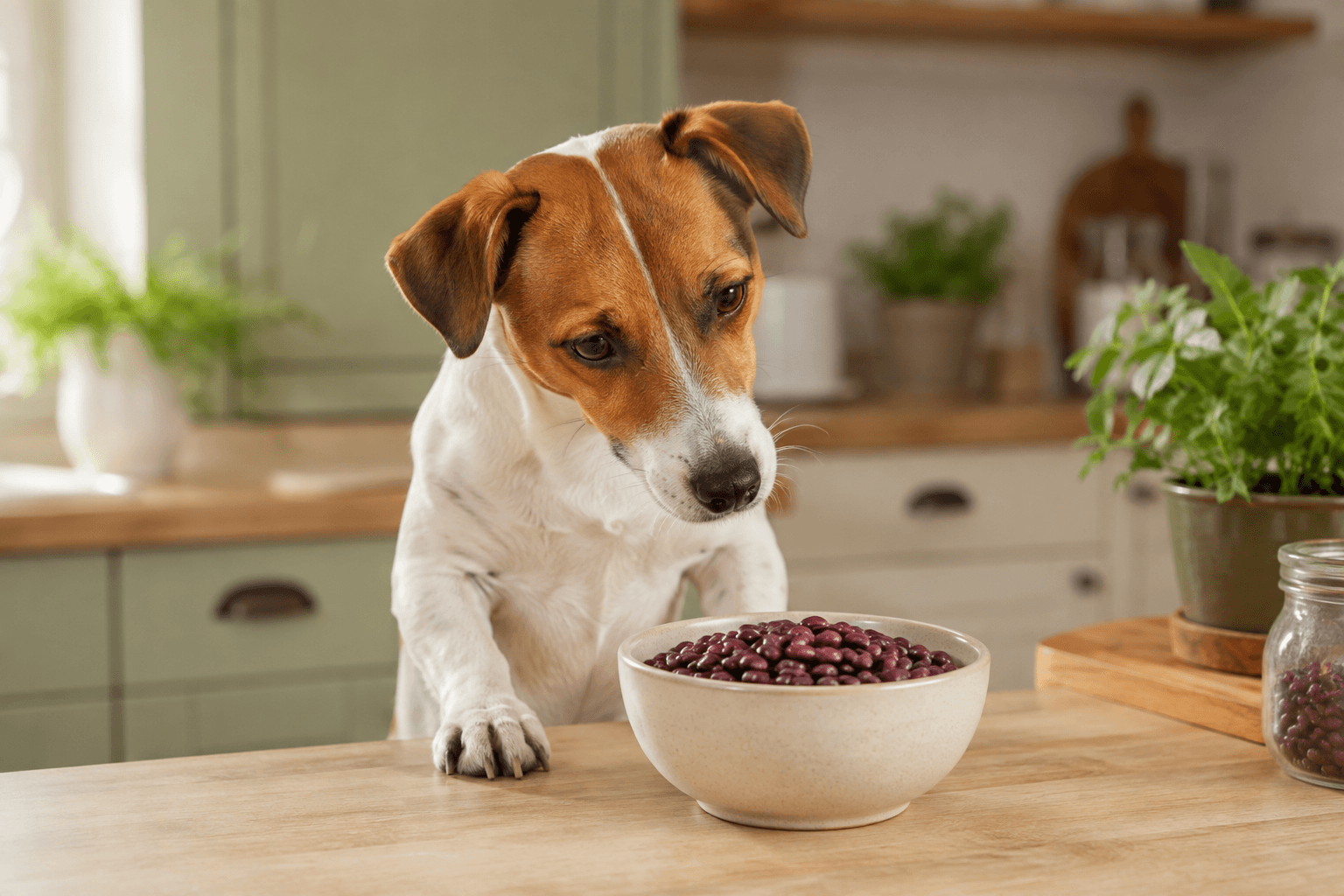
The detail
Raw and dried red kidney beans contain a lectin called phytohaemagglutinin, a protein that binds to the gut lining and clumps red blood cells together. The Centre for Food Safety, a Hong Kong government food safety authority, measured raw kidney beans at 20,000 to 70,000 haemagglutinating units, against 200 to 400 units in a fully cooked bean, a drop of roughly a hundredfold.
That gap is why preparation matters more than the bean itself. Boiling well-soaked beans hard for at least 10 minutes destroys the lectin, but a slow cooker or crock pot often does not reach a high enough temperature to finish the job.
Cooked and canned kidney beans are a different food in practical terms. Tinned beans go through a pressurised canning process that cooks them thoroughly, so a rinsed spoonful from a tin carries none of the raw-bean risk, just fibre, a little plant protein and whatever salt sits in the brine.
A UK analysis of suspected red kidney bean poisoning found 50 reported incidents between 1976 and 1989, with nausea, vomiting and diarrhoea developing within one to seven hours of eating the beans raw or under-cooked. Dogs get the same lectin from the same beans, so the same timeline and the same fix, proper cooking, apply.
Raw vs cooked kidney beans
| Raw or dried bean | 20,000 to 70,000 hau of phytohaemagglutininCentre for Food Safety measurement; hau = haemagglutinating units |
| Fully cooked bean | 200 to 400 hauRoughly a hundredfold drop from proper boiling |
| Minimum safe prep | Soak, then boil hard for at least 10 minutesA slow cooker often will not get hot enough |
| Canned beans | Already safe once rinsedPressure-canning cooks them thoroughly |
How much is sensible
| Dog size | Sensible amount |
|---|---|
| Small (under 10kg)Chihuahua, Jack Russell | A teaspoon of well-cooked, plain kidney beans, rinsed if from a tin |
| Medium (10 to 25kg)Cocker spaniel, border collie | A tablespoon, mixed into their usual dinner |
| Large (over 25kg)Labrador, German shepherd | Two tablespoons, mixed into their usual dinner |
| Overweight or diabetic dogs | A teaspoon at most; the fibre is useful, but the calories still count |
Raw or undercooked kidney beans
This is the form that causes real harm. The Centre for Food Safety measured raw kidney beans at up to 70,000 haemagglutinating units of phytohaemagglutinin, against 200 to 400 units once properly cooked, and says as few as four or five raw beans are enough to cause symptoms.
A packet of dried beans left within reach, or a few raw beans dropped while you're prepping a chilli, is the realistic route in. Symptoms usually start within one to three hours and include vomiting, abdominal pain and diarrhoea, so a dog that has got into the dried bean bag needs watching closely even before anything shows.
Cooking kidney beans safely for a dog's bowl
Soak dried beans, then boil them hard for at least 10 minutes before finishing the cook. The Centre for Food Safety is specific that beans should not be cooked at a low temperature, in a slow cooker or crock pot for example, since that method may not reach the temperature needed to destroy the toxin.
If you already cook kidney beans properly for your own dinner, a spoonful of the plain, unseasoned result is fine to share. Keep the portion small and unseasoned, since a curry or chilli sauce brings its own onion, garlic and spice risks that have nothing to do with the bean.
Canned kidney beans
Tinned kidney beans have already been cooked under pressure during canning, so they carry none of the raw-bean lectin risk. Drain and rinse them first, since the tinning liquid is salted and a dog gets no benefit from that part.
A rinsed spoonful mixed into dinner is a reasonable way to add fibre without any cooking of your own. Avoid tins labelled as chilli beans, refried beans or anything in a sauce, since those usually carry onion, garlic or a lot of added salt.
Chilli con carne and other bean dishes
The beans are rarely the issue in a shared chilli; the seasoning is. Chilli con carne typically includes onion and often garlic, and Battersea lists the onion family as toxic to dogs whether it is raw, cooked or dried, with a risk of damage to red blood cells.
Chilli powder and cumin are not listed as toxic, but a spiced, salted sauce is still a poor match for a dog's stomach. If your dog steals a mouthful of finished chilli, the bean itself is the smallest part of what you need to think about.
My dog ate raw kidney beans, what do I do?
Ring your vet, and try to say roughly how many beans and how long ago. Symptoms typically start within one to three hours according to the Centre for Food Safety's data on this toxin, so a dog that seems fine in the first hour is not necessarily in the clear yet.
Do not wait for vomiting to start before calling. Your vet may want to see your dog, particularly if a meaningful handful rather than one or two stray beans has gone missing, and early advice is easier to act on than a dog that is already being sick.
Signs to watch for
- Vomiting and abdominal pain, usually within one to three hours of eating raw or undercooked beans
- Diarrhoea following on from the vomiting
- Loss of appetite and lethargy over the following hours
If your dog overdoes it
Ring your vet and say roughly how many beans your dog ate and how long ago, even if they seem fine so far. Do not make your dog vomit unless a vet tells you to. Out of hours, Vets Now runs emergency clinics across the UK.
Common questions
Are raw kidney beans poisonous to dogs?
Yes. Raw and undercooked kidney beans contain a lectin called phytohaemagglutinin, and as few as four or five raw beans can cause vomiting and abdominal pain. Cooking properly destroys the toxin.
Can dogs eat cooked kidney beans?
Yes, in small amounts, plain and unseasoned. Keep the portion to a spoonful mixed into their usual food rather than a bowlful on its own.
Can dogs eat canned kidney beans?
Yes, once drained and rinsed to remove the salted tinning liquid. Canning cooks the beans thoroughly, so they carry none of the raw-bean risk.
How do I know if kidney beans are cooked enough for my dog?
Soak them first, then boil hard for at least 10 minutes. A slow cooker or crock pot often does not reach a high enough temperature to destroy the toxin, so avoid relying on one for this.
My dog ate a few raw kidney beans from the cupboard. Should I worry?
Yes, ring your vet rather than waiting to see. Symptoms typically start within one to three hours, so acting before your dog is sick gives your vet more options.
Can dogs eat chilli con carne?
Not really, and it's the seasoning rather than the bean that's the issue. Onion is a common chilli ingredient, and Battersea lists it as toxic to dogs in any form.
Are kidney beans good for dogs?
In small, cooked amounts they add fibre and a little plant protein, but nothing a complete dog food doesn't already provide. They're a reasonable occasional extra, not a food worth building a diet around.