
Can dogs eat cashews?
Updated 8 August 2026
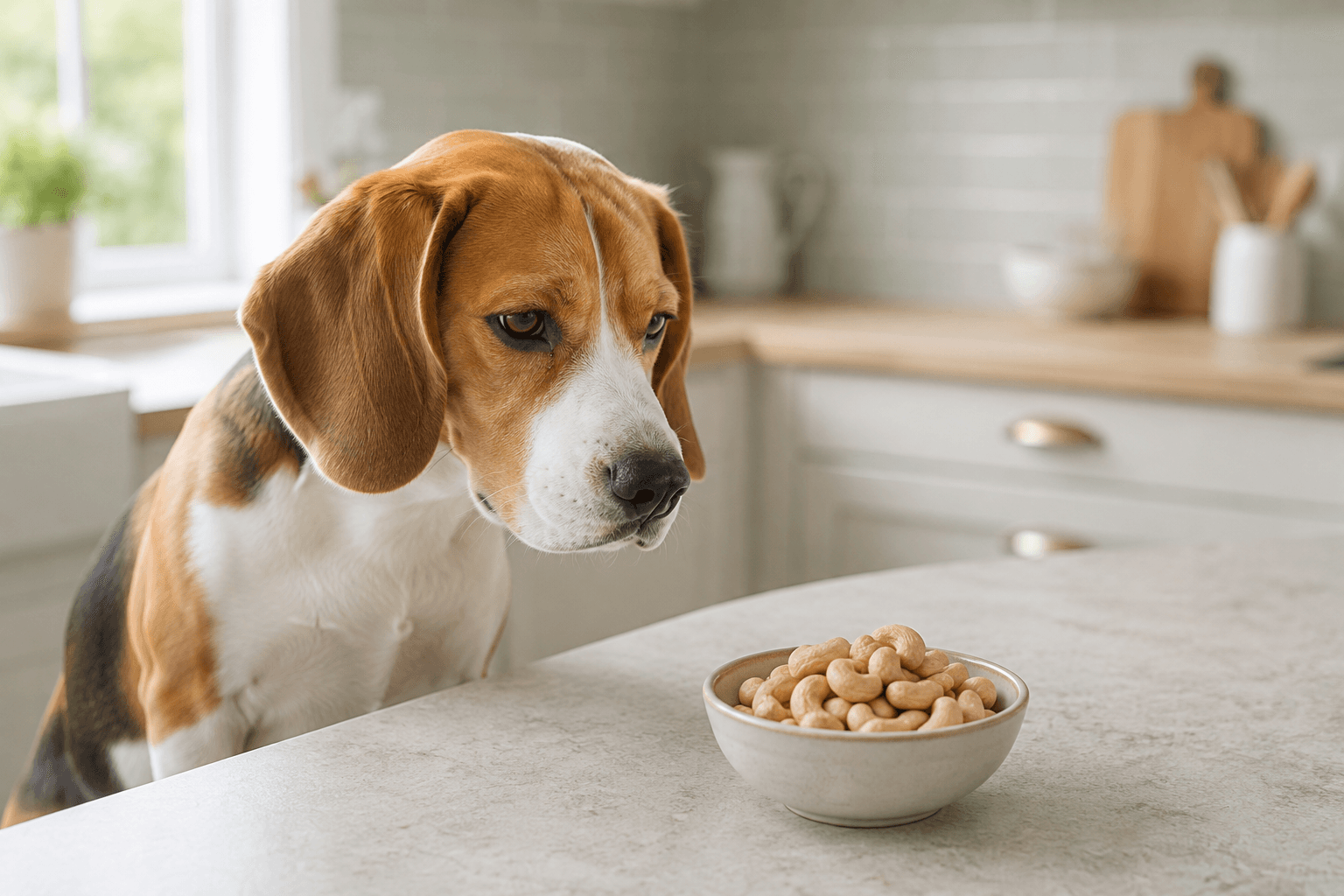
Yes, in small amounts. Cashews are not toxic to dogs the way macadamia nuts are, and Vets Now's guide to nuts and dogs places cashews in the non-toxic group. They are still high in fat, at around 44g per 100g, so a plain, unsalted handful now and then is the sensible limit, not a regular topper.
- The detail
- Cashews compared with macadamia nuts
- How much is sensible
- How many cashews can a dog safely have?
- Are cashews as risky as macadamia nuts?
- Is cashew butter safe for dogs?
- Are salted or flavoured cashews different from plain ones?
- My dog ate a whole bag of cashews, what now
- Better things to share
- Common questions
The detail
Cashews are one of the nuts vets consider genuinely non-toxic to dogs. Vets Now's guide to nuts and dogs lists cashews, along with almonds, hazelnuts and walnuts, in the group that does not poison a dog the way macadamia nuts do, though it adds that none of them are a good idea to feed deliberately. That gap between 'not toxic' and 'worth feeding' is really the whole story with cashews.
Fat is the practical reason to keep portions small. Nutritionvalue.org's figures for raw cashews put them at around 44g of fat per 100g, roughly three-quarters of their calories, and PDSA's guidance on pancreatitis names high-fat foods among the recognised triggers for a flare-up. A dog working through a generous handful, rather than one or two nuts, is taking on a meaningful fat load for its size.
Vets Now's nut guidance also flags mould as a separate risk with any nut, cashews included, noting that poor processing or storage can let mould develop and produce mycotoxins that cause their own problems. A cashew that looks or smells off, from a bag left open in a cupboard for weeks, is worth binning rather than feeding, whatever the nut.
Shop-bought cashews rarely stay plain. Salted, honey-roasted, chilli-dusted and spiced cashew mixes are common on UK supermarket shelves, and each of those coatings adds its own risk on top of the fat, whether that is straightforward salt or, in a spiced mix, garlic or onion powder. Check the ingredients on any flavoured tub before sharing, rather than assuming a cashew is a cashew whatever it is coated in.
Cashews compared with macadamia nuts
| Cashews, toxic to dogs? | NoVets Now lists cashews among the non-toxic nuts |
| Macadamia nuts, toxic to dogs? | YesMSD Veterinary Manual: signs from around 2.4g per kg of body weight |
| Fat per 100g (cashews, raw) | Approx. 44gNutritionvalue.org |
| Main everyday risk with cashews | Fat and salt, not poisoningPancreatitis is a more realistic concern than toxicosis |
How much is sensible
| Dog size | Sensible amount |
|---|---|
| Small (under 10kg)Chihuahua, Jack Russell | A couple of plain, unsalted cashews at most, once in a while |
| Medium (10 to 25kg)Cocker spaniel, border collie | Four or five plain, unsalted cashews occasionally, not a daily topper |
| Large (over 25kg)Labrador, German shepherd | A small handful of plain, unsalted cashews now and then |
How many cashews can a dog safely have?
There is no official 'safe dose' for cashews the way there is for a genuine toxin, since cashews are not toxic to begin with. The practical limit comes from fat and calories rather than poisoning risk: a small dog eating a generous handful is taking on a meaningful share of its daily calories in one sitting, and repeated big handfuls over time is more of a concern than a single occasional nut or two.
A couple of plain cashews for a small dog, or a small handful for a large one, sits well within a reasonable treat allowance. Anything beyond that is worth skipping, not because one extra nut is dangerous, but because it adds up quickly for an animal so much smaller than the person offering it.
Are cashews as risky as macadamia nuts?
No, and this is worth being clear about, since the two nuts get confused. Vets Now's guide to nuts and dogs places cashews in the group that does not cause the neurological reaction macadamia nuts do, and the MSD Veterinary Manual's entry on macadamia nut toxicosis is specific to macadamia rather than nuts in general.
That does not make cashews risk-free, since fat, salt and choking are still genuine concerns. It means a dog that eats a stray cashew is in a very different situation from a dog that eats a macadamia nut, and does not need the same emergency response.
Is cashew butter safe for dogs?
Plain cashew butter, with nothing but cashews in the jar, carries a similar risk to whole cashews, just easier for a dog to eat a lot of quickly since there is no shelling or crunching to slow them down. The fat content per spoonful is broadly the same as the whole nut.
Check the label carefully before offering any, since some cashew butters add salt, sugar or, in a smaller number of cases, xylitol, an artificial sweetener that is genuinely toxic to dogs. A plain, unsweetened jar intended for human snacking, given in a small spoonful, is the safer choice if you want to offer any at all.
Are salted or flavoured cashews different from plain ones?
Yes, treat any coated or flavoured cashew as a bigger risk than a plain one. Salted cashews add sodium on top of the fat, and UK supermarket snack mixes often go further with chilli, honey-roasting, garlic or onion seasoning, each bringing its own separate concern.
A dog getting into a tub of flavoured mixed nuts, common at Christmas or around a party, is a different situation from stealing a plain cashew off a chopping board. Check what else is in the mix before deciding how worried to be.
My dog ate a whole bag of cashews, what now
A whole bag is a genuinely different situation from a nut or two, since it adds up to a large fat dose in one sitting. Watch for vomiting, a painful or tense abdomen, lethargy or reduced appetite over the following day or two, the signs PDSA lists as pointing towards pancreatitis.
Call your vet if you see any of those signs, or if the bag was salted, flavoured, or you cannot rule out xylitol or another ingredient in the mix. A healthy dog that ate a plain bag and shows no symptoms is less likely to need emergency treatment, but a call for advice is still sensible.
Signs to watch for
- Vomiting or a reluctance to eat after a large amount
- A painful, tense or bloated-looking abdomen
- Lethargy over the following day or two
- Gagging or pawing at the mouth if a whole nut is swallowed awkwardly
Common questions
Can dogs eat cashews?
Yes, in small amounts. Cashews are not toxic to dogs, but they are high in fat, so a plain, unsalted cashew or two now and then is the sensible limit.
Are cashews as dangerous as macadamia nuts?
No. Vets Now lists cashews among the non-toxic nuts, while macadamia nuts cause a genuine, documented neurological reaction in dogs that cashews do not.
How many cashews can a dog have?
A couple of plain cashews for a small dog, or a small handful for a large one, is a reasonable occasional amount. More than that adds up to a meaningful fat load for a dog's size.
Is cashew butter safe for dogs?
In a small, plain, unsweetened amount, yes, but check the label first. Some cashew butters add salt, sugar or xylitol, and xylitol is genuinely toxic to dogs.
Are salted or roasted cashews okay for dogs?
Plain roasted cashews are fine in small amounts, but salted, honey-roasted or spiced versions add sodium and sometimes garlic or onion. Stick to a plain variety if you are sharing any.
My dog ate a whole bag of cashews, is that an emergency?
It is worth watching closely rather than panicking. Look for vomiting, a painful abdomen or lethargy over the next day or two, and call your vet if any of those appear or the bag was flavoured.
Can raw cashews poison a dog?
Cashews sold in UK shops, raw or roasted, have already had their caustic shell removed and are not a poisoning risk in that sense. The everyday concerns are fat, salt and any added flavouring, not raw versus roasted.