
Can dogs eat peanut butter?
Updated 7 August 2026
Yes, in moderation, and only if it is xylitol-free. Plain peanut butter with nothing added is a safe, popular treat, and vets often recommend a smear of it to hide tablets or fill a Kong. Sugar-free brands are the real danger: Vets Now says a dog needs only a little xylitol-containing peanut butter to show signs of poisoning, so check the label every time you buy a jar.
- The detail
- What is in a tablespoon (about 16g) of peanut butter
- How much is sensible
- Peanut butter and xylitol: the real danger
- How to check a peanut butter label for xylitol
- Peanut butter in a Kong or on a lick mat
- Giving tablets in peanut butter
- Can dogs be allergic to peanut butter?
- Better things to share
- Common questions
The detail
Peanut butter is skinned, roasted peanuts ground into a paste, sometimes with a little salt or oil added and, in the plain traditional recipe, nothing else. A tablespoon, around 16g, carries roughly 95 kcal, 8g of fat and 3.5g of protein, which is why it works well as an occasional treat rather than a daily topper on every meal. Crunchy and smooth versions carry the same nutritional profile, since the only difference is how finely the peanuts are ground, so the choice between them comes down to your dog's preference rather than safety.
The ingredient that actually decides this page is not in traditional peanut butter at all. A growing number of diet, keto and no-added-sugar peanut butters use xylitol, an artificial sweetener, in place of sugar, and Vets Now lists peanut butter directly among the everyday products this sweetener now turns up in.
Xylitol works on a dog's body roughly the way sugar does on a human pancreas, triggering a surge of insulin that drops blood sugar fast. VCA Animal Hospitals says signs of low blood sugar can appear within 30 minutes to two hours of eating it, and at higher doses liver failure can follow within one to two days.
None of this makes ordinary peanut butter something to avoid. It makes the label the thing to check, every time, rather than assuming a jar is safe because the last one was. Compared with plain peanuts, the ones covered on this site's peanuts page, peanut butter is easier to overfeed by accident, because a smear looks small but a tablespoon adds up to almost 100 kcal.
What is in a tablespoon (about 16g) of peanut butter
| Calories | About 95 kcal |
| Fat | About 8gRoughly half its weight, which is why it should stay an occasional treat |
| Protein | About 3.5g |
| Xylitol | None in traditional recipesPresent in some sugar-free, diet or keto brands; always check the label |
How much is sensible
| Dog size | Sensible amount |
|---|---|
| Small (under 10kg)Chihuahua, Jack Russell | Half a teaspoon of plain, xylitol-free peanut butter, a couple of times a week |
| Medium (10 to 25kg)Cocker spaniel, border collie | One teaspoon of plain, xylitol-free peanut butter, a couple of times a week |
| Large (over 25kg)Labrador, German shepherd | One to two teaspoons of plain, xylitol-free peanut butter, a couple of times a week |
| Dogs prone to pancreatitis, or overweight | Skip it, or use a specific low-fat version only with your vet's agreement |
Peanut butter and xylitol: the real danger
Xylitol is the one word worth reading every peanut butter label for. Vets Now includes peanut butter on its list of sugar-free products now carrying the sweetener, alongside chewing gum, baked goods and some medicines, and says symptoms in dogs can start within 30 minutes of eating it.
Early signs are vomiting, weakness and a wobbly, uncoordinated walk as blood sugar drops. VCA Animal Hospitals lists tremors, seizures and collapse as the more severe end of the same process, with liver failure possible in the following one to two days at higher doses.
If your dog has eaten peanut butter and you are not sure whether it contained xylitol, treat it as an emergency rather than waiting to see what happens. Ring your vet or the Pet Poison Helpline with the jar or its ingredients list to hand, since knowing the exact product speeds up treatment.
How to check a peanut butter label for xylitol
Xylitol does not always appear under its own name. The Royal Kennel Club's treat advice warns that it can also be listed as birch sugar or the additive number E967, so scan the whole ingredients list rather than searching the jar for one word.
Standard, mainstream peanut butter sold for human consumption in the UK rarely contains xylitol today, but diet, keto, high-protein and no-added-sugar versions are the ones most likely to carry it, since it is used to replace the sugar those recipes cut out. A peanut butter made specifically for dogs sidesteps the question entirely, since it is formulated without xylitol or added sugar.
Peanut butter in a Kong or on a lick mat
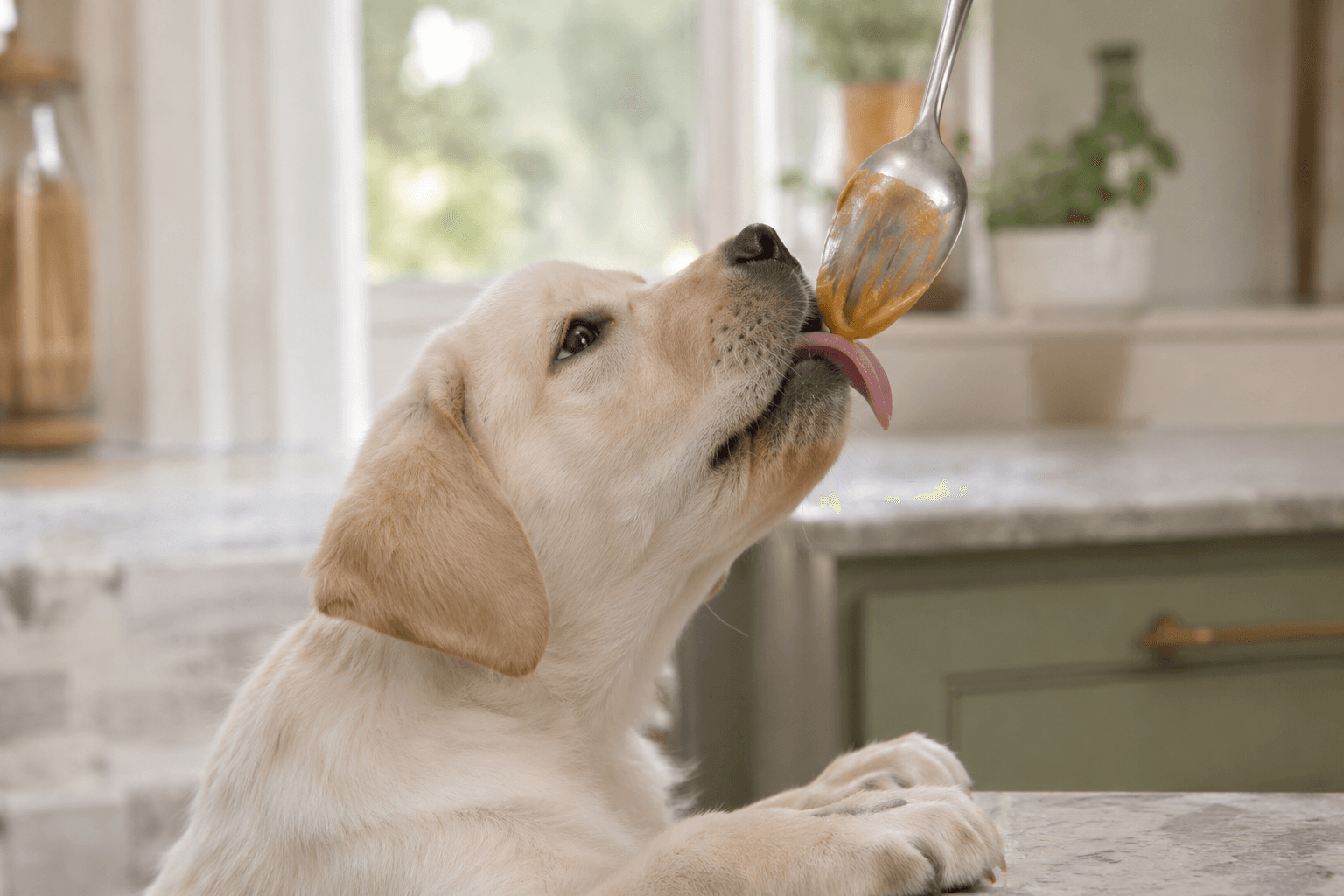
A smear of plain peanut butter inside a Kong or spread thin on a lick mat is one of the most common ways dogs get it, and it works well because a dog has to work for it rather than gulp it down in one go. Freezing the filled Kong makes the treat last longer and slows a dog that eats too fast.
Keep the smear thin rather than packing the toy solid. A Kong loaded with a full tablespoon of peanut butter several times a week adds a meaningful number of extra calories for a small dog, on top of whatever else is used to fill enrichment toys that day.
A useful habit is to check the label the day you buy a new Kong-filling jar, then keep that specific jar for enrichment use only. That way you are never reaching for an unchecked jar at the exact moment your dog is already excited for a filled toy.
Giving tablets in peanut butter
A dab of peanut butter is a genuinely useful way to get a reluctant dog to swallow a tablet, and it is part of why Vets Now flags peanut butter specifically as a product worth checking, since so many households keep a jar in the cupboard for exactly this purpose.
Use the smallest amount that will hide the pill, and keep a jar you have already confirmed is xylitol-free set aside for this job, rather than reaching for whatever is open on the shelf.
If your dog is on a course of tablets and having peanut butter daily to help them go down, mention it to your vet, particularly if your dog also has a weight or pancreatitis concern, since the extra fat and calories are easy to overlook when they arrive a teaspoon at a time.
Can dogs be allergic to peanut butter?
True peanut allergies are uncommon in dogs but not impossible, and the signs look like any other food allergy: itchy skin, recurring ear infections, or an upset stomach that develops over repeated exposure rather than after the first taste.
If you are trying peanut butter for the first time, offer a small amount and watch your dog over the next day or two before making it a regular treat, the same way you would introduce any new food.
A dog that has never reacted to peanuts or peanut butter before can still develop a sensitivity later in life, in the same way a person can. If a treat your dog has had many times before suddenly causes itching or an upset stomach, it is worth mentioning at the next vet visit rather than assuming the jar itself was the problem.
Signs to watch for
- Sudden vomiting, weakness or a wobbly, uncoordinated walk after eating peanut butter
- Collapse, tremors or seizures, which need emergency treatment
- Lethargy or loss of appetite the following day, which can point to liver damage
Common questions
Is peanut butter safe for dogs?
Yes, plain peanut butter with nothing added is safe for most dogs in small amounts. The only thing to rule out first is xylitol, an artificial sweetener that has started appearing in some sugar-free peanut butter brands and is genuinely dangerous.
What happens if a dog eats peanut butter with xylitol in it?
VCA Animal Hospitals says xylitol triggers a rapid insulin release, causing blood sugar to crash within 30 minutes to two hours, with liver failure possible within one to two days at higher doses. Treat it as an emergency and ring your vet or the Pet Poison Helpline straight away.
How do I know if my peanut butter has xylitol in it?
Check the full ingredients list rather than glancing at the front of the jar. The Royal Kennel Club notes that xylitol can also be listed as birch sugar or the additive number E967, so it is worth reading past the word itself.
How much peanut butter can I give my dog?
A teaspoon or two a few times a week is a sensible amount for most dogs, scaled down for small breeds and skipped altogether for dogs that are overweight or prone to pancreatitis. It is a rich, fatty food, so treat it as a treat rather than a daily topper.
Can I use peanut butter to give my dog tablets?
Yes, a small dab is a common and effective way to hide a tablet, which is part of why Vets Now flags peanut butter as a product worth checking for xylitol. Keep a jar you have already confirmed is xylitol-free set aside for this job.
Can dogs be allergic to peanut butter?
It is uncommon but possible. Watch for itchy skin, ear infections or stomach upset after repeated exposure, and introduce it in a small amount the first time you offer it.
Is dog-specific peanut butter better than the human version?
It removes the guesswork, since peanut butter made for pets is formulated without xylitol or added sugar. A plain, xylitol-free human brand works just as well, as long as you have checked the label yourself.