
Can dogs eat venison?
Updated 8 August 2026
Yes, in moderation, and preparation decides the risk. Cooked venison is one of the leanest meats you can give a dog and a common choice for allergy diets. Raw venison, common in the UK through raw feeding and via stalkers and shoots, can carry bacteria and parasites unless it has been properly sourced, frozen and handled.
The detail
Venison is the meat of deer, and in the UK that usually means red, roe, fallow or muntjac deer, sourced from managed stalking and shoots as well as farmed venison sold in supermarkets. It is a very lean meat, noticeably lower in fat than beef or lamb, which is one reason it turns up in premium and raw dog food as an alternative to more common proteins.
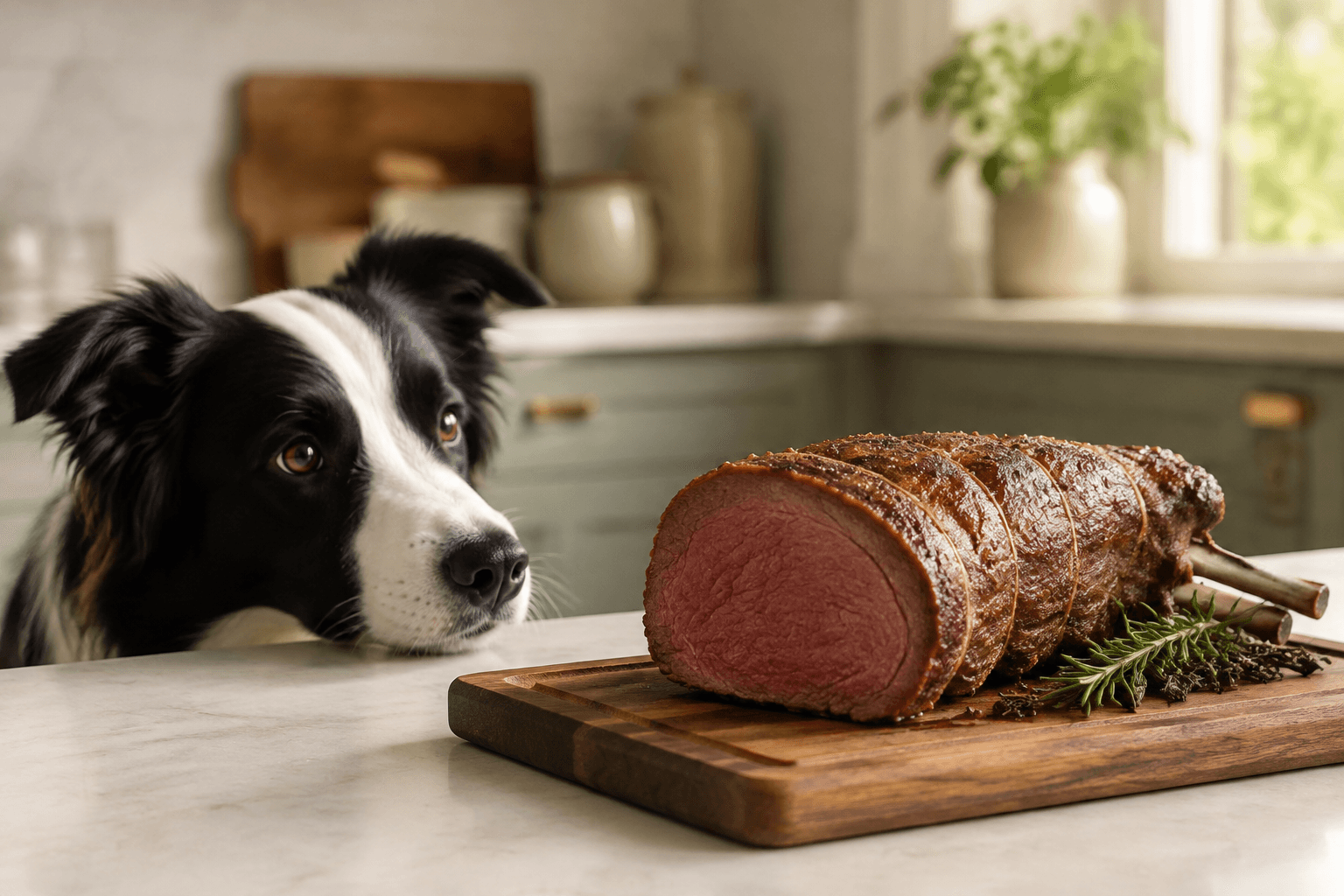
Cooked venison, plain and without seasoning, is straightforward: a lean, high-protein meat that most dogs digest well. The complications start with raw venison, which reaches UK dogs far more often than raw beef or chicken does, because a lot of it comes directly from a stalker, a shoot, or a butcher processing wild deer rather than a supermarket shelf.
Raw meat of any kind can carry bacteria like E. coli, Salmonella and Listeria, and wild venison adds the risk of parasites the deer picked up in the wild, including the organisms behind toxoplasmosis and sarcocystosis. Freezing is a genuine, commonly used step to reduce that parasite risk, rather than a raw-feeding myth, but it needs to be done properly and for long enough.
None of this means raw venison is off the table for every dog. It means the sourcing and preparation matter more than they do for most other meats on this site, and an owner feeding raw venison from a stalker or shoot is taking on a different level of responsibility than one buying a sealed pack of frozen raw food from a commercial supplier.
Farmed venison, sold in UK supermarkets and butchers, goes through the same food-safety chain as farmed beef or lamb, which removes most of the wild-sourcing questions. It is worth checking whether a pack labelled 'venison' is farmed or wild if you want to know which set of considerations applies.
Venison: risk by form
| Cooked, plain venison | A lean, low-fat protein, well tolerated by most dogs |
| Raw venison, commercially prepared | Lower risk; has typically been through food-safety handling |
| Raw venison from a stalker or shoot | Higher risk; depends entirely on field dressing and chillingPDSA and BVA both flag raw meat's bacteria and parasite risk |
| Frozen raw venison | Freezing reduces parasite risk, not bacterial risk |
| Venison sausages, burgers or casserole | Avoid; usually contain onion, garlic or heavy seasoning |
How much is sensible
| Dog size | Sensible amount |
|---|---|
| Small (under 10kg)Jack Russell, dachshund, pug | A few small pieces of plain, cooked venison, a couple of times a week. |
| Medium (10 to 25kg)Cocker spaniel, border collie, bulldog | A small handful of plain, cooked venison, a couple of times a week. |
| Large (over 25kg)Labrador, German shepherd, Rottweiler | A generous handful of plain, cooked venison as an occasional meal addition. |
Is raw venison safe for dogs
Raw venison is not automatically unsafe, but it is not automatically safe either, which is a different message from cooked meat. PDSA's position on raw feeding generally is that raw meat carries bacteria and parasites that cooking would normally kill, and that applies to venison as much as any other raw meat.
The British Veterinary Association's review of raw diets names E. coli, Salmonella, Listeria, Campylobacter and Clostridia as the bacteria of concern, and points out these can spread around a kitchen during preparation, affecting people in the household as well as the dog that eats the meat. Hygienic handling, a dedicated board and knife, and thorough hand washing matter as much as the venison itself.
A dog that is otherwise healthy and eats commercially prepared raw venison, handled and stored properly, is at a genuinely lower risk than one eating venison of unknown origin straight from a freezer bag with no food-safety checks behind it.
Does freezing venison kill parasites
Freezing is a real, widely used method for reducing parasite risk in wild meat, not a myth. The MSD Veterinary Manual states that the parasite responsible for toxoplasmosis is killed by cooking meat to at least 67°C, or by freezing it, alongside cooking as an effective option.
Freezing does nothing to bacteria like Salmonella or E. coli, which survive cold temperatures and only die with proper cooking or specific food-safety handling. Treat freezing as a parasite-reduction step, not a substitute for hygienic handling of the raw meat.
Home freezers often run warmer and less consistently than a commercial freezer, which is another reason venison from a known, food-safety-checked raw supplier is a more predictable option than freezing your own from a shoot and hoping for the best.
Venison from a stalker or shoot
A meaningful amount of UK venison reaches dogs directly from deer stalking rather than a shop, whether as offal fed to a working gundog after a shoot or a haunch shared with a neighbour. This route skips the food-safety checks a commercial supplier applies, which is exactly why sourcing and handling carry more weight here than with a supermarket pack of mince.
If you are given venison this way, ask how it was field-dressed and how long it has been chilled or frozen. A carcass processed quickly and chilled properly is a lower risk than one left sitting in a warm car boot for hours before anyone gets to it.
Feeding offal such as liver, kidney or lungs to a working dog is a long-standing practice among stalkers, and it is not inherently unsafe, but the same freezing and hygiene rules apply to organ meat as they do to muscle meat.
Venison in commercial and raw dog food
Venison is a common ingredient in premium kibble, wet food and commercial raw diets, sold as a novel, lean protein for dogs with allergies to chicken or beef. Commercially prepared venison dog food has generally been through proper food-safety handling, which is a real difference from venison you source yourself.
If a vet has recommended venison as part of an elimination diet for a suspected food allergy, a commercial single-protein venison food is usually the more predictable, controlled way to do it compared with home-prepared raw or cooked venison.
Venison also appears in weight-management formulas, since it delivers a similar protein level to beef with noticeably less fat per portion. That makes it a reasonable option for an overweight dog that still needs a genuinely tasty protein to stay interested in mealtimes.
Cooked venison: sausages, casseroles and venison burgers
Plain, cooked venison, whether roasted, grilled or stewed without seasoning, is a lean, well-tolerated treat or meal addition. The trouble comes from what venison is usually cooked with: venison sausages and burgers often contain onion, garlic, pork fat or a lot of salt, and casseroles are typically built on a stock or gravy base with the same ingredients.
A spoonful of plain venison stripped out of a casserole is fine. The sauce, the sausage skin, and any stuffing or seasoning mixed through it are the parts to leave out of the bowl.
Signs to watch for
- Vomiting or diarrhoea, the usual sign of a food-borne bacterial upset
- Lethargy or reduced appetite following a raw meal
- In rare parasite-related cases, muscle weakness or neurological signs, which need an urgent vet visit
Common questions
Can dogs eat raw venison?
In moderation, and only if it has been sourced and handled carefully. Raw venison carries the same bacteria risk as any raw meat, plus parasites picked up by wild deer, so hygienic handling and, ideally, proper freezing matter.
Does freezing venison make it safe to feed raw?
Freezing kills some parasites, including the one behind toxoplasmosis according to the MSD Veterinary Manual, but it does not kill bacteria like Salmonella or E. coli. Freezing helps, but it is not a full safety guarantee on its own.
Is venison good for dogs with allergies?
Yes, it is a lean protein most dogs have not eaten before, which makes it a common choice for an elimination diet when a chicken or beef allergy is suspected.
My dog was given raw venison by a stalker friend. Is that safe?
It depends entirely on how quickly it was field-dressed and chilled. Ask about that before feeding it raw, and consider cooking it or freezing it properly first if you are unsure.
Is venison fattier or leaner than beef?
Leaner. Venison is one of the lowest-fat meats commonly fed to dogs, which is part of why it appears in weight-management and premium dog foods.
Can puppies eat venison?
Cooked, plain venison in small amounts is fine for most puppies past weaning. Raw venison is a bigger ask for a puppy's developing immune system, so cooked is the safer choice while they are young.
Can dogs eat venison sausages or venison burgers?
Generally no. Plain venison is fine, but sausages and burgers usually contain onion, garlic, pork fat or a lot of salt, none of which belong in a dog's bowl.