
Can dogs eat crab?
Updated 8 August 2026
Caution, and the form matters. A small amount of plain, cooked crab meat with the shell removed is fine for most dogs occasionally. The shell itself is a genuine choking and gut-blockage risk, and dressed crab, crab sticks and potted crab are usually far too salty to give safely.
The detail
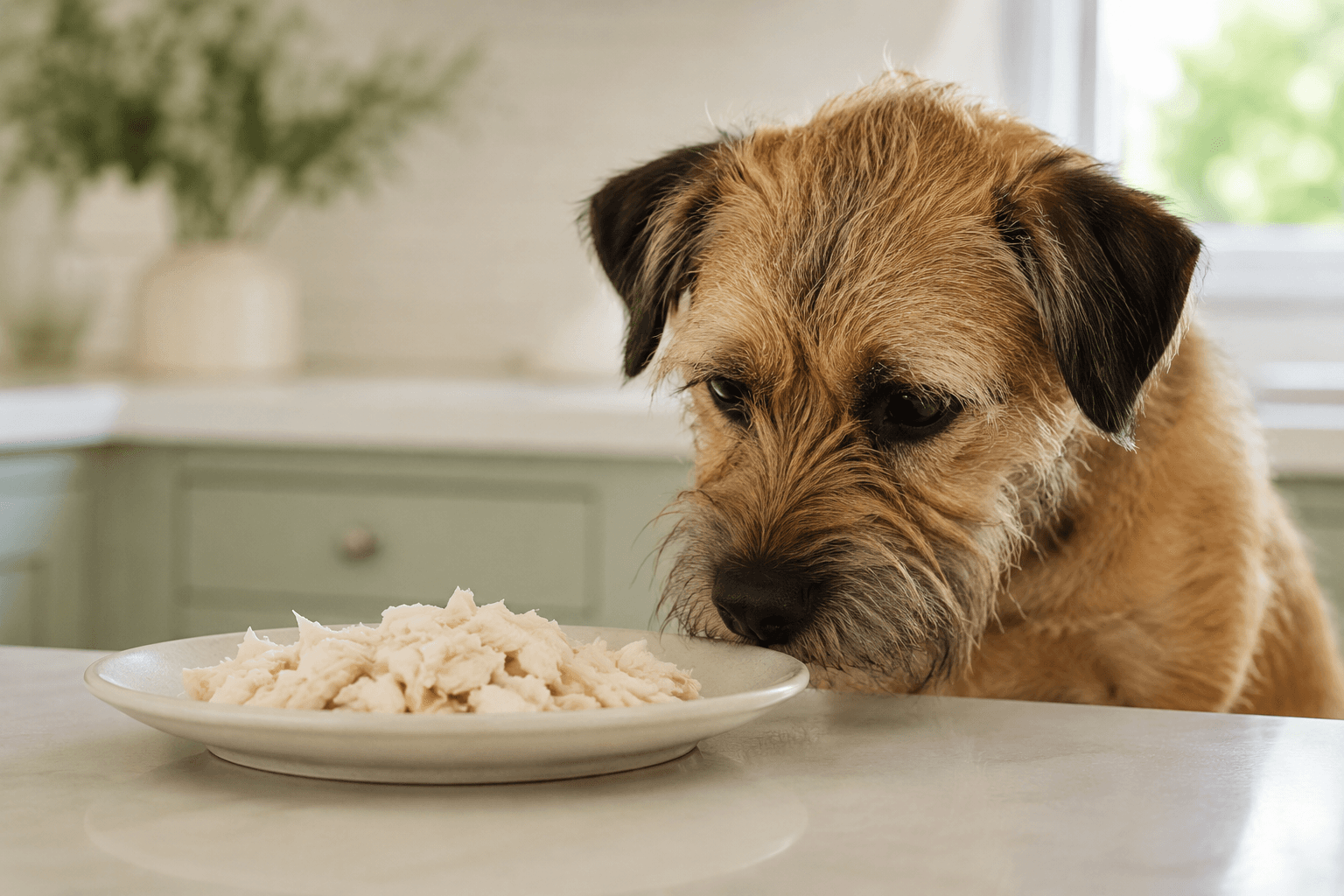
Crab meat itself is not toxic to dogs. Plain, cooked white crab meat, picked out of the shell and served without butter, mayonnaise or seasoning, is a lean, high-protein treat in small amounts, the kind of thing a dog could reasonably have a taste of on a seaside holiday.
The shell is where the real risk sits. Crab shell is hard, sharp-edged and does not break down in a dog's stomach, and Vets Now's guidance on swallowed foreign objects warns that sharp fragments can pierce the intestine and cause peritonitis, a serious abdominal infection.
Most crab a dog actually encounters is not the plain kind. Dressed crab, crab sticks, potted crab and crab pâté are all processed or seasoned in ways that load in salt, and a dog that raids a picnic or a fridge is more likely to get a salty, seasoned product than a plain piece of white meat.
Shellfish allergy is a smaller but real consideration too. Crab is one of the shellfish types that can trigger an allergic reaction in a sensitive dog, on top of the choking and salt risks that apply to every dog.
Raw crab is its own separate issue. Undercooked shellfish can carry bacteria and, in some coastal waters, parasites, so any crab offered to a dog should be fully cooked through, the same rule that applies to prawns and mussels.
Crab: risk by form
| Plain, cooked crab meat, no shell | Low risk in a small amount |
| Crab shell, claws or legs | Avoid; sharp and can cause choking or a gut blockage |
| Crab sticks (surimi) | Mostly processed fish, starch and salt, not real crab |
| Dressed crab, potted crab, crab pâté | Avoid; seasoned and salted for flavour |
| Dead or scavenged beach crab | Avoid; shell risk plus bacteria from decomposition |
How much is sensible
| Dog size | Sensible amount |
|---|---|
| Small (under 10kg)Jack Russell, dachshund, pug | A teaspoon or two of plain, cooked, shell-free crab meat, as an occasional taste. |
| Medium (10 to 25kg)Cocker spaniel, border collie, bulldog | A tablespoon of plain, cooked, shell-free crab meat, occasionally. |
| Large (over 25kg)Labrador, German shepherd, Rottweiler | Two tablespoons of plain, cooked, shell-free crab meat, occasionally. |
Can dogs eat crab shell
No. Crab shell is hard and sharp, and it does not soften or break down once swallowed. Vets Now warns that the sharp edges of a swallowed object can pierce the intestine, and a fragment of shell can also simply get stuck, causing a blockage that needs surgery to clear.
This applies to legs, claws and the body shell alike, and it is worth remembering that a dog does not need to eat a whole shell to be at risk; a single sharp fragment swallowed while trying to get at the meat inside is enough to cause a problem.
Boiling or steaming a whole crab softens the shell slightly but does not make it safe to eat. If you are picking crab meat for yourself, pick it fully clean of shell before offering any to a dog, rather than assuming a cooked shell is soft enough to risk.
Crab sticks and imitation crab: what's actually in them
Crab sticks are not crab. They are made from surimi, a processed white fish paste, usually pollock, bulked out with starch, sugar, egg white and crab flavouring, and a UK supermarket pack typically lists salt among the top ingredients.
A single crab stick is unlikely to cause serious harm, but as a regular treat they add up in sodium far faster than a piece of plain fish would. Treat them the same as any other processed, salted snack rather than as a seafood treat.
Sushi made with crab stick, a common supermarket picnic item, usually adds rice, seaweed and sometimes mayonnaise or spicy sauce on top of the surimi itself. A dropped sushi roll is more of a salt and seasoning concern than a crab-specific one.
Dressed crab, potted crab and crab pâté
Dressed crab, sold ready-picked in its shell around the coast, and potted crab or crab pâté sold in jars, are both seasoned and salted for flavour, which makes them a poor choice for a dog even though the crab meat inside is genuine.
A dog that gets into a tub of potted crab or a dressed crab left cooling on the side has eaten a meaningfully salty dish, not a plain protein snack, and that is worth mentioning to your vet if the amount was more than a lick.
Some dressed crab recipes also mix in mayonnaise, breadcrumbs or a squeeze of lemon, none of which are dangerous in themselves but which add fat and acidity on top of the salt. Treat any prepared crab dish as a combined risk rather than judging it on the crab content alone.
Crabbing, rock pools and dead crab on the beach
Crabbing off a pier or harbour wall with a line and a bit of bacon is a classic UK seaside activity, and it is also a route for a dog to get hold of a live or freshly caught crab, shell and all. A crab pinch is unpleasant but rarely serious; swallowing the crab whole is the bigger concern.
Dead or rotting crab washed up on the tideline is also common on UK beaches, and a scavenged dead crab carries the same shell risk as a fresh one, plus the added issue of whatever bacteria has built up as it decomposed. Keeping a dog on a lead near rock pools and the tideline avoids both problems.
PDSA's beach safety advice also recommends bringing fresh water on any coastal walk, which matters here as much as it does for seaweed or general beach hazards, since a thirsty dog crabbing on a hot day is more likely to drink from a rock pool or the sea.
Shellfish allergy in dogs
Some dogs react to shellfish, including crab, with itching, swelling, vomiting or diarrhoea, the same way a person can be allergic to prawns or crab. This is separate from the choking and salt risks and shows up as a reaction rather than a physical injury.
If you want to try crab with a dog that has never had shellfish before, offer a very small amount of plain meat first and watch for a reaction over the following day before considering it a regular treat.
A dog that has previously reacted to prawns or mussels is more likely to react to crab too, since shellfish allergies often cover more than one species. Mention any known shellfish reaction to your vet before trying a different type for the first time.
Signs to watch for
- Gagging, drooling or pawing at the mouth after chewing shell
- Vomiting, straining or a swollen abdomen, signs of a possible blockage
- Excessive thirst, vomiting or diarrhoea after a salty crab product
- Itching or swelling, signs of a shellfish allergy
Common questions
Can dogs eat crab meat?
A small amount of plain, cooked crab meat with the shell removed is fine for most dogs occasionally. It is the shell, and salty prepared crab products, that cause the real problems.
Can dogs eat crab shell?
No. Crab shell is hard and sharp, does not break down in the stomach, and can cause choking or a blockage that needs surgery to clear.
Are crab sticks safe for dogs?
Crab sticks are mostly processed fish, starch and salt rather than real crab, and they are salty enough that they should only be an occasional taste, not a regular treat.
My dog ate a whole dressed crab. What should I do?
Contact your vet. A whole dressed crab is a meaningful amount of salt and, if any shell was swallowed, a genuine choking or blockage risk, so it is worth a call rather than waiting to see what happens.
Can dogs be allergic to crab?
Yes, some dogs react to shellfish including crab with itching, swelling or an upset stomach. Try a very small amount first if your dog has never had shellfish before.
Is it safe to let my dog go crabbing with me?
Watch them closely near the line and the bucket. A crab pinch is unpleasant but usually minor; the bigger risk is a dog trying to swallow a live crab whole.
Can dogs eat crab claws?
No, whole claws carry the same shell risk as the rest of the shell. If you want to share crab, pick the meat out and offer that instead.