
Can dogs eat mussels?
Updated 8 August 2026
With caution, yes. Plain, fully cooked mussel meat with the shell removed is a lean, protein-rich treat for most dogs, and it is the same green-lipped mussel used in many joint supplements. The risks sit around the shell itself, shellfish allergies, and wild or beach-found mussels, which can carry bacteria or, occasionally in the UK, a genuine marine toxin.
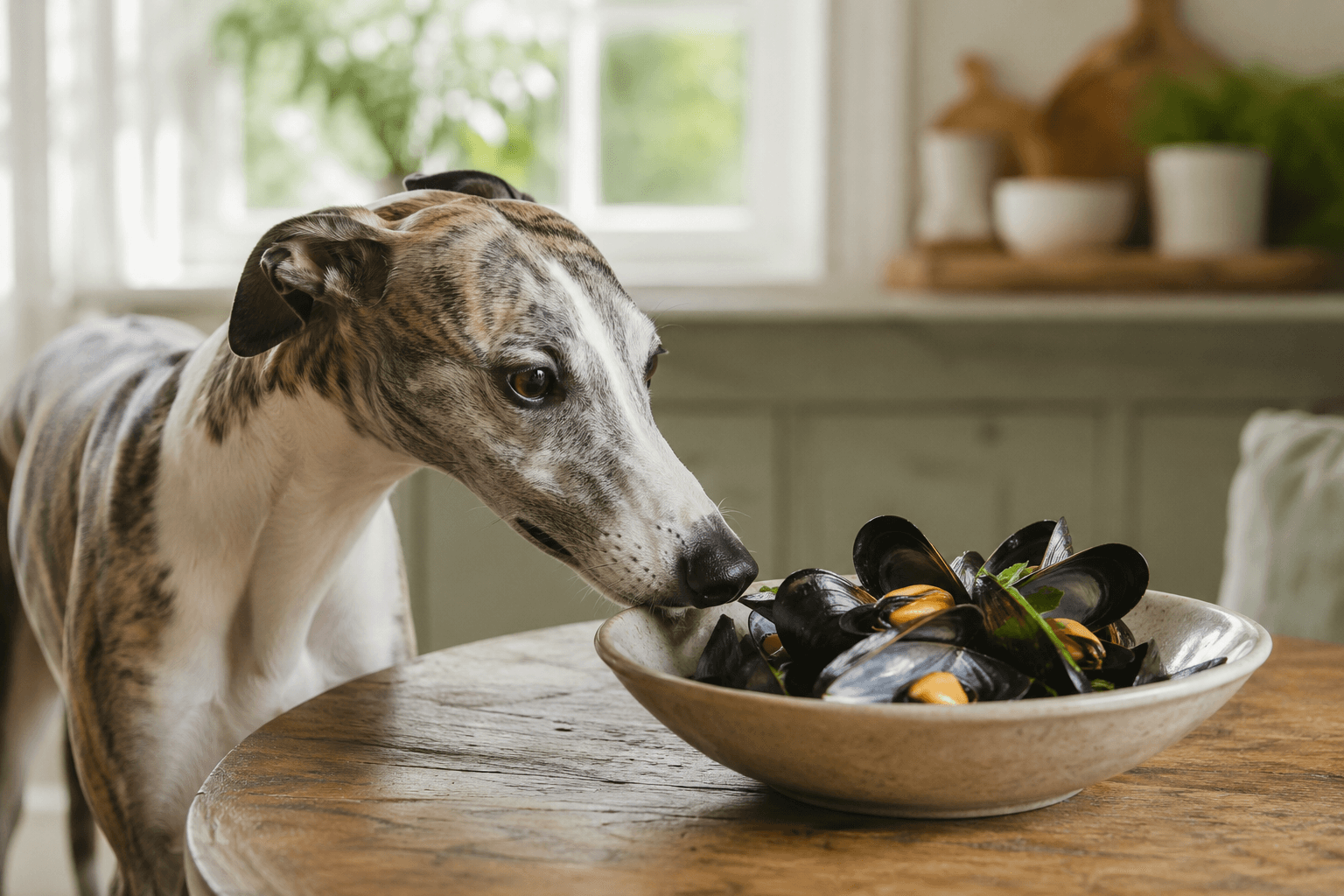
- The detail
- What is in cooked mussel meat
- How much is sensible
- Can dogs eat mussel shells?
- Can dogs eat mussels from the beach?
- Are green-lipped mussels good for a dog's joints?
- Can dogs be allergic to mussels or shellfish?
- Can dogs eat mussels in white wine or garlic sauce?
- Better things to share
- Common questions
The detail
A cooked mussel with the shell taken off is a small parcel of lean protein, omega-3 fatty acids and minerals, and there is nothing in the meat itself that is toxic to dogs. This is the same shellfish that turns up, dried and powdered, in a lot of dog joint supplements, since green-lipped mussel is a recognised natural source of glucosamine and the fatty acids linked to joint comfort in older or arthritic dogs.
The shell is where the ordinary, everyday risk sits. Mussel shells are hard and sharp-edged, and a dog cannot chew or digest them properly, so a whole shell or a sharp fragment is a choking and cut risk in the mouth and throat, and a potential gut obstruction risk further down. Always remove mussels from their shells before offering any to a dog.
Raw or undercooked mussels carry a further, separate risk of bacterial contamination, similar to raw fish or other raw shellfish, and can cause vomiting and diarrhoea from bacteria that thorough cooking would otherwise kill. Shop-bought mussels cooked properly and served plain, with no wine, garlic, butter or salt, sidestep this problem.
Shellfish allergies are real in dogs, just as they are in people, and a dog having mussels for the first time should get a small taster rather than a full portion, then be watched for a reaction such as swelling, itching, hives or digestive upset over the following hours.
What is in cooked mussel meat
| Protein | High, lean protein per gram |
| Fat | Low |
| Omega-3 fatty acids | PresentSimilar profile to other cold-water shellfish |
| Shell | Not edibleChoking and gut obstruction risk, always remove before serving |
| Common preparation risk | Wine, garlic and salt in restaurant-style dishes |
How much is sensible
| Dog size | Sensible amount |
|---|---|
| Small (under 10kg)Chihuahua, Jack Russell | One or two whole cooked mussels, shell removed, no more than once a week |
| Medium (10 to 25kg)Cocker spaniel, border collie | Two to three whole cooked mussels, shell removed, once a week |
| Large (over 25kg)Labrador, German shepherd | Four to five whole cooked mussels, shell removed, once a week |
| First time trying mussels | A single small piece, then wait a few hours to check for any allergic reaction |
Can dogs eat mussel shells?
No. A mussel shell is hard, brittle and sharp-edged when it breaks, and a dog cannot digest it. Always shell mussels completely before offering the meat, and keep cooked shells out of a kitchen bin a determined dog could raid.
If a dog does get hold of a shell or a fragment, watch for pawing at the mouth, drooling, reluctance to eat, or later signs of a blocked gut such as vomiting or straining, and call your vet if any of these appear.
Can dogs eat mussels from the beach?
This is the version to actively avoid. Wild mussels picked up on a UK beach have not been through the food safety checks that farmed, sold mussels go through, and they can be affected by algal blooms that leave bivalve shellfish carrying paralytic shellfish toxins.
Eastern IFCA's documented UK cases involved dogs eating other washed-up marine life, shore crabs and starfish, during confirmed PSP events on the east coast, which shows the same contaminated water can affect any filter-feeding shellfish nearby, mussels included. Keep dogs away from anything washed up on the tideline, and keep them leashed on beaches where a bloom has been reported.
Are green-lipped mussels good for a dog's joints?
Green-lipped mussel, a species farmed mainly in New Zealand, is a genuine source of glucosamine, chondroitin and omega-3 fatty acids, and it is a common ingredient in commercial dog joint supplements aimed at older or arthritic dogs.
That is a different thing from feeding an ordinary blue mussel from the fishmonger as a treat, since supplement products use a concentrated, standardised extract rather than a whole cooked shellfish. Either way, ask your vet before starting a joint supplement, particularly if your dog is already on other medication.
Can dogs be allergic to mussels or shellfish?
Yes, shellfish allergy is a recognised, if less common, food allergy in dogs, working the same way any protein allergy does: the immune system reacts to a specific protein, usually after some prior exposure, rather than on the very first bite.
Signs to watch for include itchy skin, swelling around the face or paws, hives, or digestive upset such as vomiting or diarrhoea. Introduce mussels with a small piece the first time, and stop and call your vet if you see any of these signs.
Can dogs eat mussels in white wine or garlic sauce?
No, keep dogs away from moules marinière and similar dishes. The classic preparation is built on wine, garlic and often onion, and garlic and onion are established as toxic to dogs, damaging red blood cells and potentially causing anaemia.
If you want to share mussels, steam or boil them plainly at home with no added wine, garlic, onion, butter or salt, then remove the shells and offer a small amount of the plain meat once it has cooled.
Signs to watch for
- Pawing at the mouth or drooling after chewing a shell fragment
- Vomiting or diarrhoea after raw, undercooked or beach-found shellfish
- Itching, swelling or hives suggesting an allergic reaction
- Weakness, wobbliness or laboured breathing, which needs an emergency vet visit and can suggest a marine toxin
Common questions
Can dogs eat mussels every day?
No, keep it to an occasional treat rather than a daily habit, around once a week at most. There is nothing that makes daily mussels dangerous on its own, but any single treat food fed too often can crowd out a balanced diet.
Are mussel shells dangerous for dogs?
Yes. Shells are hard, sharp when broken, and indigestible, so they carry a real choking and gut obstruction risk. Always remove mussels from their shells before offering any to a dog.
Can dogs eat mussels from a beach in the UK?
No, avoid this entirely. Wild, beach-found shellfish have not been through food safety checks, and the Veterinary Poisons Information Service and Eastern IFCA have both documented UK cases of paralytic shellfish poisoning linked to contaminated marine life during algal blooms.
Is green-lipped mussel the same as the mussels I'd buy to eat?
It is a related but different species, farmed mainly in New Zealand and usually sold to dogs as a concentrated powder or extract in joint supplements, not as whole cooked shellfish. Ask your vet before starting any joint supplement.
My dog stole a mussel shell off my plate. What should I do?
Watch closely for pawing at the mouth, drooling or reluctance to eat over the next few hours, and call your vet if you see any of these or if your dog seems in pain. If a large piece was swallowed whole, ring your vet straight away rather than waiting.
Can dogs be allergic to mussels?
Yes, shellfish allergy is a recognised food allergy in dogs. Introduce mussels with a small piece first and watch for itching, swelling, hives or digestive upset before offering more.
Is it safe to give a dog the mussels from a takeaway moules marinière?
No, skip this dish specifically. It is typically cooked in wine, garlic and often onion, and PDSA's guidance confirms garlic and onion damage a dog's red blood cells and can cause anaemia.