
Can dogs eat tuna?
Updated 5 August 2026
In small, occasional amounts, yes. Tinned tuna in spring water is the version to share, a spoonful at a time. Tuna carries more mercury than most fish because it is a large predator, so keep it an occasional treat rather than a regular meal, and skip the brine and oil versions.
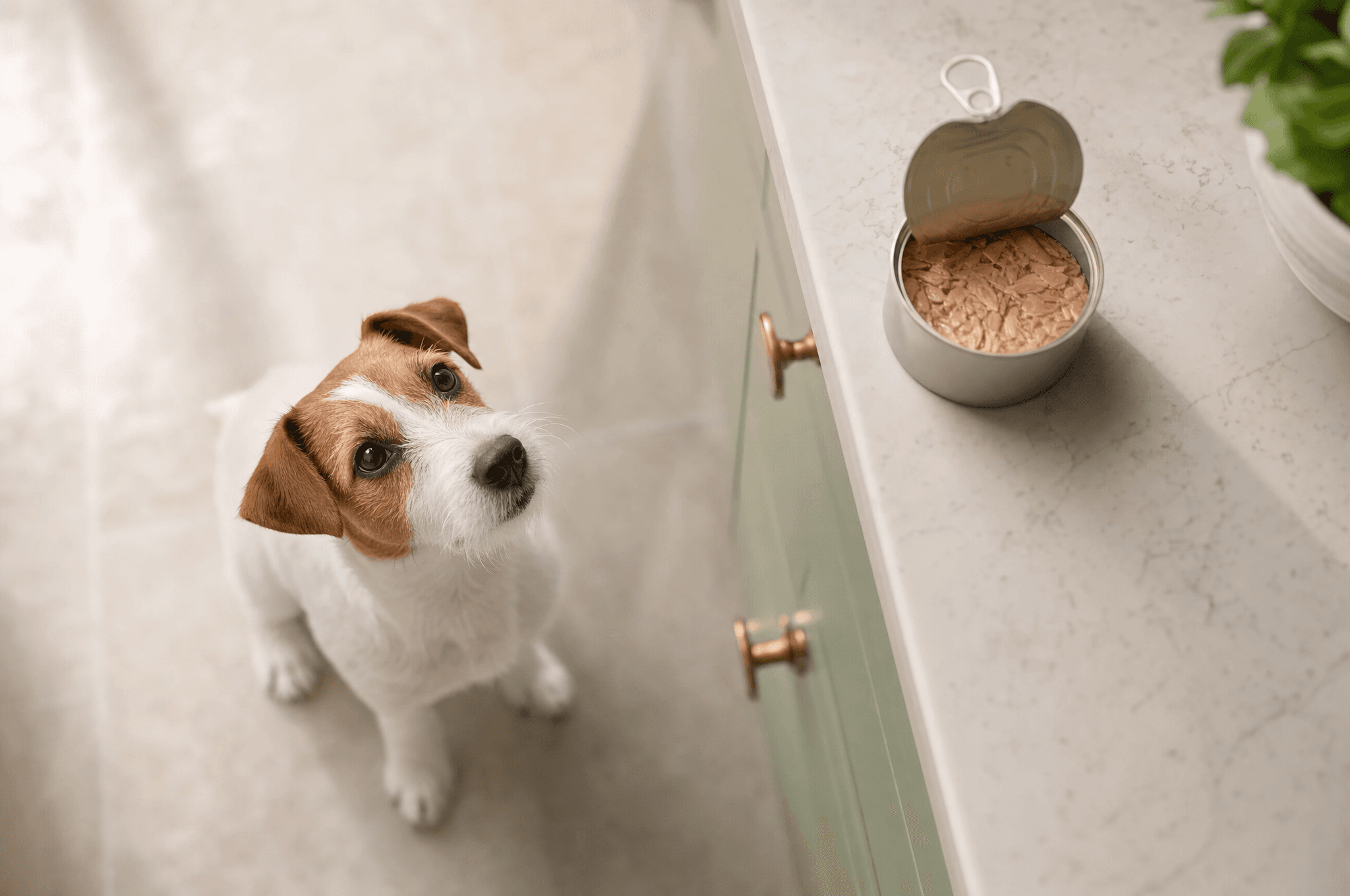
The detail
Tuna is not toxic to dogs, and a spoonful stirred into dinner is a popular trick for fussy eaters. The reason it sits in the amber category is what builds up when a treat becomes a habit.
Mercury concentrates as it moves up the food chain, so a big predatory fish like tuna carries more of it than salmon or sardines. One spoonful is nothing; tuna several times a week, for months, is the pattern worth avoiding.
The tin matters as much as the fish. Spring water adds nothing, brine adds salt, and oil adds fat, which is why only the first one earns a place in the dog bowl.
Risk by tin
| Tuna in spring water | The one to share. A spoonful, drained, once a week |
| Tuna in brine | Skip it. Brine is salt waterThe Kennel Club warns against it even as a flavouring |
| Tuna in oil | Skip it. The fat causes upset stomachs |
| Fresh tuna steak | Fine plainly cooked, in small occasional amounts |
| Tuna mayo with onion | No. Onion is toxic to dogs in any form |
How much is sensible
| Dog size | Sensible amount |
|---|---|
| Small (under 10kg)Chihuahua, Jack Russell | A teaspoon of spring-water tuna, no more than once a week |
| Medium (10 to 25kg)Cocker spaniel, border collie | A tablespoon, once a week |
| Large (over 25kg)Labrador, German shepherd | Two tablespoons, once a week |
| Puppies | None. Save fish treats for adulthood, then keep them occasional |
Tinned tuna in spring water
This is the least-bad tin on the shelf. Drained spring-water tuna adds protein and nothing else, which is why it is the only version worth sharing.
Keep it to the portions in the table above and treat it as a weekly extra at most. The drained juice works as a food topper for a dog that is off its dinner.
Tuna in brine or oil
Brine is salt water, and dogs handle salt poorly, which is why the Kennel Club warns against it even as a juice for poorly puppies. Give the brine tin a miss altogether.
Oil-packed tuna swaps the salt problem for a fat one. Rich, oily extras are a classic trigger for upset stomachs, and for pancreatitis in dogs prone to it, so this tin stays on the human shelf too.
Fresh tuna steak
A small piece of plainly cooked tuna steak is fine on the same occasional basis as the tinned version. Cook it through, add nothing, and let it cool.
Skip raw tuna, including sushi offcuts. Raw fish carries a bacteria and parasite risk that cooking removes, and the mercury sums do not improve for the fish being expensive.
How much mercury is in tuna?
More than in most fish, and that is the honest core of this page. The MSD Veterinary Manual describes how mercury can bioaccumulate a million-fold from single-cell organisms up to the top predators, which is the company tuna keeps.
Nobody has published a safe weekly tuna allowance for dogs, so the sensible reading is the one vets give: occasional treat, small amounts, and salmon or sardines for anything more regular.
Tuna mayo sandwiches
The sandwich changes the question. Mayonnaise is mostly oil, and tuna mayo made with onion, chives or sweetcorn relish brings genuinely toxic ingredients into it. Vets Now lists onions and chives among the foods that damage dogs' red blood cells.
A stolen plain corner is a watch-and-wait. If the filling held onion, ring your vet with your dog's weight and a guess at the amount.
Signs to watch for
- Excessive thirst after a brine tin goes missing
- Vomiting or diarrhoea after oily or dressed tuna
- Wobbliness or tremors are a vet visit, whatever the suspected cause
If your dog overdoes it
A stolen spoonful of plain tuna needs nothing but a raised eyebrow. If your dog has eaten tuna in brine, put water down and watch for vomiting or unusual thirst. If the filling or dish contained onion, ring your vet straight away. Out of hours, Vets Now runs emergency clinics across the UK.
Common questions
How much tinned tuna can I give my dog?
A teaspoon for a small dog, up to two tablespoons for a large one, and no more than about once a week. Always the spring-water tin, drained, with nothing added.
My dog ate a whole tin of tuna in brine. What now?
Put fresh water down and keep an eye out for vomiting, diarrhoea or unusual thirst. For a small dog, or any dog showing symptoms, ring your vet with the tin size and your dog's weight.
Can dogs eat raw tuna or sushi?
Skip it. Raw fish can carry bacteria and parasites that cooking removes, and sushi rolls often add rice vinegar, soy and sometimes onion or wasabi. Cooked and plain is the only version to share.
Can puppies eat tuna?
No. A puppy diet is complete already, the salt in brine is a real hazard at their size, and a growing body has no business building a mercury habit. Fish treats can wait for adulthood.
Is tuna or salmon better for dogs?
Salmon. It sits lower down the food chain, so it carries far less mercury, and it is already a standard dog-food ingredient. Tuna is the occasional guest; salmon can be the regular.
Can dogs eat tuna mayo?
Plain tuna mayo is a fat bomb rather than a poison, so a stolen bite is usually just watched. If the mix contained onion or chives, ring your vet, because both damage dogs' red blood cells.