
Can dogs eat black pepper?
Updated 7 August 2026
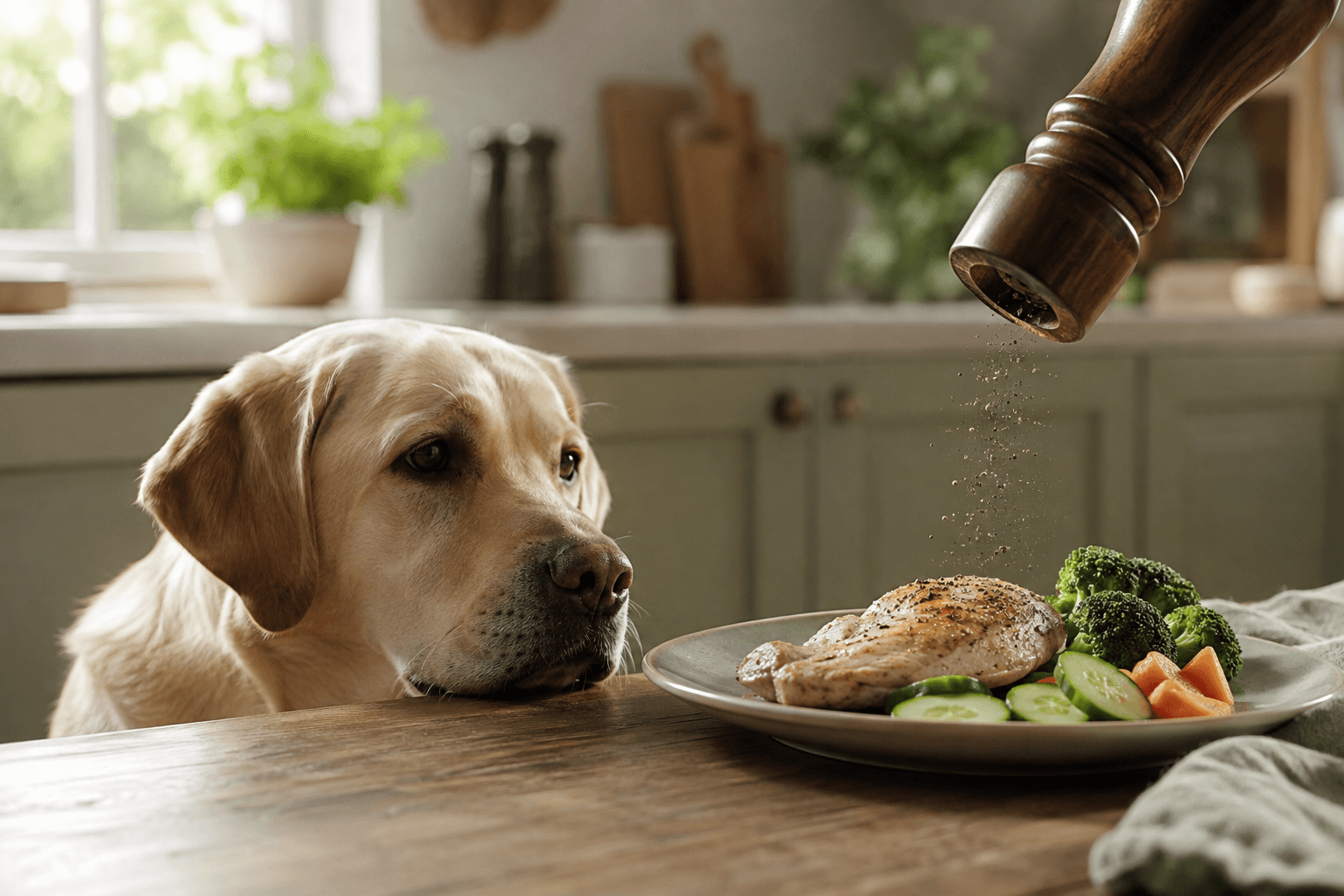
In small amounts, yes. A light dusting of black pepper is not dangerous to dogs, and none of the UK's major veterinary charities list it among the foods that poison them. Bigger amounts irritate the nose and stomach, and loose powder inhaled from a spoon or a spilled pot can trigger a coughing, sneezing fit.
- The detail
- Black pepper by amount and context
- How much is sensible
- A dropped pinch of pepper
- Is black pepper the same as chilli or cayenne pepper?
- Peppered steak, black pepper crisps and pepper sauce
- Gravy and stuffing seasoned with pepper
- Does black pepper help a dog's digestion?
- Better things to share
- Common questions
The detail
Black pepper comes from Piper nigrum, a flowering vine grown mostly in India and Vietnam, and its heat comes from a compound called piperine. That is a different plant and a different chemical from chilli, cayenne or bell peppers, which come from Capsicum plants and get their heat from capsaicin instead.
Piperine on its own does not poison a dog. What it does is irritate a sensitive nose and a sensitive stomach, so a dog that gets a faceful of pepper from a dropped grinder tends to sneeze, paw at its face and sometimes bring up its last meal.
Brachycephalic breeds feel it more than most. Pugs, French bulldogs, boxers and other flat-faced dogs already have narrower airways than average, so a lungful of pepper dust is more likely to bring on a real coughing fit than a quick sneeze and forget it.
Deliberately seasoning a dog's dinner is where owners go wrong, not a stray sprinkle. Battersea Dogs & Cats Home and the Kennel Club both publish full lists of dangerous foods for dogs, and neither names black pepper, which usually turns up in gravy, stuffing and seasoning blends alongside onion or garlic powder, the ingredient actually worth worrying about.
There is also no nutritional reason to add it. A dog's complete food is already balanced for its needs, and pepper contributes flavour a dog did not ask for rather than anything its diet is short of.
Black pepper by amount and context
| A light dusting on food | No expected problemNot listed as toxic by Battersea, the Kennel Club or the RSPCA |
| A dropped pot or a faceful of ground pepper | Sneezing, pawing at the face, occasional vomitingIrritation from piperine, not poisoning |
| Gravy, stuffing or seasoning blends | Check the label firstOnion or garlic powder is the real risk, not the pepper |
| Chilli, cayenne or bell pepper | A different plant entirelyCapsicum species the Pet Poison Helpline lists as mildly toxic; unrelated to black pepper |
How much is sensible
| Dog size | Sensible amount |
|---|---|
| Small (under 10kg)Chihuahua, Jack Russell | A pinch stirred into food, rarely |
| Medium (10 to 25kg)Cocker spaniel, border collie | Up to an eighth of a teaspoon, stirred in |
| Large (over 25kg)Labrador, German shepherd | Up to a quarter of a teaspoon, stirred in |
| Any dog, any size | No deliberate seasoning of a dog's bowl, and check gravy or stuffing for onion powder first |
A dropped pinch of pepper
A dropped pepper pot or a sneeze-inducing dusting on the floor is not an emergency. None of Battersea's, the Kennel Club's or the RSPCA's lists of dangerous foods for dogs names black pepper, and the usual result of a dog nosing into a small amount is a bout of sneezing rather than anything more serious.
Watch for repeated vomiting or diarrhoea if your dog has managed to eat a larger amount, such as a knocked-over pepper mill's worth. That is still more likely to be an unpleasant afternoon than a vet emergency, but call your vet if it carries on beyond a day.
Some owners rub pepper onto bandages, cables or furniture to stop a dog licking or chewing them. It will not harm a dog to encounter it that way, but it is not a reliable deterrent either, and a proper bitter-apple spray sold for the job or a vet-approved cone works better than a kitchen spice.
Is black pepper the same as chilli or cayenne pepper?
No, and the shared name causes real confusion. Black pepper comes from Piper nigrum, a flowering vine, while chilli, cayenne and bell peppers come from Capsicum plants in the nightshade family, entirely unrelated botanically.
The Pet Poison Helpline's page on nightshade plants lists peppers among the food-crop nightshades with mild toxicity, where a few bites of foliage or fruit are unlikely to cause more than minor nausea. That page does not cover black pepper at all, because Piper nigrum is not a nightshade and is not part of that entry.
Peppered steak, black pepper crisps and pepper sauce
A peppercorn crust on a steak is mostly a fat and salt problem rather than a pepper problem. The crust itself, plus any trimmed fat a dog is given alongside it, is the part likely to cause a greasy stomach upset.
Black pepper crisps carry the same salt load as any other flavoured crisp, and pepper sauce made with cream, stock and often brandy adds fat and sometimes alcohol on top. None of that is about the pepper specifically, but all of it adds up to a plate best kept away from the dog.
Fajita and steak seasoning blends are worth a second look at the label, because a lot of them mix black pepper with chilli powder or cayenne. That combination raises the chance of the nose and mouth irritation that chilli-type peppers cause on their own, so a dog that hoovers up dropped fajita spice can react more than one seasoned with pepper alone.
Gravy and stuffing seasoned with pepper
This is where black pepper does the most real-world damage, by association rather than by itself. Shop-bought gravy granules and stuffing mixes are seasoned with pepper alongside salt and, in a lot of recipes, onion or garlic powder.
Battersea's list of toxic foods says the onion family is particularly toxic to dogs whether it is dry, raw or cooked, which covers powdered forms baked into stuffing as much as a fresh onion in a stew. Check the ingredients on any gravy or stuffing before a dog gets near the leftovers, and treat a large helping of either as a reason to read our onion page and consider a call to your vet.
Sunday roast and Christmas dinner are when this comes up most, because a gravy boat and a bowl of stuffing both sit within reach of a dog under the table. A splash of plain gravy without onion in the ingredients list is a much smaller worry than the seasoned, thickened kind poured from a jug at the end of a big family meal.
Does black pepper help a dog's digestion?
No good evidence supports that claim for dogs. It is a common line in supplement marketing, built on the idea that piperine improves the absorption of other nutrients, which is a separate question from whether it helps a dog's gut.
A dog with an ongoing digestive problem needs a vet's assessment rather than a kitchen spice, since sporadic vomiting, loose stools or wind can point to anything from diet intolerance to a medical condition that a pinch of pepper will not touch.
Some human piperine supplements are marketed as boosting the absorption of turmeric or other ingredients, and that marketing sometimes gets carried over into pet products. If you are considering a supplement that lists black pepper or piperine on the label, tell your vet, particularly if your dog already takes any medication, since piperine is known in humans to change how some drugs are absorbed.
Signs to watch for
- Sneezing, pawing at the face or eye irritation after inhaling loose powder
- Vomiting or diarrhoea after a large amount
- Vomiting or lethargy after gravy or stuffing, which usually points at onion rather than the pepper
Common questions
Is black pepper toxic to dogs?
No. Black pepper is not on Battersea's, the Kennel Club's or the RSPCA's lists of foods that poison dogs. Large amounts can still upset a stomach or irritate a nose, so treat it as unnecessary rather than dangerous.
My dog licked pepper off a plate. Should I worry?
Not usually. A lick or two of seasoned food is unlikely to cause more than mild sneezing or a slightly upset stomach. Watch for vomiting or diarrhoea over the next day and call your vet if either carries on.
Is black pepper the same as chilli or cayenne pepper?
No, they are different plants entirely. Black pepper comes from the vine Piper nigrum, while chilli and cayenne are Capsicum species that the Pet Poison Helpline lists as mildly toxic nightshades. Confusing the two is easy, but the risk profile is not the same.
Can dogs have gravy or stuffing seasoned with pepper?
The pepper itself is not the concern. Check the label for onion or garlic powder first, since Battersea lists the onion family as toxic to dogs whether it is dry, raw or cooked, and most gravy granules and stuffing mixes contain one or the other.
Does black pepper help a dog's digestion?
There is no veterinary evidence for that claim. A dog with ongoing digestive trouble needs a vet's assessment, not a kitchen spice.
Can puppies have black pepper?
There is no reason to give a puppy pepper at all. Their complete puppy food already covers what they need, and a sensitive young stomach has less to gain from seasoning than an adult dog's.
My dog ate a whole peppercorn. Is that a problem?
One whole peppercorn is very unlikely to cause anything beyond a possible sneeze on the way past. Watch for repeated vomiting or signs of discomfort if your dog has eaten a large handful, and call your vet if either appears.