
Can dogs eat asparagus?
Updated 7 August 2026
Yes. Asparagus is safe for dogs, and VCA Animal Hospitals lists it among the good vegetable options for a treat, raw or cooked, without butter or oil. Plain spears add fibre and vitamins for very few calories. The vegetable itself needs no special caution; the sauces, salt and garlic it is usually served with do.
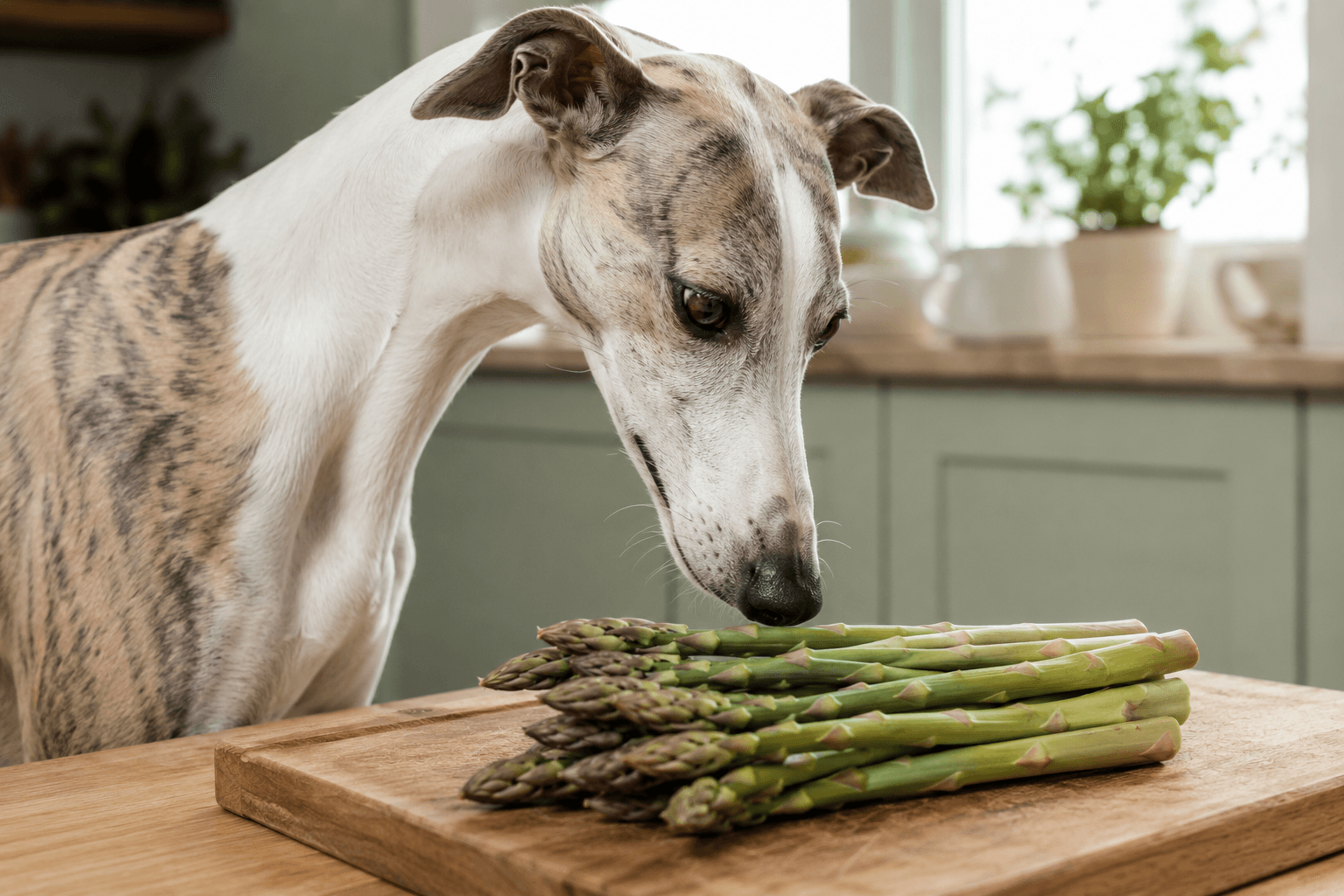
The detail
Asparagus is a low-calorie stalk vegetable, running to roughly 20 calories per 100g cooked, with a useful amount of fibre, folate and vitamin K. It also contains asparagusic acid, the compound responsible for the distinctive smell some people notice in their own urine after eating it, which has no bearing on whether it is safe for a dog.
VCA Animal Hospitals names asparagus among the vegetables it calls good options for dogs, alongside broccoli, celery, cucumber and green beans, and says they can be offered raw or cooked as long as nothing is added: no seasoning, butter or oil. Raw spears are tougher to chew than cooked ones, so cooking or steaming plain asparagus until it gives slightly makes it easier for most dogs to manage.
The vegetable rarely causes a problem on its own. What causes trouble is how British kitchens usually serve it, drenched in butter, hollandaise sauce or grated parmesan, or roasted with garlic, all of which carry their own separate risks.
White asparagus, grown in the dark and more common on the continent than in the UK, is the same species as the green spears sold here, just denied sunlight so it never develops chlorophyll. It behaves the same way for a dog, and the same rules on plain preparation apply regardless of colour.
Tinned or jarred asparagus is usually preserved in a salted brine, which makes it a poorer choice than fresh or frozen spears cooked plainly at home. Drain and rinse it well if it is the only option available, and treat fresh or frozen as the better default.
What is in 100g of cooked asparagus
| Water | About 93 percentA useful low-calorie source of moisture alongside a full water bowl |
| Calories | About 20 kcalA low-calorie treat either raw or cooked |
| Fibre | About 2g |
| Anything toxic to dogs | Nothing in the vegetable itselfThe ornamental asparagus fern is a different, toxic plant, per the Pet Poison Helpline |
How much is sensible
| Dog size | Sensible amount |
|---|---|
| Small (under 10kg)Chihuahua, Jack Russell | One or two chopped spears |
| Medium (10 to 25kg)Cocker spaniel, border collie | Two or three chopped spears |
| Large (over 25kg)Labrador, German shepherd | A small handful of chopped spears |
| Any dog, any size | None with butter, hollandaise, garlic or parmesan from the dinner table |
Raw or cooked asparagus?
Both are acceptable. VCA Animal Hospitals lists asparagus among the good vegetable options for dogs and says it can be offered raw or cooked, with no seasoning, butter or oil either way.
Raw spears are noticeably tougher to bite through than cooked ones, so a lot of dogs manage cooked or lightly steamed asparagus more easily, especially small dogs and enthusiastic gulpers. Cook it plain in water or steam it rather than frying or roasting it in oil.
The tip of the spear is softer than the base, so a dog new to asparagus may find the top half easier going. If you are offering it for the first time, start with a small piece from the tip end and see how your dog gets on before working up to a full spear.
Asparagus with butter, garlic or hollandaise sauce
Keep it plain. Restaurant and Sunday dinner asparagus usually arrives with butter, hollandaise sauce or a scattering of parmesan, and the fat in any of those can trigger a greasy stomach upset or, in a dog prone to it, pancreatitis.
Garlic is the more serious concern. Battersea's list of toxic foods names the onion family, which includes garlic, as particularly toxic to dogs whether it is dry, raw or cooked, and garlic butter or a garlic-roasted tray of asparagus both count.
Asparagus wrapped in bacon or Parma ham, a common starter or canapé at a British dinner party, adds another layer of fat and salt on top of any seasoning underneath. Read our bacon and ham pages if a plate of these has gone missing, since the cured meat wrapped around the spear is usually the bigger concern of the two.
Woody asparagus stems and choking
The base of an asparagus stalk is fibrous and much harder to chew through than the tip. Most people trim or snap this woody end off before cooking for themselves, and the same trimmed spear is a safer size and texture to give a dog.
A whole untrimmed stalk swallowed in a hurry is a choking risk, particularly in small dogs. Chop cooked asparagus into shorter lengths before handing any over, the same way you would with a stick of celery or a carrot.
Is asparagus fern the same as asparagus?
No, and this is worth knowing if you grow either. Asparagus fern, Asparagus setaceus, also sold as foxtail fern or lace fern, is a feathery ornamental houseplant, not the vegetable grown for eating, even though they share a genus name.
The Pet Poison Helpline lists asparagus fern as toxic to pets, saying ingestion, especially of the berries, can irritate a dog's gastrointestinal tract, with skin irritation also possible from direct contact. Keep an ornamental asparagus fern out of reach of a dog that grazes on houseplants, and treat it as a different plant from anything on a dinner plate.
The fern is a popular hanging-basket and houseplant choice precisely because it looks nothing like the vegetable, feathery and trailing rather than upright and spear-shaped. If your dog has chewed a houseplant and you are not sure which one, a photo to your vet or the Pet Poison Helpline is more useful than guessing from the name alone.
Asparagus for a dog on a diet
Asparagus is low in calories and adds fibre, which makes it a reasonable treat for a dog watching its weight. VCA Animal Hospitals includes it on its list of good vegetable treat options for exactly that reason.
As with any vegetable used this way, it supplements a calorie-controlled diet rather than replacing part of it. Ask your vet for a target before using vegetables to bulk out a reduced portion.
Older dogs carrying extra weight are also the dogs most likely to be managing joint problems, so a lower-calorie treat swap often comes alongside advice about weight-bearing joints. Ask your vet whether joint support is worth adding at the same time as any diet change.
A few plain spears used as training treats during a walk work just as well as commercial low-calorie treats, at a fraction of the cost and with an ingredients list of exactly one item. Keep a small tub of pre-chopped, cooked asparagus in the fridge if this becomes a regular part of your routine.
Signs to watch for
- Loose stools or wind after a large amount
- Vomiting or drooling after asparagus served with butter, garlic or hollandaise, which points at the sauce rather than the vegetable
Common questions
Can dogs eat raw asparagus?
Yes, VCA Animal Hospitals lists it among the vegetables dogs can have raw or cooked without seasoning. Raw spears are tougher to chew, so cooked is often the easier option for a dog that swallows quickly.
Can dogs eat asparagus with butter or hollandaise sauce?
No, keep it plain. Butter and hollandaise add fat that can upset a dog's stomach, and any garlic in the sauce is a genuine toxicity risk rather than just a rich topping.
Is the asparagus fern plant toxic to dogs?
Yes, but it is a different plant from the vegetable. The Pet Poison Helpline lists asparagus fern, Asparagus setaceus, as capable of irritating a dog's gastrointestinal tract, especially the berries, and it is grown as a houseplant rather than eaten.
Can dogs eat the woody ends of asparagus stalks?
It is best to trim them off. The tough base of the stalk is harder to chew and swallow than the tip, and large unchewed pieces are a choking risk.
When is British asparagus in season?
Traditionally from around St George's Day on 23 April to Midsummer's Day on 21 June, with the Vale of Evesham as the best-known growing area. That is when home-grown spare spears are most likely to end up in a dog's bowl.
Does asparagus make a dog's urine smell?
It contains asparagusic acid, the compound behind the smell some people notice in their own urine after eating it. There is no evidence it causes a dog any harm.
Is asparagus good for a dog on a diet?
Yes, it is low in calories and adds fibre. VCA Animal Hospitals lists it among good treat options for weight management, offered plain.