
Can dogs eat spinach?
Updated 6 August 2026
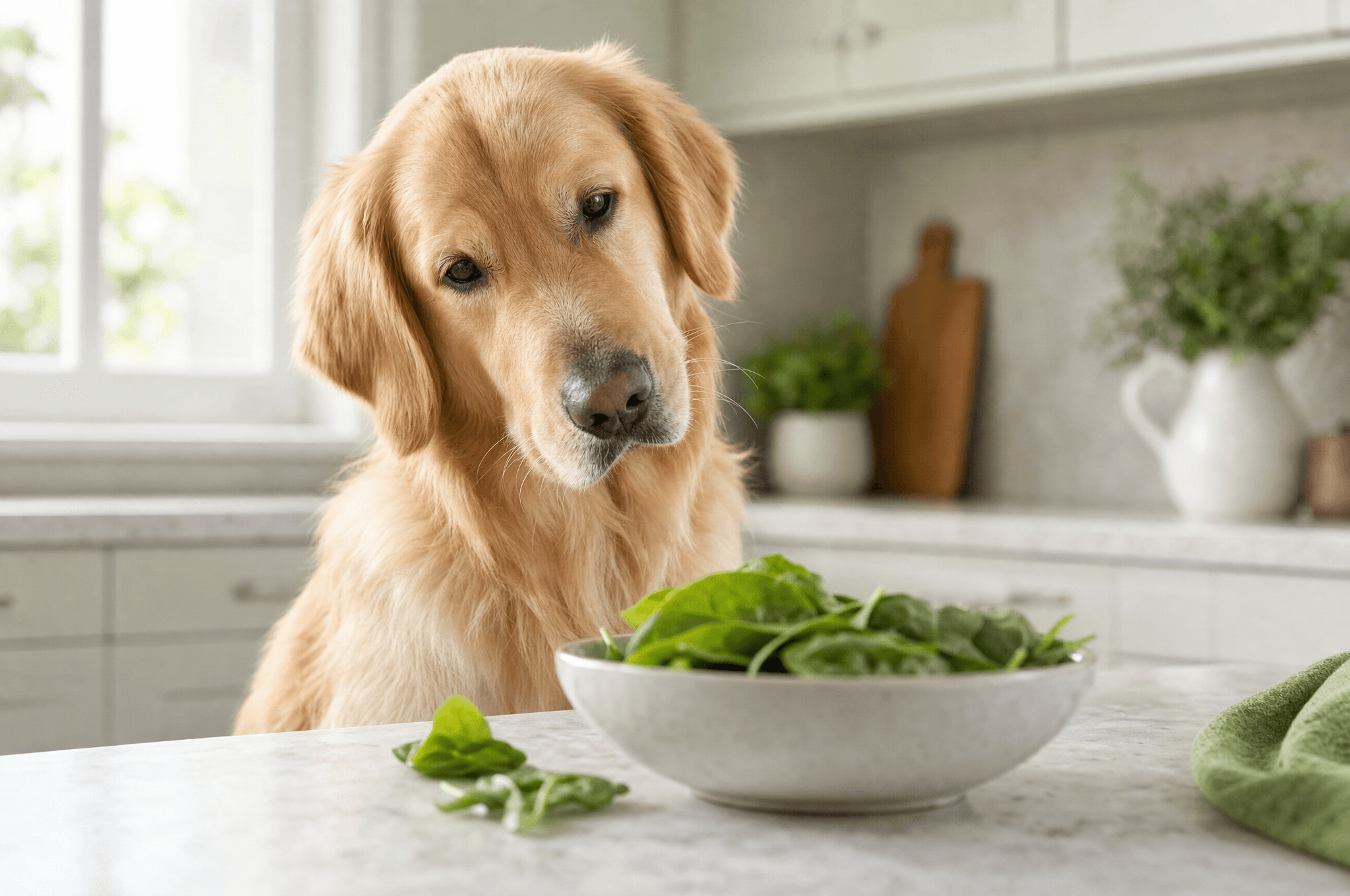
In small amounts, yes. Spinach is not toxic to dogs, but it is high in oxalates, which bind calcium in the gut and go out through the kidneys. A tablespoon of plain cooked spinach now and then is fine for a healthy dog. Large or daily amounts are not, and some dogs should have none.
The detail
Spinach gets recommended constantly in dog blogs for its iron and vitamins, and the nutrition itself is real. The problem is oxalic acid, which spinach carries more of than nearly any other vegetable in a UK kitchen.
Oxalates bind calcium in the gut, so the calcium in spinach is largely unavailable to your dog, and the surplus leaves through the kidneys. Vets Now advises serving spinach only occasionally for exactly that reason.
For a healthy dog on a complete food, an occasional tablespoon is nowhere near a problem. The dogs to keep it away from entirely are those with kidney disease or a history of calcium oxalate bladder stones.
The other trap is how spinach usually reaches the table. Creamed, buttered, or cooked down with onion and garlic, it stops being a vegetable question and becomes a dairy and allium one.
What is in 100g of raw spinach
| Oxalate | Roughly 600 to 900mgAmong the highest of any common vegetable |
| Calcium | About 99mgLargely unavailable, because the oxalate binds it |
| Iron | About 2.7mg |
| Calories | About 23 kcal |
| Anything toxic to dogs | NothingThe concern is oxalate load over time, not poisoning |
How much is sensible
| Dog size | Sensible amount |
|---|---|
| Small (under 10kg)Chihuahua, Jack Russell | A teaspoon of plain cooked spinach, once a week at most |
| Medium (10 to 25kg)Cocker spaniel, border collie | A tablespoon of plain cooked spinach, once a week |
| Large (over 25kg)Labrador, German shepherd | Two tablespoons, once a week |
| Kidney disease or a history of bladder stones | None at all. Talk to your vet before any high-oxalate vegetable goes in the bowl |
What oxalates actually do
Oxalate is a natural compound in plenty of plants, and spinach is one of the highest sources on a British shopping list. Raw spinach carries somewhere in the region of 600 to 900mg of oxalate per 100g, against single figures for most other greens.
In the gut, oxalate grabs calcium and forms calcium oxalate, which passes straight through. That is why the 99mg of calcium in 100g of spinach is largely unavailable to your dog.
Whatever the gut does not bind goes to the kidneys for excretion, and in dogs already forming calcium oxalate crystals that is the load you want to reduce. One tablespoon a week is a rounding error; a daily handful stirred into dinner is a habit worth stopping.
Raw or cooked spinach
Cooked is the marginally better choice. Boiling leaches some oxalate into the water, so cooked spinach with the water tipped away carries a little less than the same weight raw.
The reduction is modest and it does not change the verdict. Boiled spinach is still a high-oxalate food, and the portion sizes in the table above apply either way.
Raw baby spinach leaves are the version most likely to end up in a dog's mouth, usually out of a salad bowl. A few stolen leaves need no action beyond noting that they count towards the weekly amount.
Dogs with kidney problems or a history of bladder stones
These dogs should have no spinach. VCA Animal Hospitals is direct about it: dogs with calcium oxalate bladder stones should not be fed high-oxalate foods, and spinach is on the list.
The same caution applies to dogs on a prescription renal or urinary diet. Those foods are formulated to control mineral load precisely, and a handful of spinach undoes part of the calculation.
If your dog has had stones removed, has blood in the urine, or strains to pass water, the vegetable drawer is not where to start. Ring your vet.
Creamed spinach, saag and spinach dishes
Almost every cooked spinach dish is a no. Creamed spinach is butter, cream and often nutmeg, and many adult dogs digest dairy badly because they lose the enzyme that breaks down lactose after puppyhood.
Saag, spinach curries and most spinach side dishes are built on onion and garlic. Battersea lists both as foods that damage dogs' red blood cells, and cooking does not remove that. Our onion page covers what to do if a dog eats a dish made with them.
Spinach and feta pastries, spanakopita and spinach quiche add salt and pastry fat on top. If your dog polishes off a slice, the spinach is the least of it.
How much spinach is sensible
For a healthy adult dog, the honest answer is a tablespoon of plain cooked spinach about once a week, scaled by size using the table on this page. That is enough to satisfy the urge to add greens without stacking oxalate.
Chop it before serving, because wet spinach leaves clump and a dog swallowing a clump often brings it straight back. Serve it plain, with no butter, no oil, no salt and nothing from the allium family.
There is no nutritional reason to include it. A complete dog food already covers iron and the vitamins spinach is praised for, so treat it as an occasional extra rather than something your dog is missing.
Signs to watch for
- Vomiting or diarrhoea after a large portion
- Drinking or urinating more than usual after repeated large amounts
- Straining to pass urine, or blood in the urine
If your dog overdoes it
A tablespoon of plain spinach needs no action. If your dog has eaten a large amount of creamed spinach, saag or any dish made with onion or garlic, ring your vet with your dog's weight and a guess at the amount. Out of hours, Vets Now runs emergency clinics across the UK, and the Animal PoisonLine is on 01202 509000.
Common questions
Is spinach bad for dogs?
Not in small occasional amounts. It is high in oxalates, so large or daily portions are the problem, and dogs with kidney disease or a history of bladder stones should have none.
Can dogs eat raw spinach?
Yes, in the same small amounts as cooked. Boiling removes a little of the oxalate, so cooked is marginally better, but the portion limit is the same either way.
My dog ate a bowl of creamed spinach. What should I do?
Check what was in it, because cream and butter upset many adult dogs and onion or garlic is a vet call. Ring your vet with your dog's weight and the amount if either was in the recipe.
How much spinach can a dog have?
About a teaspoon of plain cooked spinach for a small dog and up to two tablespoons for a large one, roughly once a week. There is no need to include it at all.
Is spinach good for dogs with anaemia?
No, treat anaemia as a vet problem rather than a food one. The iron in spinach comes bound up with oxalate, and anaemia in dogs needs a diagnosis before anything else.
Can puppies eat spinach?
Better to wait. Puppy food is balanced tightly for growth, and a high-oxalate vegetable adds nothing they need at that stage.
Is baby spinach safer than mature spinach?
No meaningful difference for a dog. Both are high in oxalate, so the same weekly portion limits apply.