
Can dogs eat seaweed?
Updated 8 August 2026
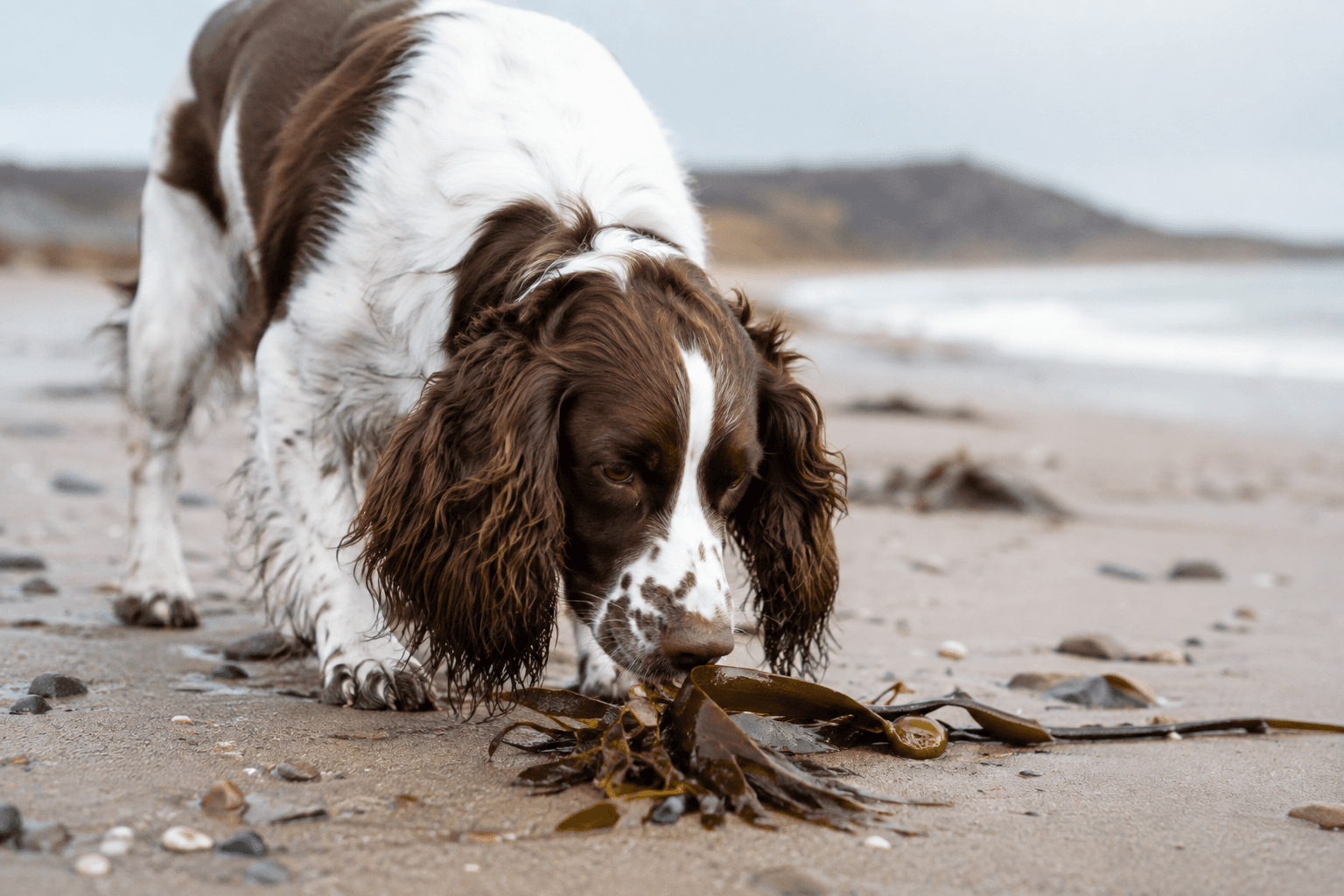
Caution, and the type matters. Dried seaweed washed up on a UK beach can expand once swallowed and block a dog's gut, a risk vets treat seriously; a small bite of a plain seaweed snack or nori sheet is a different, much lower-risk thing. Keep dogs away from the tideline drifts and rinse their mouths after a beach walk if you cannot stop them scavenging.
- The detail
- Seaweed: risk by type
- How much is sensible
- Dried beach seaweed vs seaweed snacks from the shop
- Can dogs eat nori (sushi seaweed)?
- Seaweed supplements and kelp powder for dogs
- My dog ate seaweed at the beach, what do I do?
- Salt poisoning from seawater and seaweed
- Better things to share
- Common questions
The detail
Fresh, wet seaweed on the shoreline is mostly harmless in small amounts, but as it dries in the sun it shrinks to a fraction of its size. If a dog swallows a dried piece, it rehydrates in the stomach and expands again, sometimes enough to lodge in the gut.
That is the mechanism behind some of the more serious beach cases UK vets see: a dog that scavenged what looked like a small, dry scrap of weed ends up with a stomach or intestinal blockage hours or days later.
Shop-bought dried seaweed, the kind used for sushi wraps or sold as a dog snack, is processed and portioned rather than found dried on sand, so the swelling risk is much lower. Salt content and any seasoning on the sheet are the bigger concerns there.
The stalks are a separate physical hazard from the flat blades of weed. A tough, rubbery seaweed stalk can catch across the back of the throat or further down the gut even without drying and expanding, simply because of its size and toughness.
Seaweed: risk by type
| Fresh, wet seaweed on the shore | Low risk in a small amount |
| Dried, shrunken beach seaweed | High risk; expands in the stomach and can cause a blockageRoughly a third of dogs that ingest it are reported to die |
| Plain nori or dog seaweed snacks | Low risk in a small amount, unseasoned |
| Kelp powder or joint supplements | Vet-guided dosing only, due to iodine content |
How much is sensible
| Dog size | Sensible amount |
|---|---|
| Small (under 10kg)Jack Russell, dachshund, pug | A small torn piece of plain nori or a dog seaweed snack, occasionally, not the beach kind. |
| Medium (10-25kg)Cocker spaniel, border collie, bulldog | A sheet or two of plain nori, or a few pieces of a dog-specific dried seaweed treat. |
| Large (over 25kg)Labrador, German shepherd, Rottweiler | A few sheets of plain nori is fine occasionally; still avoid anything scavenged from the tideline. |
Dried beach seaweed vs seaweed snacks from the shop
The seaweed a dog finds drying on the sand is not the same product as a packet of nori or a dog seaweed treat, even though both are technically dried seaweed. Beach seaweed dries unevenly, in unknown thickness, and can carry sand, oil residue or dead fish caught up in it.
Shop-bought seaweed is thin, portioned and consistent, which is why the swelling and blockage risk is so much lower. Treat the two as different foods when you are deciding what is fine and what is not.
The confusion is understandable, because both are seaweed and both are dry to the touch. The difference that matters is thickness and how much the piece can expand once it rehydrates, and beach seaweed is unpredictable on both counts.
PDSA also points out that beach seaweed can absorb substances like oil, and that a drift of weed can conceal dead fish a scavenging dog will happily eat along with it, risks that have nothing to do with the seaweed swelling once swallowed.
Can dogs eat nori (sushi seaweed)?
A small torn piece of plain nori is low risk for most dogs and some genuinely enjoy it. The things to check are added salt, sesame oil or seasoning on flavoured sheets, and whether it was wrapped around raw fish or rice with ingredients that are not dog-appropriate.
Plain, unseasoned nori in a small amount is the safest version to offer if you want to try it.
A whole sheet at once is more likely to cause a loose stool than a serious problem, simply because it is a new food and a dog's gut needs time to adjust to anything unfamiliar.
Seaweed supplements and kelp powder for dogs
Kelp powder is sold as a coat and joint supplement for dogs, and it is a concentrated source of iodine. Too much iodine can affect thyroid function, so these products should be dosed as directed rather than added freely.
Speak to your vet before starting a kelp supplement, particularly for a dog with an existing thyroid condition.
A supplement dose is a fixed, measured amount, which is a different thing entirely from a dog grazing on seaweed at the beach. The two should not be thought of as the same exposure just because both involve seaweed.
My dog ate seaweed at the beach, what do I do?
Watch for vomiting, diarrhoea, loss of appetite, straining to pass stool or a swollen, tender abdomen over the following 24 to 48 hours. These can be signs the seaweed has expanded and is causing a blockage.
If you saw your dog eat a noticeable amount of dried seaweed, or any of those signs appear, contact your vet or, out of hours, Vets Now straight away rather than waiting for it to pass on its own.
A quiet, watchful few days after any suspected ingestion is worthwhile even if your dog seems completely normal on the walk home. Symptoms from a blockage can build gradually rather than appear all at once.
Salt poisoning from seawater and seaweed
Dogs that lick or drink from rock pools and the sea, often while chasing a ball or chewing seaweed at the shoreline, can take in enough salt to cause vomiting, diarrhoea and, in serious cases, neurological signs.
PDSA advises bringing fresh water on every beach trip and offering it often, so a dog has less reason to drink seawater in the first place.
A dog that seems unsteady, confused or wobbly after a beach trip needs a vet urgently. Salt poisoning progresses quickly and is a separate emergency from a seaweed blockage, even though both can start on the same walk.
Signs to watch for
- Vomiting or diarrhoea after a beach walk
- Straining to pass stool, or a swollen, tender abdomen
- Lethargy, weakness or reluctance to move
- Loss of appetite in the hours or days after
Common questions
Is all seaweed dangerous for dogs?
No. Fresh, wet seaweed and small amounts of plain shop-bought seaweed are generally low risk. Dried, shrunken seaweed found on the beach is the dangerous form because it expands once swallowed.
Why is dried beach seaweed worse than fresh?
Drying shrinks it, so a dog can swallow a piece that looks small. Once inside the stomach it absorbs moisture and expands again, sometimes enough to cause a blockage.
My dog ate a small piece of seaweed at the beach. Is that an emergency?
A very small amount often passes without issue, but watch for vomiting, straining or a swollen abdomen over the next couple of days. Contact your vet if you saw them eat a noticeable amount or any symptoms appear.
Can dogs eat nori sushi wraps?
A small torn piece of plain nori is generally fine. Check for added salt, oil or seasoning first, and skip anything wrapped around raw fish or seasoned rice.
Are seaweed and kelp supplements for dogs safe?
They can be, but kelp is high in iodine and should be dosed as directed rather than added freely, especially for dogs with a thyroid condition. Ask your vet before starting one.
Why did my dog get so ill from seawater and seaweed together?
Salt from seawater and the blockage risk from dried seaweed are two separate problems that often happen on the same walk, which is why beach trips see more of both kinds of case.
How can I stop my dog eating seaweed on walks?
Keep them on a lead near the tideline where dried drifts collect, bring fresh water so they are less tempted to drink from the sea, and recall training helps more than anything else if they are a known scavenger.