
Can dogs eat nectarines?
Updated 6 August 2026
With care, and only once the stone is out. Nectarine flesh is safe for dogs in small amounts, and peaches get exactly the same answer. The stone is the problem: it can choke a dog, block a small gut, and its kernel holds cyanogenic compounds if it gets crunched open.
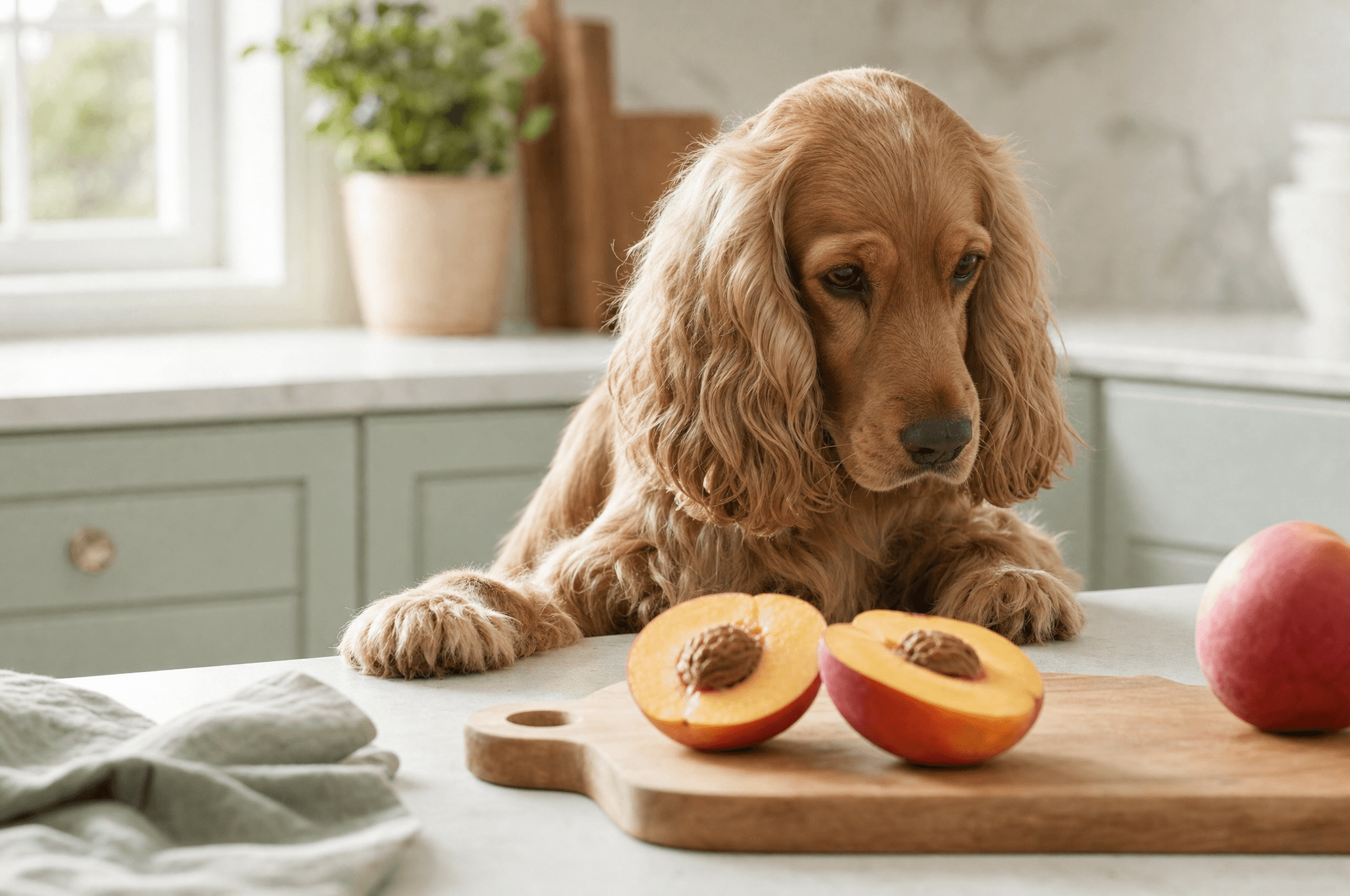
The detail
The PDSA lists both nectarine and peach among the fruits dogs can eat, with the stone removed in each case. That is the whole preparation instruction, and it is not optional.
A nectarine stone is bigger than a plum stone, around 3cm, with a deeply ridged surface. That size makes it harder for a dog to swallow and easier to choke on, and it is well capable of blocking the intestine of a small or medium dog.
Inside the stone sits a kernel with cyanogenic compounds. The Pet Poison Helpline makes the practical point that dogs do not chew thoroughly enough to release much free cyanide, so obstruction is the more realistic risk of the two.
The flesh itself is fine, and the limit is sugar. A medium nectarine carries around 11g, which is a lot for a small dog in one sitting, so it is a sliced treat rather than a bowl.
Risk by form
| Fresh flesh, stone removed | Fine in small amountsAround 11g of sugar in a medium nectarine |
| The skin | Safe. Rinse it first |
| The stone, swallowed whole | Choking first, then blockageAbout 3cm across, so it lodges easily |
| The stone, chewed open | Releases cyanogenic compoundsRing your vet the same day |
| Tinned in syrup | Skip. Two to three times the sugar of fresh fruit |
How much is sensible
| Dog size | Sensible amount |
|---|---|
| Small (under 10kg)Chihuahua, Jack Russell | Two or three small pieces of stoned flesh, occasionally |
| Medium (10 to 25kg)Cocker spaniel, border collie | A quarter of a nectarine, stone out |
| Large (over 25kg)Labrador, German shepherd | Up to half a nectarine, stone out |
| Overweight or diabetic dogs | None. Cucumber does the same job with none of the sugar |
Peaches and nectarines get the same answer
People search for these two together, and there is no need to split them. A nectarine is a peach without the fuzz, the stone is the same design, and the sugar is within a gram or two of the same figure.
Both are on the PDSA's safe list with the stone removed, and both carry the same warning from Vets Now about the stone. Everything on this page applies to peaches, tinned or fresh.
The stone
Cut the flesh away and bin the stone somewhere the dog cannot reach. A nectarine stone is about 3cm across, hard, and shaped with sharp ridges that do not soften in the gut.
The size cuts both ways. It is too big for most small dogs to swallow easily, which makes choking the first risk, and if it does go down it is a strong candidate for a blockage. Signs are vomiting, a hunched posture, refusing food or no stools, usually within 24 to 48 hours.
A stone that has been crunched open is a different call. The kernel holds cyanogenic compounds, and laboured breathing, bright red gums, dilated pupils or collapse mean a vet now rather than a wait.
Tinned nectarines and peaches in syrup
Skip the syrup versions. Tinned fruit in syrup can carry two to three times the sugar of the fresh fruit, which turns a modest treat into something worth nothing to a dog.
Fruit tinned in juice is better but still sweeter than fresh, so keep the portion to a piece or two. Check the label for sweeteners as well, because sugar-free products aimed at people sometimes contain xylitol, which is severely toxic to dogs.
The upside of tinned fruit is that the stone is already gone. That is the one part of the preparation you do not have to do.
The skin, and how much flesh
Nectarine skin is safe and does not need peeling off, though it is worth a rinse under the tap first. Peach fuzz bothers some dogs enough that they spit the piece out, which is a harmless outcome.
Stick to the portions in the table above. Around 11g of sugar in a medium nectarine means half a fruit is plenty for a labrador and a couple of small pieces is right for a terrier.
Too much fruit in one go gives loose stools, and that is the most common way a nectarine treat goes wrong. Cut it small, feed it one piece at a time.
Mouldy or fermenting fruit
Nectarines go over quickly in a warm kitchen, and a soft, mould-spotted one belongs in the bin rather than the dog bowl. The Royal Kennel Club warns that mouldy food can contain a range of toxins and advises keeping food waste sealed and out of reach.
Fruit left under a tree or in an open compost heap ferments, and fermenting fruit produces alcohol. A dog that has raided one and is wobbly, twitching or vomiting needs a vet call rather than a night on the sofa.
Signs to watch for
- Gagging, retching or pawing at the mouth straight after eating a whole fruit
- Vomiting, a hunched posture, refusing food or no stools within 48 hours of swallowing a stone
- Loose stools the same evening after too much flesh
- Laboured breathing, bright red gums or wobbliness after crunching a stone open
If your dog overdoes it
If your dog is choking on a stone, that is an immediate vet trip. If a stone has been swallowed whole, ring your vet with your dog's weight and watch for vomiting, straining or refusing food across the next 48 hours. For a stone you heard being crunched, or any dog under 10kg, call straight away. Out of hours, Vets Now runs emergency clinics across the UK, and the Animal PoisonLine is on 01202 509000.
Common questions
Can dogs eat peaches and nectarines?
Yes, both, in small pieces with the stone removed. The PDSA lists them on its safe-fruit list on exactly that condition, and the answer is the same for either fruit.
My dog swallowed a nectarine stone. What now?
Ring your vet with your dog's weight and roughly when it happened. At about 3cm it is a real blockage risk in small and medium dogs, so watch for vomiting, straining or refusing food over the next two days.
Do I need to peel a nectarine for my dog?
No. The skin is safe and digests fine, so a rinse and a slice is all it needs. Some dogs dislike peach fuzz and spit the piece out, which is harmless.
Can dogs eat tinned peaches?
Only the sort tinned in juice, and only a piece or two. Syrup versions carry two to three times the sugar of fresh fruit, and any sugar-free product needs a label check for xylitol.
Can puppies eat nectarine?
A small piece of stoned flesh will not hurt one, but puppies are the size where a stone becomes a serious blockage. Their food is balanced already, so there is nothing to gain by adding fruit.
How much nectarine can a dog have?
Two or three small pieces for a dog under 10kg, up to half a fruit for a large one, and not every day. Around 11g of sugar in a medium nectarine is the reason for keeping the portion small.