
Can dogs eat mushrooms?
Updated 5 August 2026
It depends entirely on the mushroom. Plain cooked mushrooms from the supermarket are safe for dogs in small amounts. Wild mushrooms are a different matter altogether: the UK has genuinely deadly species, including the death cap, and an unknown mushroom eaten on a walk is an emergency.
The detail
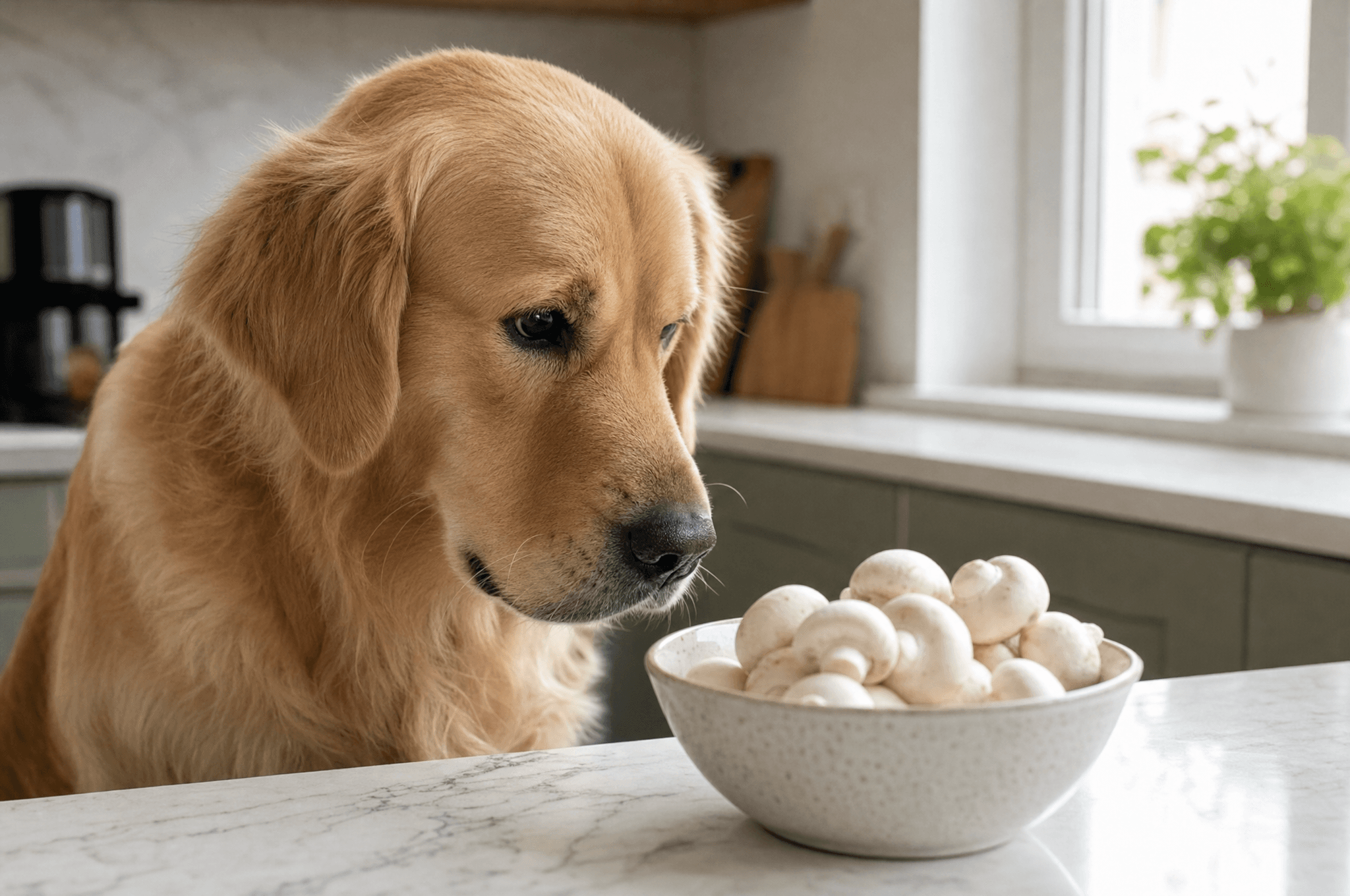
This is a page with two answers, and mixing them up is the danger. The button, chestnut and portobello mushrooms sold in UK supermarkets are fine for dogs when cooked plain, as Vets Now confirms.
Wild mushrooms follow the opposite rule. The Pet Poison Helpline reports that most confirmed fatal mushroom poisonings in pets involve the Amanita, Galerina and Lepiota groups, and the death cap (Amanita phalloides) grows in the UK, often under oak and beech from late summer into autumn.
Identification is the trap. Deadly species can look like edible ones, experts use microscopes to tell some apart, and a dog does not wait for a field guide. That is why every unknown mushroom gets treated as toxic until proven otherwise.
Shop vs wild at a glance
| Supermarket mushrooms, cooked plain | Safe in small amountsButton, chestnut, portobello, flat |
| Supermarket mushrooms, raw | Not toxic, but poorly digestedExpect wind or a loose stool after more than a bite |
| Mushrooms cooked in garlic, onion or cream | Avoid. The other ingredients are the problem |
| Any wild or unknown mushroom | Emergency. Ring your vet immediatelyThe death cap grows in the UK |
How much is sensible
| Dog size | Sensible amount |
|---|---|
| Small (under 10kg)Chihuahua, Jack Russell | One small cooked shop mushroom, chopped, once or twice a week |
| Medium (10 to 25kg)Cocker spaniel, border collie | One or two cooked shop mushrooms |
| Large (over 25kg)Labrador, German shepherd | Two or three cooked shop mushrooms |
| Any dog, wild mushrooms | None, ever. An unknown mushroom is a vet call |
Shop mushrooms, cooked plain
Button, chestnut, portobello and flat mushrooms from the supermarket are safe cooked plain: steamed, boiled or dry-fried with nothing added. They bring a little fibre and some B vitamins, though a complete dog food already covers both.
Plain is the operative word. No oil beyond a wipe of the pan, no salt, no garlic butter. Chop them so an enthusiastic eater does not swallow one whole.
Raw shop mushrooms
A raw shop mushroom is not poisonous, so a slice stolen from the chopping board is nothing to panic about. Dogs just digest raw mushroom poorly, and the usual result of more than a bite or two is wind or a loose stool.
Cooked keeps the same mushroom and loses the stomach upset. If your dog has a habit of counter-raiding raw ones, the fix is storage, not worry.
Wild mushrooms on walks
This is the emergency half of the page. If your dog eats an unknown mushroom on a walk, ring your vet now, not after watching and waiting. Fatal species exist in the UK, and with the death cap the early signs can fade before the liver damage lands.
Photograph the mushroom where it grew, and take a sample in a paper bag if you can do it without touching it bare-handed. Vets Now asks owners to bring the specimen because identification changes the treatment.
Prevention is mundane but it works. Learn the corners of your regular walks where fungi come up, keep a known scavenger on the lead through them in autumn, and clear fungi from your own lawn before the dog finds them.
Mushrooms in cooked dishes
The mushroom is usually the safest thing on the plate. Garlic mushrooms, mushroom gravy, stroganoff and creamy pasta sauces carry garlic and onion, which are toxic to dogs, plus cream and butter that upset plenty of stomachs.
Mushroom risotto and pizza toppings fail the same test for the same reason. If you want to share, cook a plain mushroom separately before the garlic goes in the pan.
Signs to watch for
- Drooling, vomiting or diarrhoea within hours of a walk
- Wobbliness, tremors or seizures
- Yellowing gums or eyes in the days after, a sign of liver damage
If your dog overdoes it
For a wild or unknown mushroom, ring your vet immediately, even if your dog seems fine. Photograph the mushroom and take a sample in a paper bag for identification. Do not make your dog vomit unless a vet tells you to. Out of hours, call Vets Now or the Animal PoisonLine on 01202 509000.
Common questions
My dog ate a mushroom in the garden. What do I do?
Treat it as unknown and ring your vet now, with a photo of the mushroom if you can get one. Lawn fungi include toxic species, and early treatment works far better than waiting for symptoms.
Can dogs eat raw mushrooms from the supermarket?
A stolen slice is harmless, just poorly digested. More than a bite or two tends to cause wind or a loose stool, so cooked plain is the better way to share.
Can dogs eat garlic mushrooms or mushrooms in sauce?
No. Garlic and onion are toxic to dogs, and the cream and butter in most mushroom dishes upset stomachs on their own. Only a plain cooked mushroom is worth sharing.
Which wild mushrooms are dangerous in the UK?
The death cap is the most notorious, and the Pet Poison Helpline reports most fatal pet poisonings involve the Amanita, Galerina and Lepiota groups. Lookalikes fool experienced foragers, so treat every wild mushroom as dangerous.
How quickly does mushroom poisoning show in dogs?
Anywhere from 15 minutes to 24 hours depending on the species, per the Pet Poison Helpline. Death cap poisoning is the nastiest pattern: early sickness can ease before liver failure develops, so never use improvement as an all-clear.
Can dogs eat tinned or canned mushrooms?
Better not. They are safe in the toxin sense but usually canned in brine, and the salt has no place in a dog's diet. Fresh, cooked plain is the version to share.