
Can dogs eat custard?
Updated 5 August 2026
A lick is fine, a bowl is not. Plain custard contains nothing toxic to dogs, but it is built on milk and sugar, and many adult dogs digest lactose badly. Keep any share to a licked spoon, and treat sugar-free versions as a no until you have checked the label for xylitol.
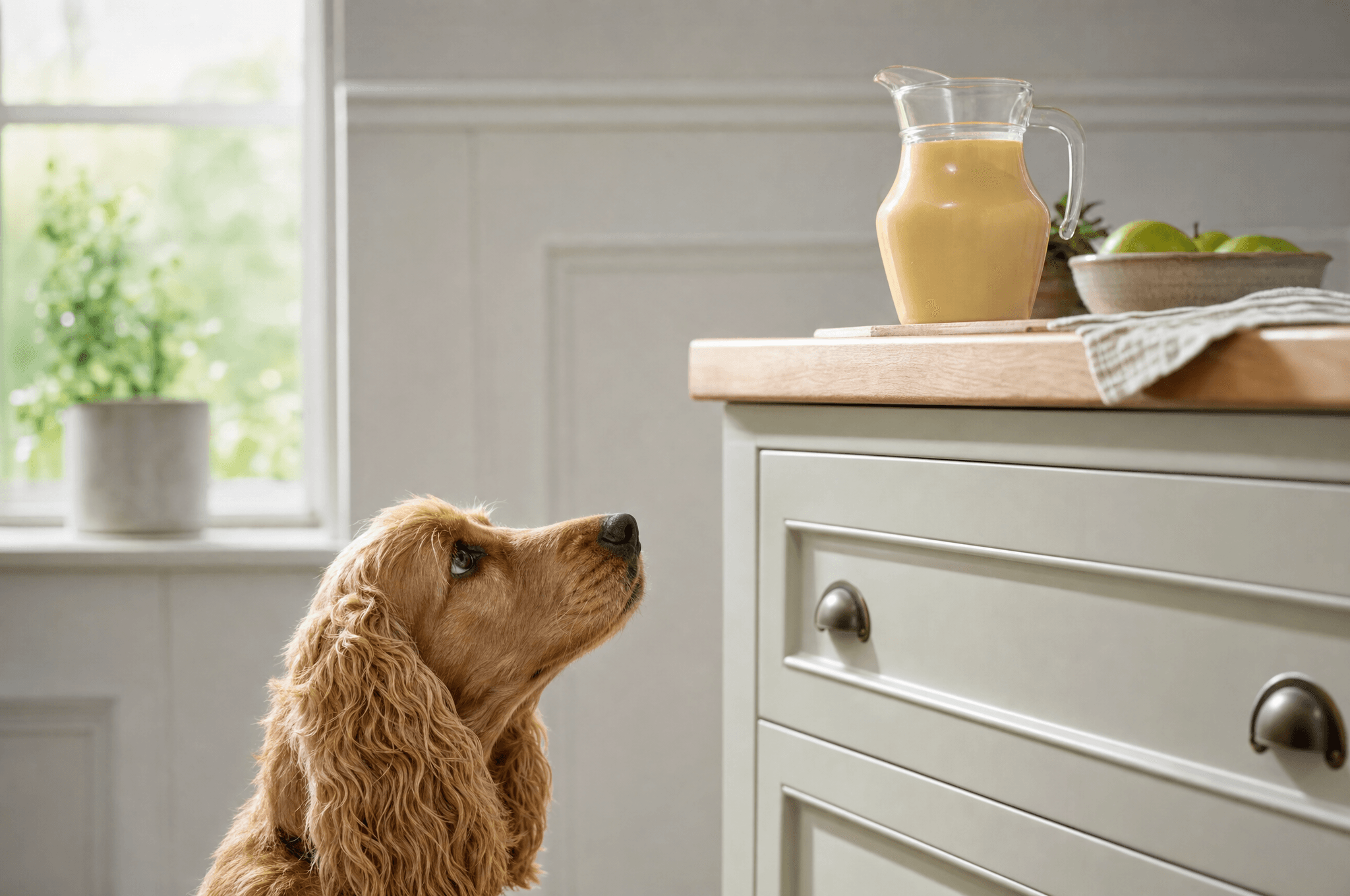
The detail
Custard is milk or cream thickened with egg or cornflour and sweetened, whether it comes from a tin, a carton or a Sunday saucepan. Every one of those ingredients is dog-safe in the sense of not being poisonous.
The trouble is what a serving adds up to. Ready-made custard runs to about 10g of sugar per 100g, so a 150g bowl carries roughly 15g of sugar, and the milk base brings lactose that many adult dogs can no longer break down properly.
VCA Animal Hospitals lists diarrhoea, bloating and abdominal discomfort as the classic signs of lactose intolerance. In practice, the dog that finishes the custard jug at 2pm is often the dog with an urgent garden visit by evening.
What is in ready-made custard
| Sugar | About 10g per 100gA 150g bowl is roughly 15g of sugar |
| Milk | The base of nearly every recipeLactose is the usual cause of trouble |
| Fat | About 3g per 100g, more in homemade with cream |
| Anything toxic to dogs | Nothing in plain vanillaChocolate flavours and xylitol in sugar-free versions are the exceptions |
How much is sensible
| Dog size | Sensible amount |
|---|---|
| Small (under 10kg)Chihuahua, Jack Russell | A lick of a spoon, rarely, and only from plain vanilla custard |
| Medium (10 to 25kg)Cocker spaniel, border collie | A licked spoon or a teaspoon at most, as a rare share |
| Large (over 25kg)Labrador, German shepherd | A spoonful occasionally, never the bowl or the jug |
| Dogs with known dairy trouble, overweight or diabetic dogs | None. The lactose or the sugar is exactly their problem |
Custard made with milk
Almost all custard is milk-based, and the milk matters more than anything else in it. Many adult dogs lose the enzyme that digests lactose after puppyhood, so the usual price of a shared bowl is a soft stool by bedtime.
A lick delivers a trivial lactose dose, which is why the small print on this page keeps saying lick rather than serving. If your dog reacts to even small tastes of dairy, that answers the custard question for good.
Sugar-free and low-sugar custard
This is the version that can turn a mild stomach upset into an emergency. Sugar-free products sometimes use xylitol, which the Pet Poison Helpline links to collapse within 15 minutes and to liver failure.
Check the ingredients of any sugar-free or diabetic custard before it comes anywhere near a dog. If xylitol appears and any has been eaten, ring your vet immediately.
Custard creams
The biscuit named after custard contains no milk custard at all, just a vanilla-flavoured sugar and fat filling. That makes it a biscuit problem rather than a dairy one.
One stolen custard cream is a shrug for a healthy dog. The full answer, including which biscuits are genuinely dangerous, is on our biscuits page.
Custard with crumble, trifle and other puddings
The pudding underneath usually matters more than the custard on top. Apple crumble is sugar and butter, trifle adds sponge and sometimes sherry, and Christmas versions can hide dried fruit, which is toxic to dogs.
If a dog raids a finished pudding, work out what was in the layers before deciding anything. Raisins or sultanas anywhere in it turn a mess into a vet call.
Banana, chocolate and frozen custard
Banana custard is the least bad flavour, since banana itself is a safe share, though the custard part still carries the sugar and lactose. A lick remains the ceiling.
Chocolate custard is different. Chocolate is toxic to dogs, so chocolate-flavoured custard desserts move off the caution list and onto the do-not-share list, with a vet call if a meaningful amount disappears.
Frozen custard and vanilla ice cream answer the same way as the jug, with more sugar in most tubs. Read the label before deciding whether a stolen scoop matters, because raisin-studded and sugar-free varieties turn a lick into a vet call.
Signs to watch for
- Loose stools, wind or a gurgling stomach within a day of a dairy share
- Vomiting after a large amount
- Wobbliness or collapse after sugar-free custard, which is an emergency
If your dog overdoes it
After a big custard theft, offer water and feed light for a day, and ring your vet if diarrhoea runs past a day or two. If the custard was sugar-free, check for xylitol and call your vet immediately if it is listed. Out of hours, Vets Now or the Animal PoisonLine on 01202 509000.
Common questions
My dog licked the custard spoon. Is that a problem?
No. A lick is a trivial amount of lactose and sugar for a healthy dog. Rinse the spoon and carry on.
My dog ate a whole bowl of custard. What should I do?
Expect wind and possibly loose stools rather than poisoning, as long as it was plain vanilla with real sugar. Offer water, feed light, and ring your vet if diarrhoea lasts beyond a day or two.
Is custard powder dangerous to dogs?
Dry custard powder is mostly cornflour with flavouring and contains no milk, so a licked spill is harmless. Made up, it becomes ordinary custard and the lactose and sugar rules apply.
Can dogs eat custard creams?
One is a shrug for a healthy dog, since there is no chocolate or fruit in them. They are still sugar and fat, so they belong in the rare-accident category rather than the treat rotation.
Can puppies have custard?
Skip it. Puppies handle lactose better than adults but their diet is balanced already, and teaching a puppy that human puddings are shared creates years of begging. Save the ritual for dog-safe treats.
Is chocolate custard as dangerous as chocolate itself?
It carries less chocolate per spoonful, but the same toxin is there. Ring your vet with your dog's weight and the amount eaten rather than assuming dilution makes it safe.
Can dogs have Ambrosia custard?
Same answer as any ready-made custard: a licked spoon is fine, a pot is not. The tinned version runs to about 10g of sugar per 100g on a milk base, so the lactose and sugar rules apply in full.